









AI Risk Markets: Why Predictive Risk Is Becoming a Core Business Capability
Risk used to be something enterprises reacted to.
Incidents happened, reports followed, controls tightened later.
That model is collapsing.
Across healthcare, retail, climate platforms, and networked systems, risk is now continuous, probabilistic, and dynamic. AI is not just helping organizations detect risk-it is reshaping how risk itself is priced, mitigated, and governed.
By 2026–2027, enterprises that treat AI risk analysis as a side function will fall behind those that treat it as core infrastructure.
Risk is no longer an exception.
It is a signal that must be computed continuously.
Why Traditional Risk Models Are Breaking Down
Legacy risk management assumes:
- Stable environments
- Periodic assessment
- Human-led review cycles
Modern digital systems provide none of these conditions.
In AI-driven environments:
- Decisions happen in milliseconds
- Conditions shift constantly
- Failures cascade across systems
Static risk models cannot keep up.
The Rise of AI Risk Markets
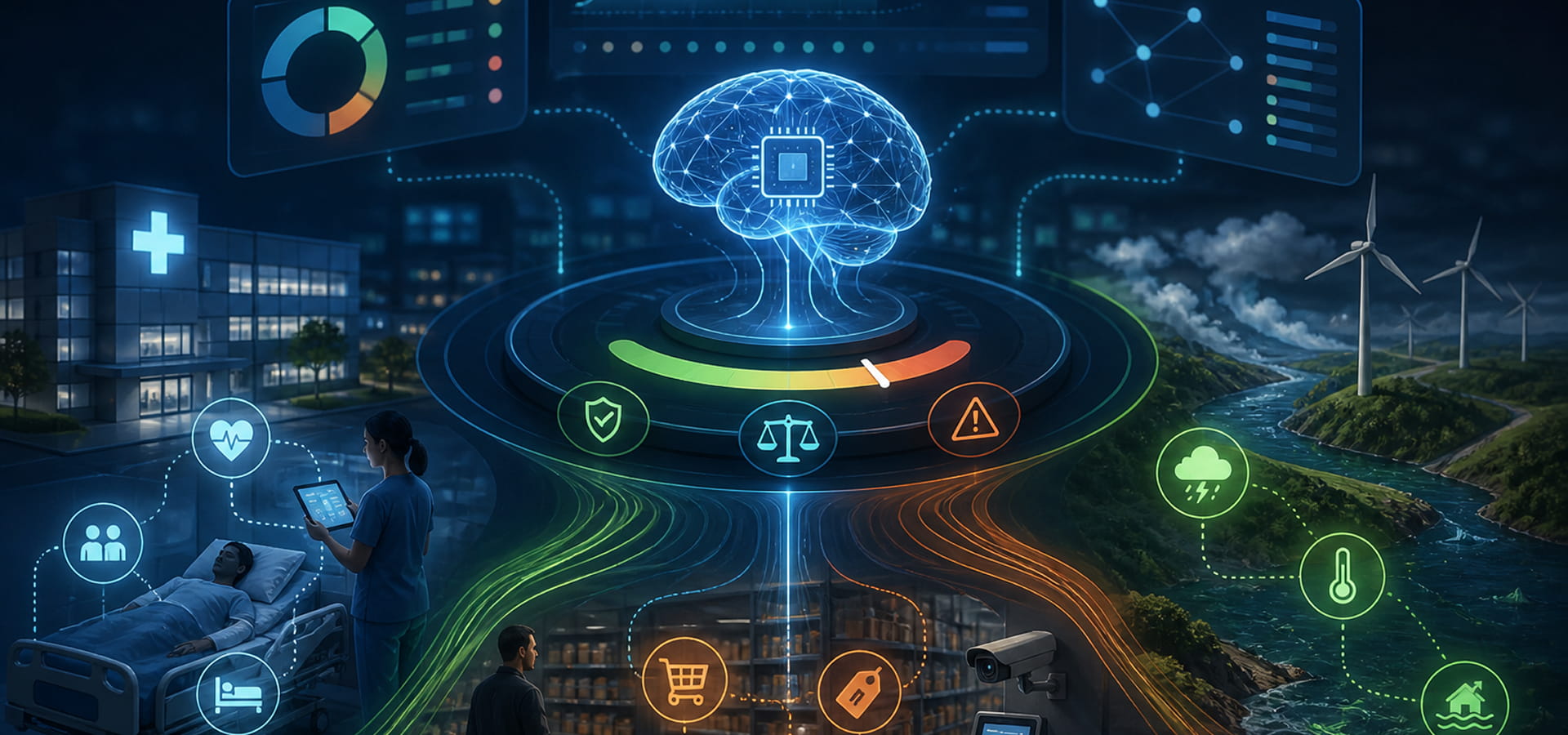
An AI risk market is not a financial exchange.
It is a decision environment where risk is continuously evaluated, weighted, and acted upon.
In practice, this means:
- Risk scores influence real-time decisions
- Actions adapt as risk levels change
- Systems balance opportunity and exposure dynamically
Healthcare software development platforms already use this approach when prioritizing patient care or allocating resources. Retail systems apply it to fraud, shrinkage, and pricing. Climate platforms use it to model exposure and response thresholds.
Where AI Risk Systems Deliver Real Value
1. Continuous Risk Scoring
AI-driven decision systems monitor inputs constantly:
- Behavioral signals
- Environmental data
- Operational metrics
Risk is recalculated continuously, not quarterly.
2. Actionable Risk Thresholds
Instead of reports, AI systems:
- Block actions above risk thresholds
- Slow processes under uncertainty
- Escalate when human review is required
This turns risk management into real-time governance.
3. Risk-Aware Optimization
AI systems learn how much risk is acceptable for:
- Speed
- Revenue
- Service quality
Optimization becomes risk-aware rather than risk-blind.
Where Enterprises Go Wrong
⚠️ Treating Risk as Analytics
Dashboards don’t prevent failure. Decisions do.
⚠️ Isolating Risk Teams
Risk intelligence must be embedded in operational systems-not reviewed after the fact.
⚠️ Ignoring Cross-System Effects
Risk propagates across platforms. AI systems must model interdependence, not silos.
Deployment Insight
In a large-scale platform:
- Incident response time dropped dramatically
- False-positive interventions declined
- Executive confidence in automated decisions increased
Because risk was computed and acted upon continuously.
Strategic Implications for CXOs
By 2027:
- Risk will be priced into decisions automatically
- Manual risk review will be insufficient
- AI risk analysis will become a competitive differentiator
Enterprises won’t ask “Is this risky?”
They’ll ask “How risky is this right now?”
Organizations evaluating predictive risk platforms often start with architecture-level discussions:
https://www.prologic-technologies.com/book-meeting-consultant/
Final Thought
AI risk systems don’t eliminate uncertainty.
They make it manageable at machine speed.
Enterprises that master this shift will move faster-and fail less.