






ABDM M3 Milestone Implementation Guide: Building Secure, Consent-Driven Access to Linked Health Records
Understanding M3 and the Complete Workflow India's Digital Health Mission Becomes Truly Interoperable with ABDM M3 The first two milestones...
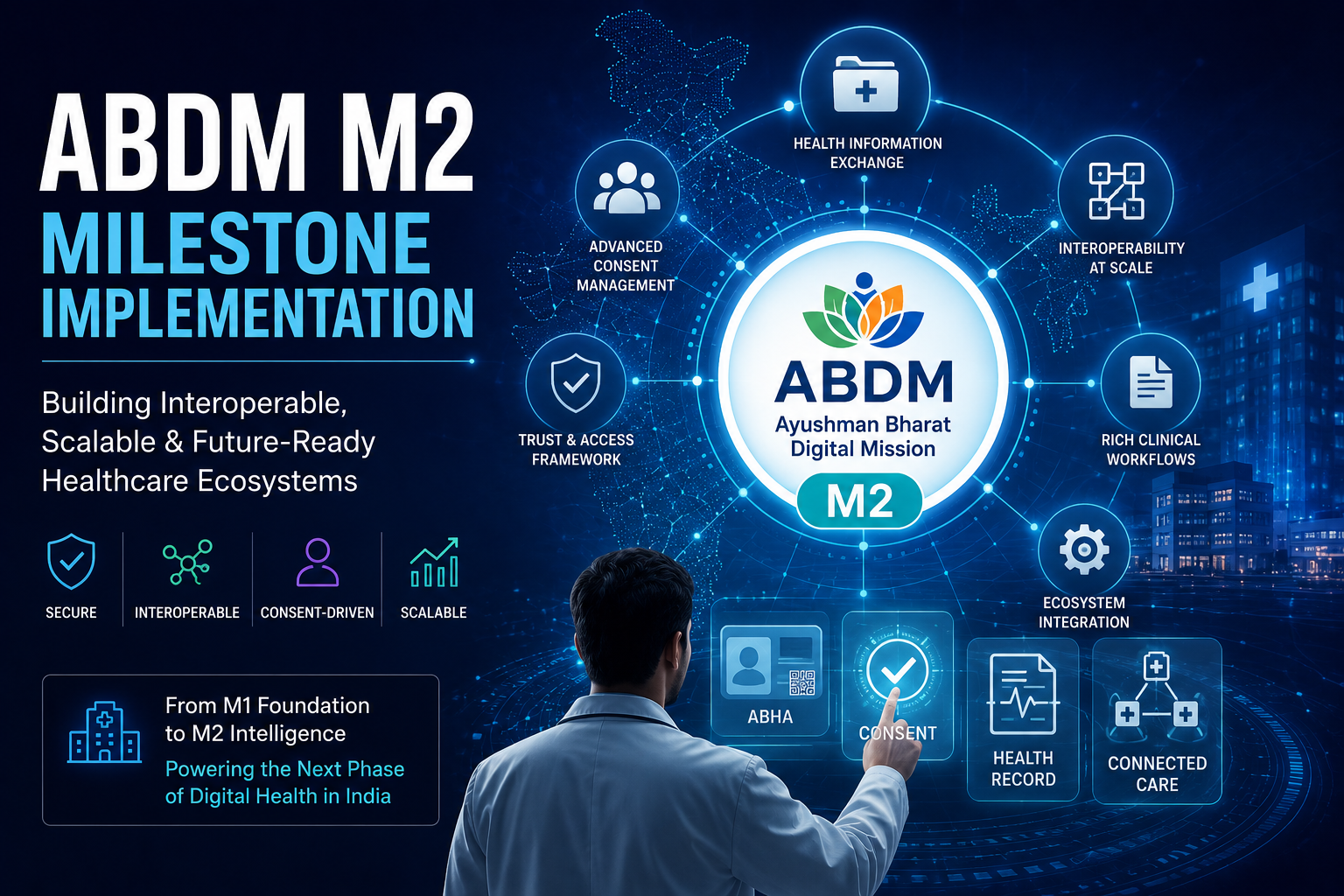
The Sequel to Our M1 Workflow
The natural next step after ABHA creation is turning digital identity into an actual care journey. In the earlier Prologic Technologies article on the ABDM M1 implementation guide, the focus was on the unified ABHA and Aadhaar workflow that helps teams structure identity creation and verification clearly.[1] This M2 article continues that journey by showing what happens next: appointment booking, facility linkage, and prescription record flow.
For teams building ABDM-enabled products, M1 and M2 should not be treated as disconnected milestones. M1 establishes the patient identity foundation, while M2 starts operationalizing that foundation inside a real healthcare interaction. That is exactly why this blog is best read as a sequel to the earlier M1 guide rather than as a standalone technical note.
In the M1 milestone, the implementation challenge revolves around ABHA creation, Aadhaar verification, ABHA address selection, and related retrieval or verification paths. That part of the journey is essential because it creates the patient’s digital identity layer inside the ABDM ecosystem.[1]
M2 begins where M1 leaves off. Once a patient has a digital identity and the platform can recognize that user properly, the next challenge is enabling an actual healthcare workflow around appointments, provider facilities, and records generated during care. In that sense, M2 is the milestone where ABDM starts to become visible as a day-to-day patient and provider experience, not just a registration capability.
Many companies can implement a milestone in isolation, but fewer design the continuity between milestones well. That continuity matters because users do not experience “M1” and “M2” as separate compliance modules. They experience one ongoing journey: create ABHA, connect identity, book care, receive treatment, and access the resulting health records.
That is the implementation philosophy followed at Prologic Technologies while building Vedic Connect, an Ayurveda-focused telemedicine platform for Ayurverse Integrative. Rather than treating ABDM milestones as separate documentation exercises, the product workflow has been designed as a connected sequence that supports real telemedicine operations.
Existing ABDM and NHA learning resources are useful, but many implementation teams still struggle with fragmented guidance, outdated demonstrations, and missing end-to-end context. Public materials often explain a specific function, but they do not always give product teams a unified snapshot of all relevant M2 use cases in one place.
That becomes a real problem during delivery. Product managers, frontend developers, backend teams, QA engineers, and healthcare stakeholders may all understand different parts of the milestone but still lack a shared implementation picture. The result is ambiguity, delayed testing, and avoidable workflow rework.
To solve that problem, Prologic Technologies created a consolidated infographic for the **ABDM M2 Milestone Flow** as part of the Vedic Connect implementation journey. This single snapshot maps the full milestone flow for **Book Appointment, Link Facility, and Add Prescription** into one implementation-ready visual that product and engineering teams can use as a common reference.
Read together with the earlier M1 guide, this infographic completes the next layer of ABDM understanding. The earlier blog explains how the patient identity layer is created.[1] This article explains how that identity is then used to drive a practical consultation-related workflow in a telemedicine product.
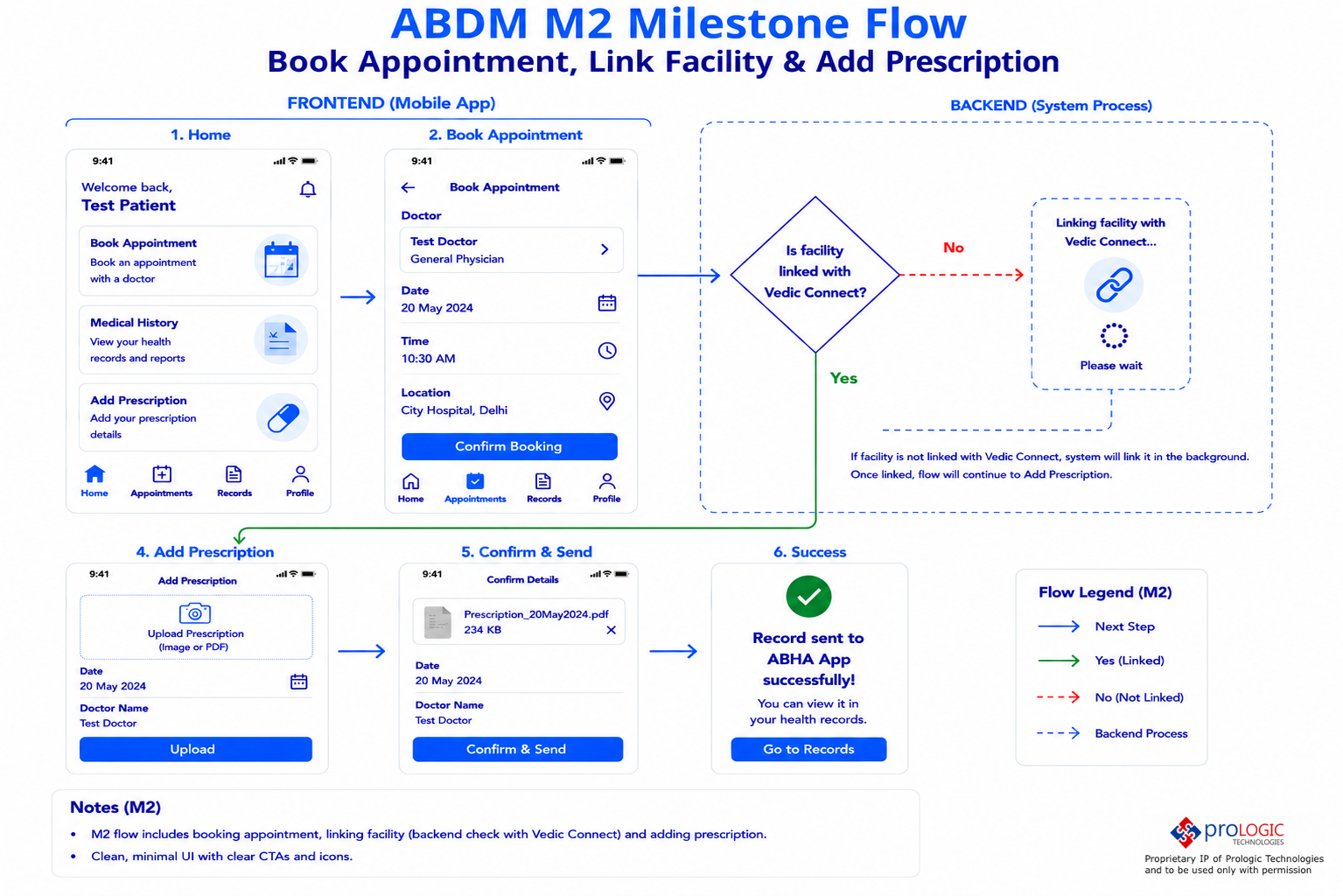
The M2 milestone workflow prepared by Prologic Technologies organizes the journey into six practical steps:
1. Home – the patient sees the core actions available in the app, including booking appointments, reviewing history, and adding prescription data.
2. Book Appointment – the patient selects doctor, date, time, and facility details before confirming the booking.
3. Facility Link Check – the backend checks whether the selected facility is already linked with the platform.
4. Add Prescription – once linkage is confirmed or completed, the patient can upload a prescription in image or PDF format.
5. Confirm and Send – the patient verifies appointment date, doctor details, and prescription file before submission.
6. Success – the system confirms that the record has been sent successfully to the ABHA app.
This progression is important because it shows how M2 extends the M1 milestone. M1 establishes who the patient is in the digital health ecosystem; M2 begins capturing what happens in the care journey linked to that identity.
A strong M2 implementation must handle more than the cleanest happy path. The unified workflow created for Vedic Connect highlights the operational branches that real-world products need to support.
This is the simplest and fastest path. The patient chooses a doctor and slot, the system confirms the facility is already linked, and the workflow moves directly toward prescription upload and submission.
For repeat users and known facility networks, this is the ideal low-friction experience. It is also the flow that most teams design first.
This is one of the most important branches in the M2 milestone. If the selected facility is not yet linked with the platform, the backend has to complete the linkage before the record flow can proceed.
This system behavior is easy to miss when teams rely only on fragmented documentation. Making it explicit in a single infographic helps both developers and testers understand that facility linkage is not always a static precondition; it can be part of the operational flow itself.
The M2 workflow also highlights prescription upload as a meaningful patient-facing action. That matters for telemedicine platforms because consultation value increases significantly when the resulting prescription or care document is correctly attached to the user’s health journey.
Support for image and PDF formats is practically important because prescriptions may originate as scanned paper, photographed handwritten notes, or digital prescription files.
Before record submission, the app should show a confirmation screen containing the uploaded file, date, and doctor details. This reduces mismatches and improves user trust.
The final success stage confirms that the record has entered the patient’s digital health context. For users, this reinforces the value of ABDM beyond registration. For implementers, it marks the completion of a full milestone-level workflow rather than just a document upload event.
For Vedic Connect, the sequel from M1 to M2 is particularly meaningful because Ayurveda often involves continuing care, repeat consultations, prescriptions, and patient review of prior treatment advice. That makes a strong digital bridge between identity, appointments, and records especially useful.
Ayurverse Integrative Solutions product vision benefits from this continuity. Instead of treating ABHA creation as one isolated feature and consultation records as another, the platform can offer patients a connected digital journey where onboarding leads naturally into care delivery and record access.
The biggest lesson is that milestones should be implemented as a connected sequence, not as separate compliance checklists. A disconnected approach may pass internal development steps, but it often results in inconsistent UX and missed backend dependencies.
Teams working on ABDM enablement should therefore treat M2 as the operational sequel to M1 and align product, engineering, and QA accordingly. A shared milestone map helps everyone understand how identity, booking, facility readiness, document handling, and record delivery work together.
A production-ready approach should include:
– A clear dependency map showing how M2 builds on the ABHA identity flow established in M1.
– User journeys for both linked and unlinked facility paths.
– Support for prescription uploads in common real-world formats.
– Confirmation states before record submission.
– Observable success and support logs for the full path from appointment booking to ABHA app record delivery.
– Test cases that validate the continuity from patient identity to patient record flow.
Prologic Technologies brings more than a decade of HealthTech and telemedicine delivery experience across US and EU markets, including HIPAA- and GDPR-compliant SaaS healthcare platforms. That experience strengthens ABDM work because milestone implementation requires more than technical integration; it requires workflow clarity, regulatory discipline, security awareness, and production-grade UX design.
The work on Vedic Connect demonstrates that practical strength. The earlier M1 blog established a unified view of the identity workflow. This M2 article continues that effort by showing the next milestone as part of one connected, real-world digital health journey.
If your team has already completed the identity layer described in the earlier M1 guide and is now moving into appointment and record workflows, M2 is the milestone where that effort starts producing real healthcare value.
Prologic Technologies helps HealthTech companies translate #ABDM milestones into connected, production-ready product journeys.
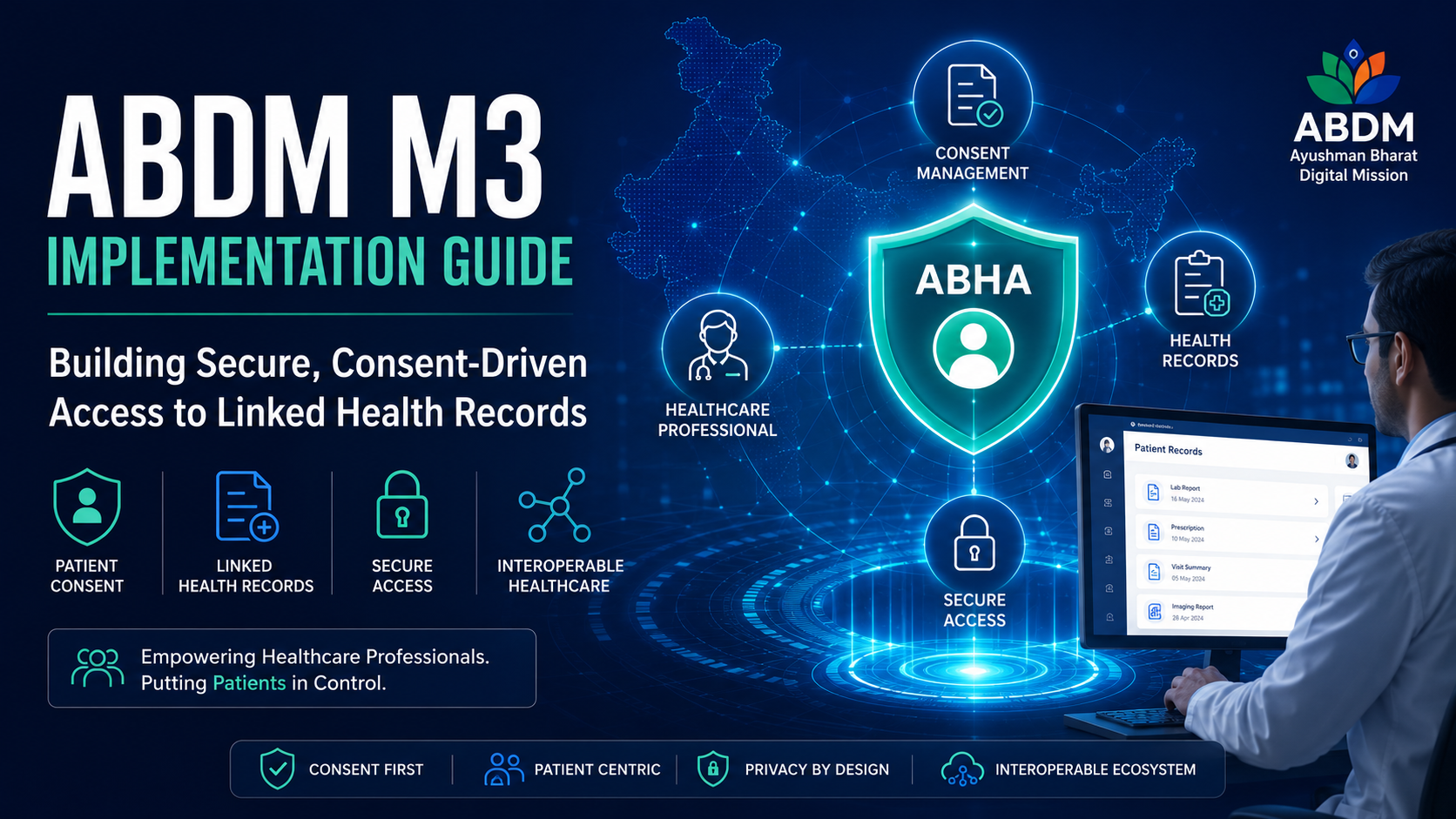
Understanding M3 and the Complete Workflow India's Digital Health Mission Becomes Truly Interoperable with ABDM M3 The first two milestones...
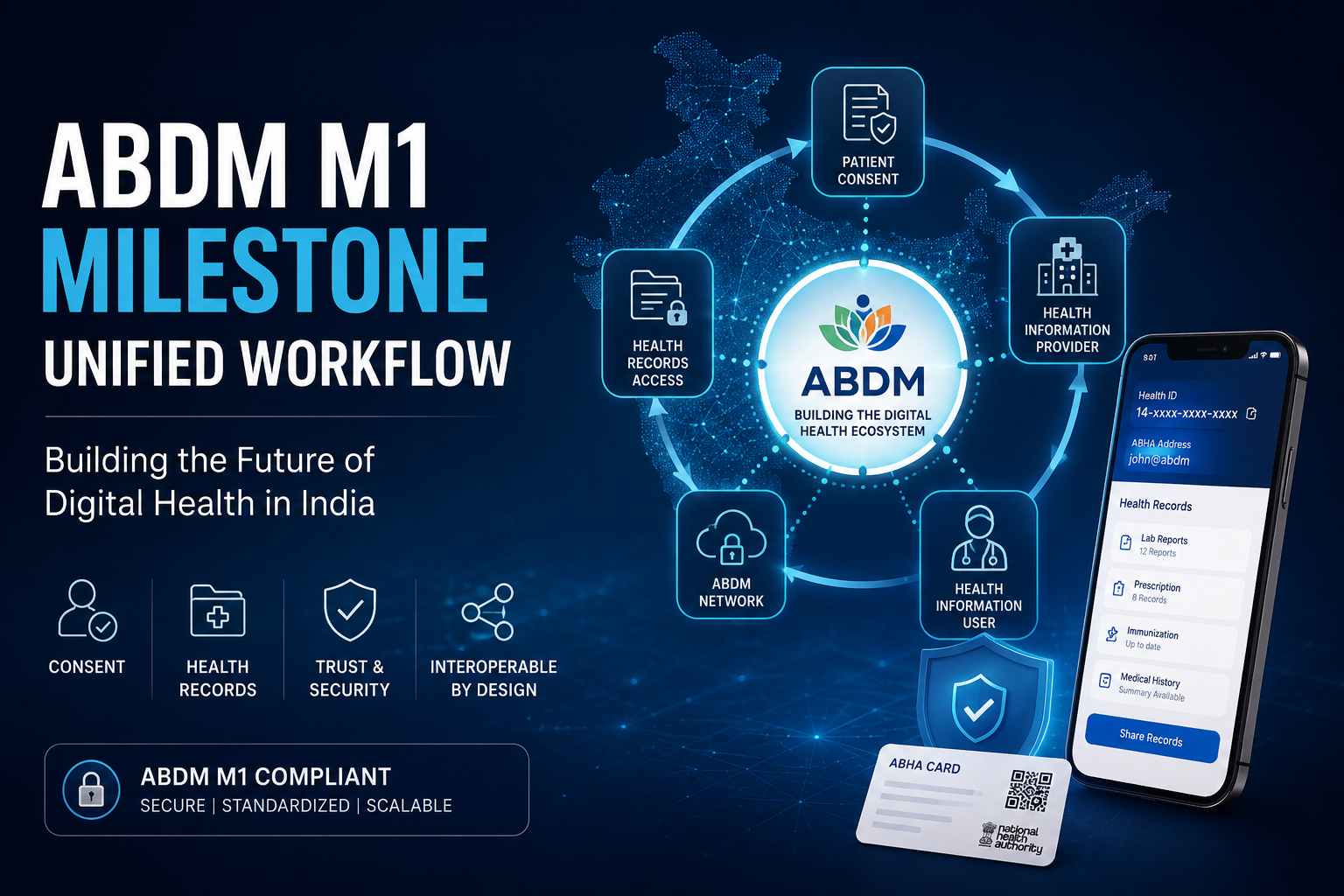
India’s Ayushman Bharat Digital Mission (ABDM) and the ABHA (formerly Ayushman Bharat Health Account) are reshaping digital healthcare in th...
