








How AI Is Reshaping Enterprise Contracts and Commercial Governance
Contracts are the most under-digitized layer of enterprise operations.
They define:
- Rights
- Obligations
- Pricing
- Risk
Yet they are often enforced manually-long after damage is done.
AI is changing this by turning contracts into living operational systems.
A contract that cannot be enforced in real time is already obsolete.
Why Traditional Contract Management Fails
Most systems:
- Store documents
- Track dates
- Alert deadlines
They do not:
- Enforce terms dynamically
- Detect violations early
- Adapt to changing conditions
What AI Enables in Contract Governance
1. Obligation Awareness
AI continuously monitors:
- SLA adherence
- Volume commitments
- Performance thresholds
Violations are detected as they occur-not months later.
2. Automated Enforcement Triggers
Contracts can:
- Adjust pricing
- Restrict access
- Trigger escalation
Based on real-world behavior.
3. Risk Forecasting
AI models anticipate:
- Likely breaches
- Exposure accumulation
- Counterparty stress
This allows proactive intervention.
The Governance Challenge
AI must never:
- Rewrite contracts
- Interpret legal intent autonomously
Instead, it operationalizes agreed rules.
Deployment Insight
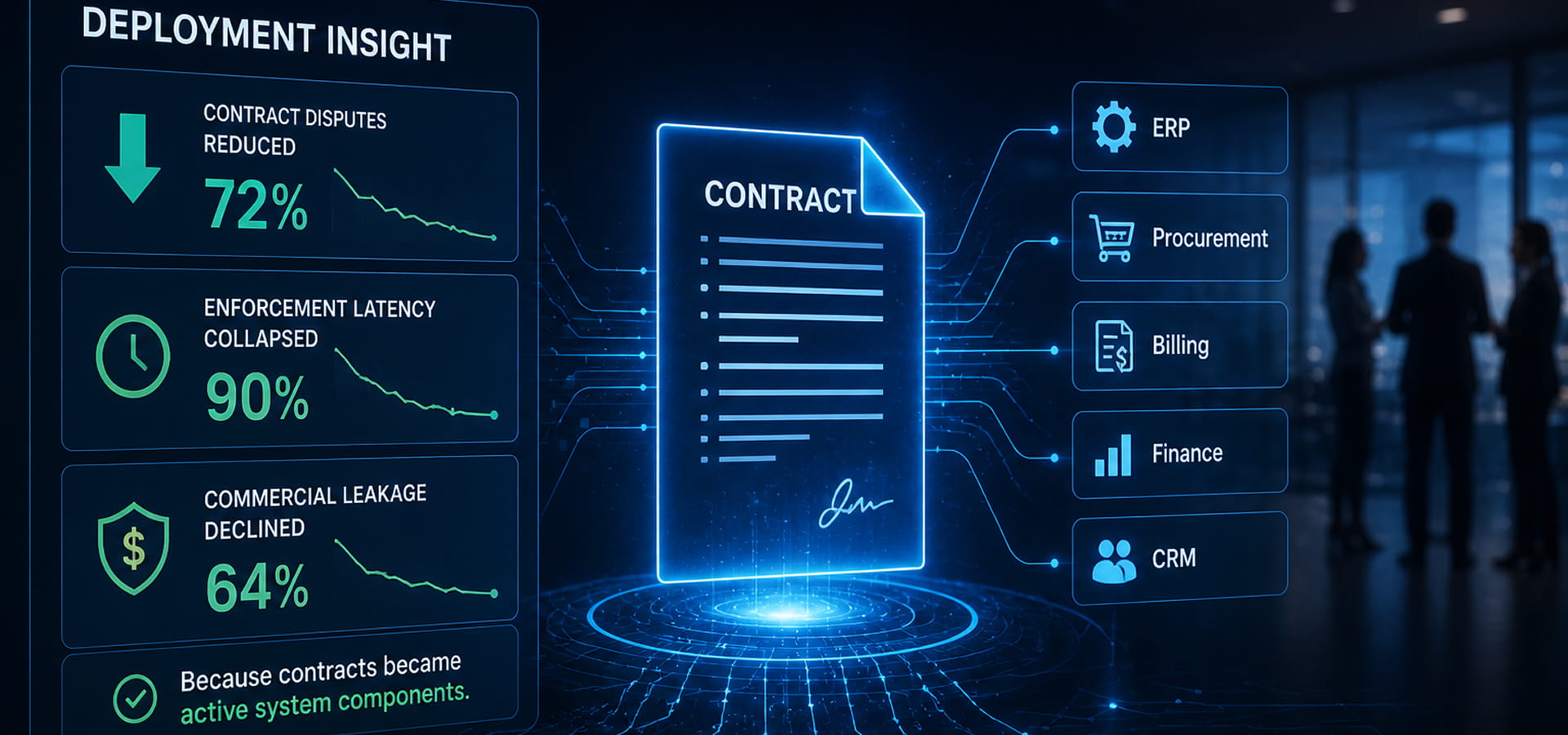
In a large enterprise deployment:
- Contract disputes reduced
- Enforcement latency collapsed
- Commercial leakage declined
Because contracts became active system components.
What Enterprise Leaders Should Prepare For
The future of contracts is not legal-it is operational.
Organizations modernizing commercial governance increasingly assess AI-enabled contract enforcement early:
https://www.prologic-technologies.com/book-meeting-it-serv/?utm_source=intBlog