






PAINE at NASSCOM Agentic AI Confluence 2026: From AI-Native Engineering to the Orchestration Economy
24 September 2026 | Bengaluru
Yesterday was one of those days that makes the years spent experimenting, building and questioning conventional approaches to software engineering feel particularly meaningful.
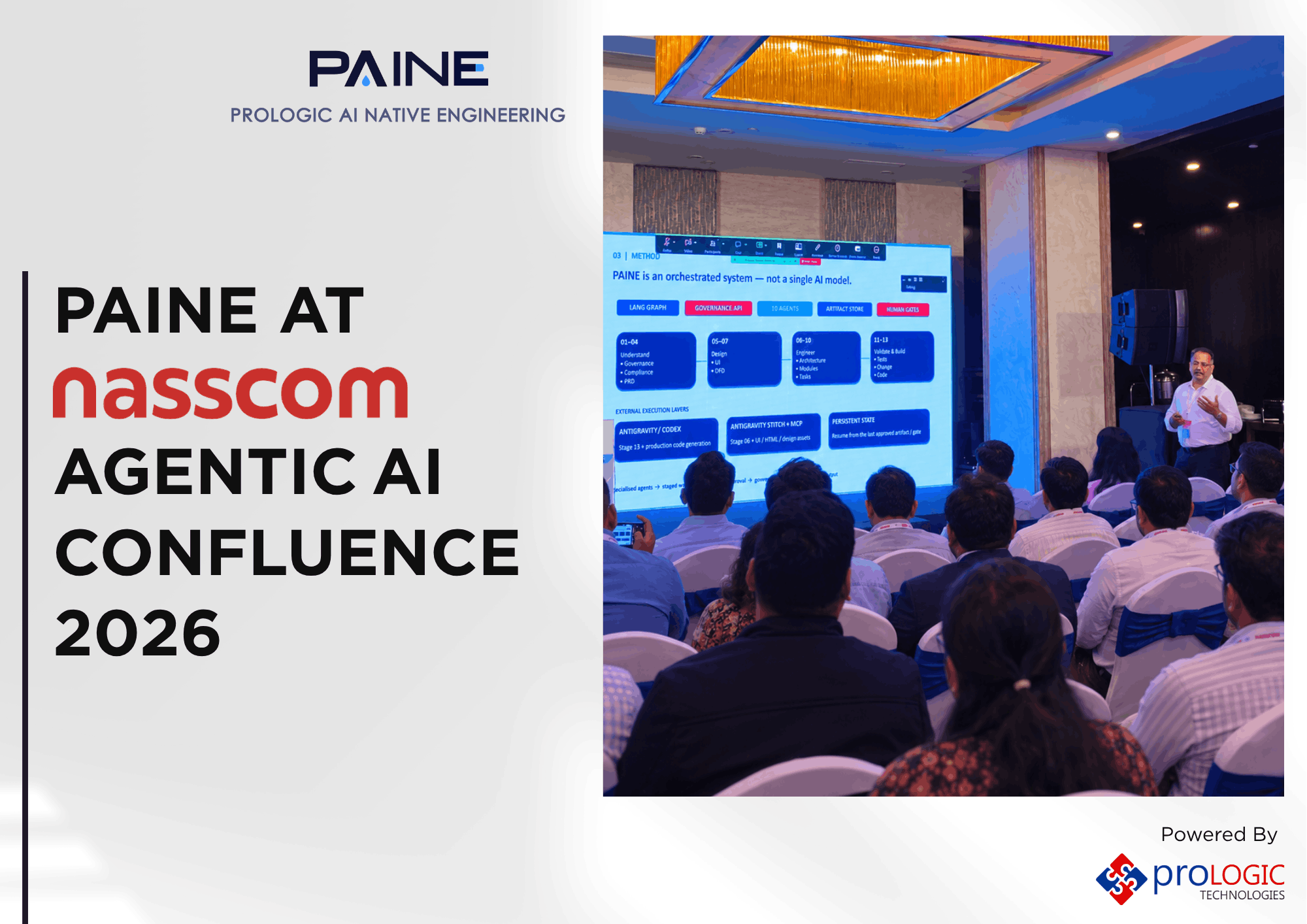
I had the opportunity to present PAINE – Prologic AI Native Engineering Framework at the Research Track of NASSCOM Agentic AI Confluence 2026 in Bengaluru. The conference brought together technology leaders, researchers, builders and practitioners around an important shift in AI: from individual AI capabilities towards agentic systems, orchestration and enterprise-scale adoption.
From AI-assisted coding to AI-native engineering
PAINE emerged from a question we have been exploring at Prologic Technologies:
If AI can generate code, can we rethink the entire engineering process around AI – without giving up human judgment and accountability?
PAINE approaches this through a structured, multi-agent engineering workflow covering requirements, product definition, compliance, design, data flow, architecture, module decomposition, task planning, testing, change analysis and code generation.
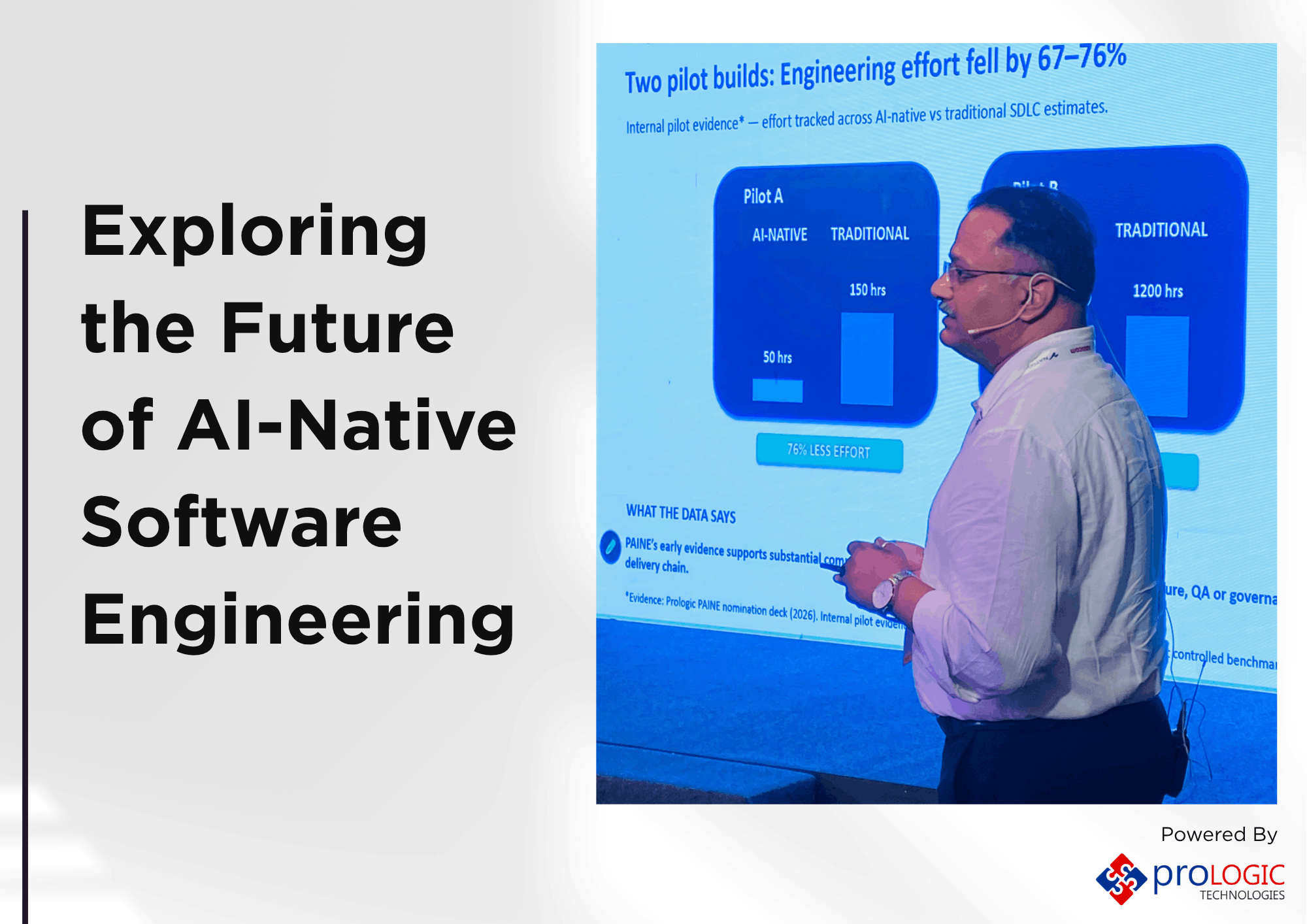
The framework currently comprises 13 engineering stages and 10 specialised AI agents, with Human-in-the-Loop review gates and governance logging throughout the workflow. Our early implementation has also been explored through two AI-native pilot projects, providing initial data for further validation.
For me, however, the most interesting part of the presentation was not the technology itself. It was the larger question of what software engineering looks like when AI becomes an active participant in the engineering process rather than simply a coding assistant.
Beyond PAINE
The Research Track also provided a valuable opportunity to exchange perspectives with people working on different dimensions of the emerging AI ecosystem.
A special thank you to Amol Bhaskar Mahamuni, who was my point of contact for the Research Track and was a part of organizing team. His encouragement and the effort of the research-track team made the experience particularly worthwhile.
I also enjoyed connecting with Arshdeep Singh, with whom I discovered several common interests around technology and ayurveda.
And it was a pleasure to meet Chockalingam (Chocks) in person and exchange perspectives on the rapidly evolving Engineering Jobs landscape from PoV of AI.
Taking the research forward
The NASSCOM presentation is not an endpoint for PAINE. If anything, it reinforces the need to test the framework more rigorously.
Our next steps are to expand the evidence base, measure engineering quality alongside productivity, examine rework and defect rates, quantify human intervention, and understand where multi-agent engineering genuinely creates value – and where human expertise remains indispensable.
At Prologic, this work sits at the intersection of three things we have been building for years:
Domain expertise in HealthTech through HealthFabric.
Domain expertise in Ecommerce and Retail through CommerceFabric.
AI-native engineering through PAINE.
The bigger opportunity is not simply to build software faster.
It is to explore whether we can build software more systematically, more transparently and with AI participating across the engineering lifecycle while humans remain accountable for the decisions that matter.
That conversation has only just begun.