






Connected Care Is Really Connected Decisions
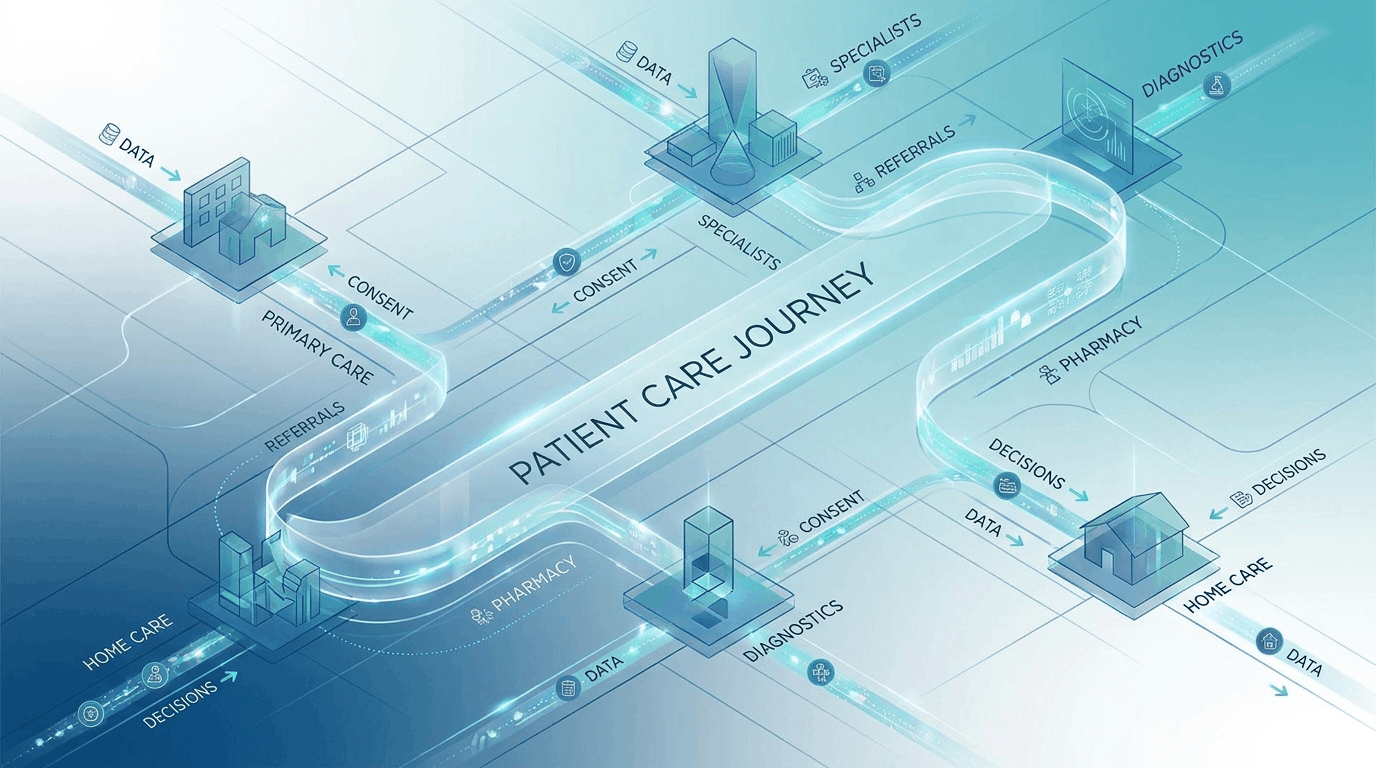
Why Sharing Data Isn't Enough to Transform Healthcare Executive Summary For years, digital health initiatives have focused on one primary ob...
The Ayushman Bharat Digital Mission (ABDM) is transforming India’s healthcare landscape by creating a nationwide, interoperable digital health ecosystem where patients, providers, hospitals, laboratories, and digital health platforms securely exchange health information with patient consent. From digital identity and consent-driven health information exchange to AI-ready FHIR architectures, explore the complete 4-part engineering roadmap.
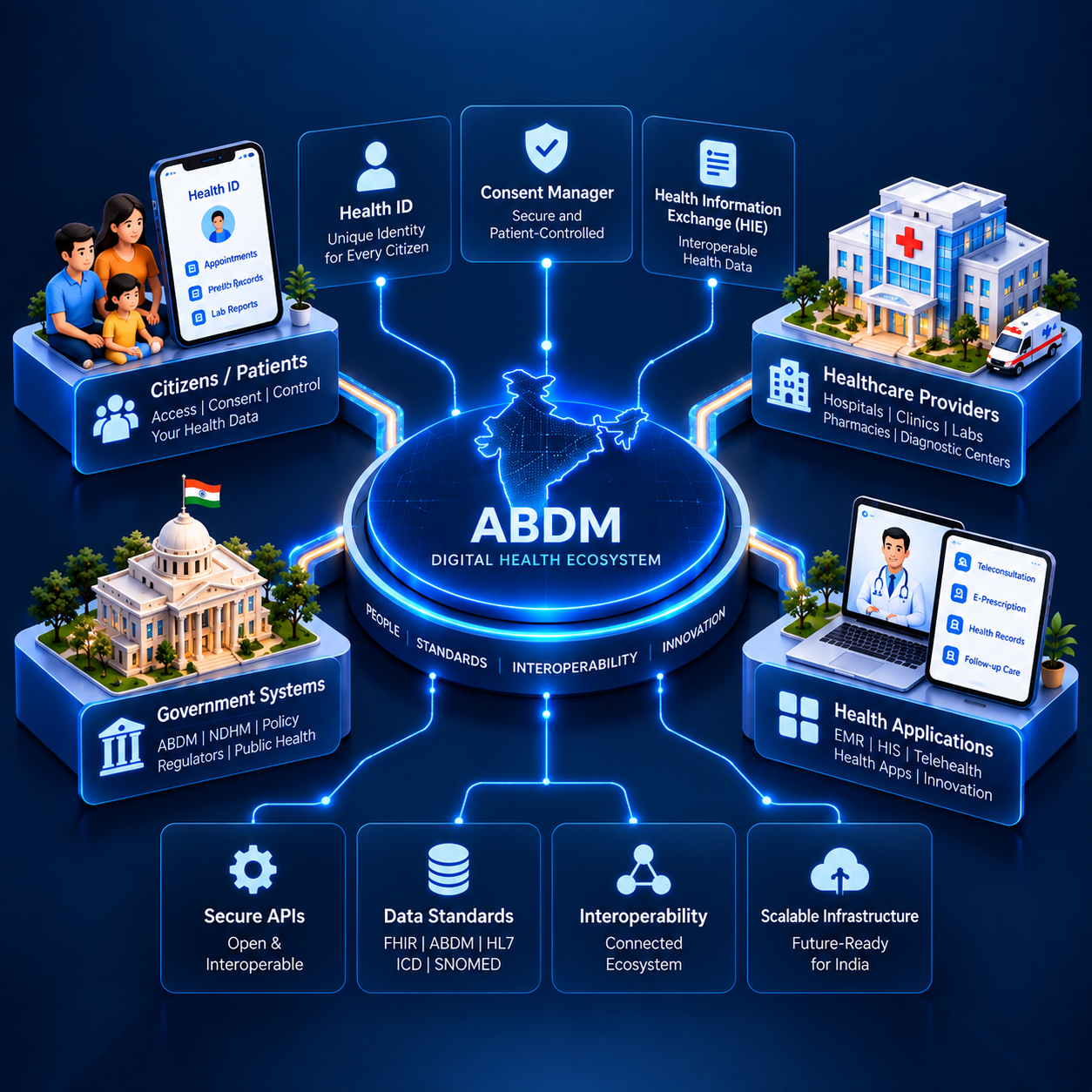
ABDM is not simply a compliance requirement or government program. It is the digital backbone for India’s future healthcare ecosystem and the foundation for AI-native healthcare transformation.

Healthcare data across India has historically been trapped in proprietary, disconnected Hospital Information Systems (HIS), electronic medical records, diagnostic labs, and clinic registers.
A standardized, federated architecture where health data remains at the point of origin, discovered and linked securely through consent-driven tokenized protocols.
Bridging fragmented enterprise health systems with the national digital infrastructure via the HealthFabric™ Integration Engine.
Existing transactional data stores without native ABDM/FHIR capabilities.
HL7 v2 / SQL
PDF / Custom APIs
REST / CSV / Flat Files
INTEGRATION LAYER
Zero rip-and-replace middleware handling bi-directional FHIR transformation.
Aadhaar/Mobile OTP, ABHA Seed Engine
Automated record link & context publish
DiagnosticReport, Prescription, Encounters
Unified National Health Authority (NHA) protocols and consent channels.
“The organizations deriving the greatest value from ABDM are those that stop thinking in milestones and start thinking in platforms.”
A comprehensive blueprint spanning foundational protocols, milestone migrations, technical frameworks, and execution accelerators.
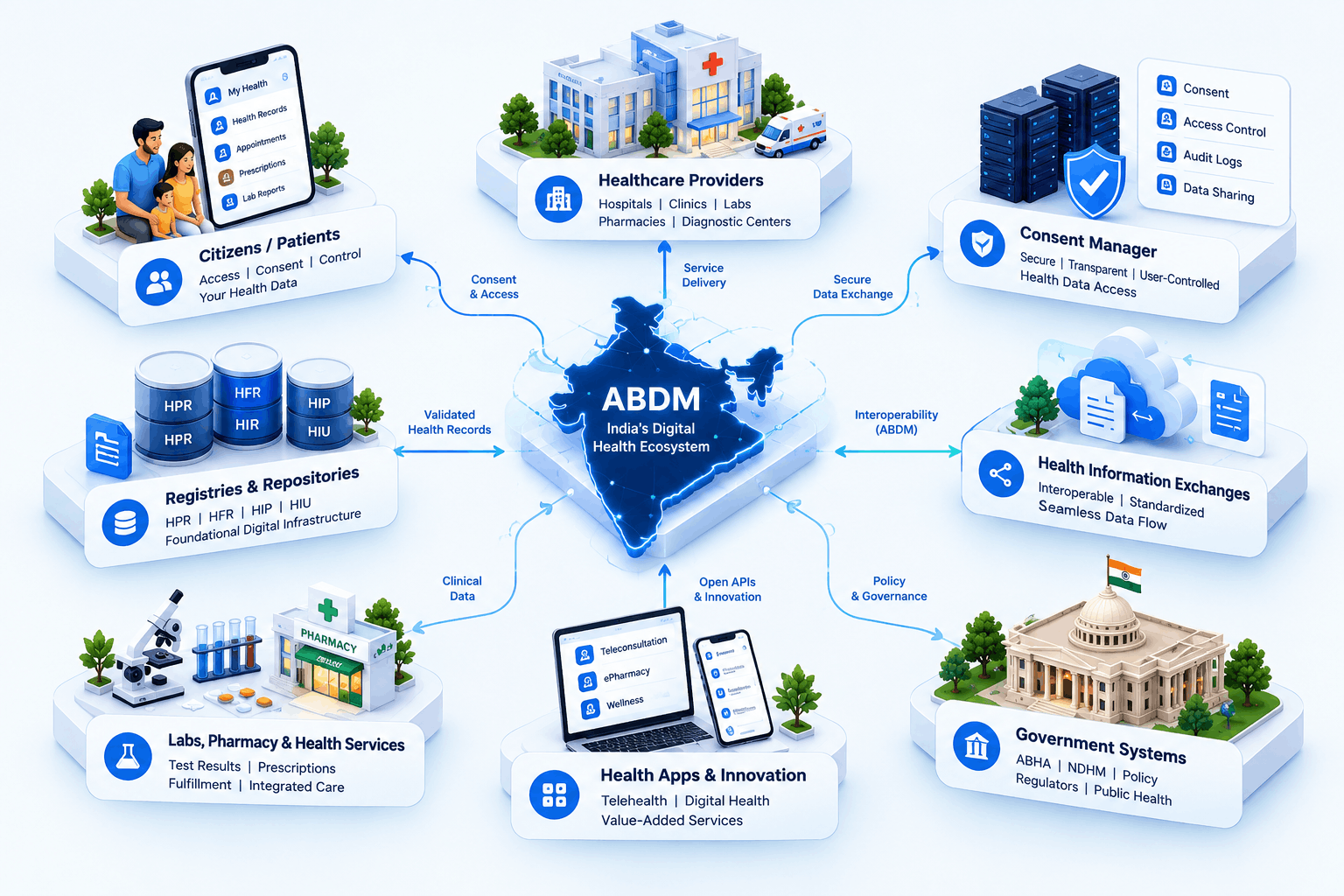
Digital Identity, Patient-Controlled Consent & The ABDM Ecosystem
Deconstructing the foundational protocols, patient-mediated consent mechanisms, and interoperability standards powering India’s national healthcare grid.
The Disconnected Problem
Four Foundational Principles
Consent Manager Architecture
ABHA (Ayushman Bharat Health Account)
HPR & HFR Registries
HIP & HIU Roles
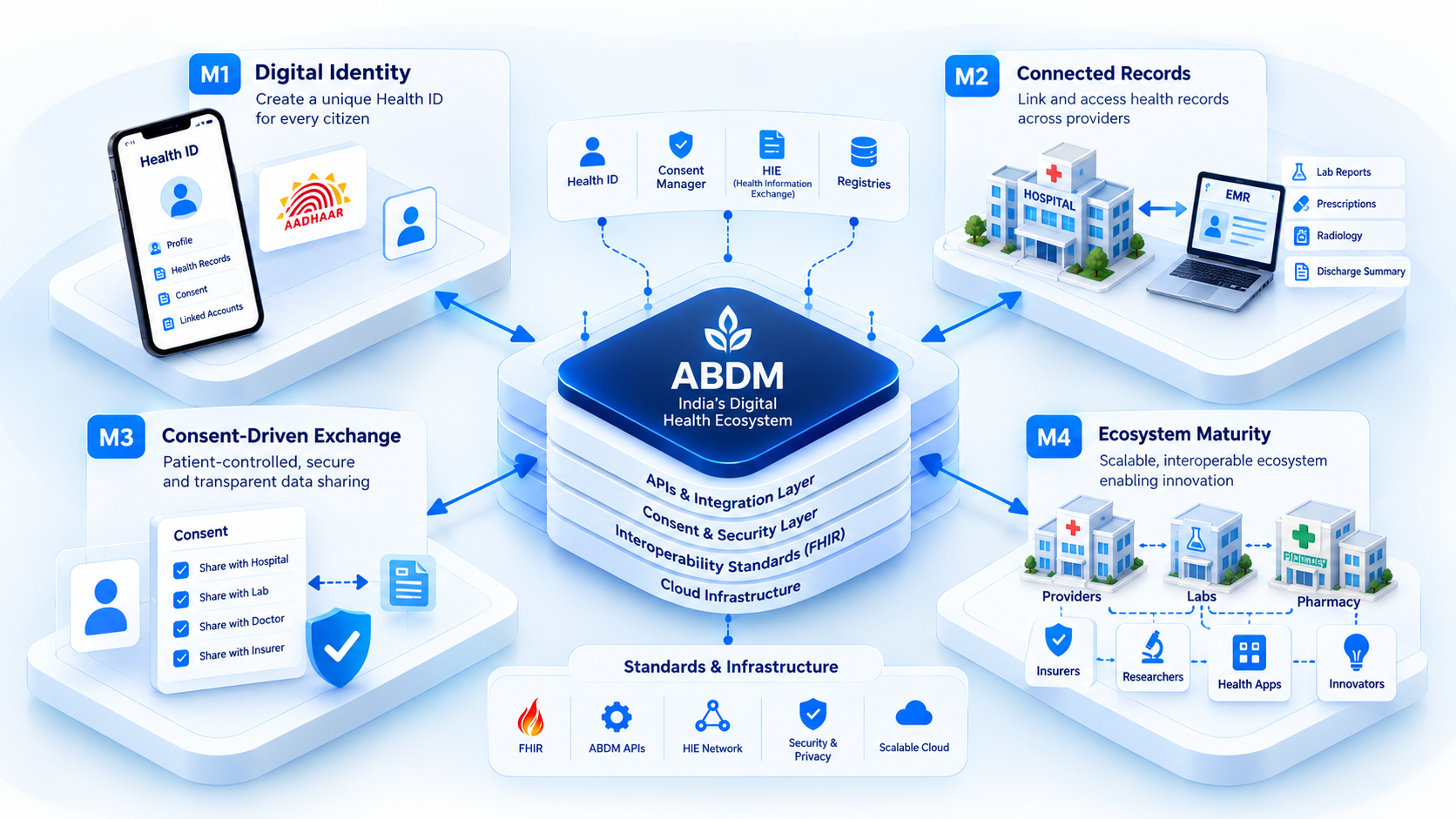
The Four-Stage Progressive Continuum (M1 to M4) & Reference Architecture
Shifting from a checklist compliance mindset to platform engineering. A progressive walkthrough of digital identity, care contexts, and consent exchange.
Four Stages Roadmap
M1: Digital Identity
M2: Connected Records
M3: Consent-Driven Exchange
M4: Ecosystem Maturity
Reference Blueprint

Six Engineering Pillars, Legacy HIS Integration & Operational Resilience
Successfully implementing ABDM requires engineering platforms that scale reliably, maintain strict auditability, and adapt as digital health standards evolve.
1. Identity First
2. Consent by Design
3. FHIR R4 Architecture
4. API-First Integration
5. Security by Default
6. Event-Driven Health
SNOMED / LOINC
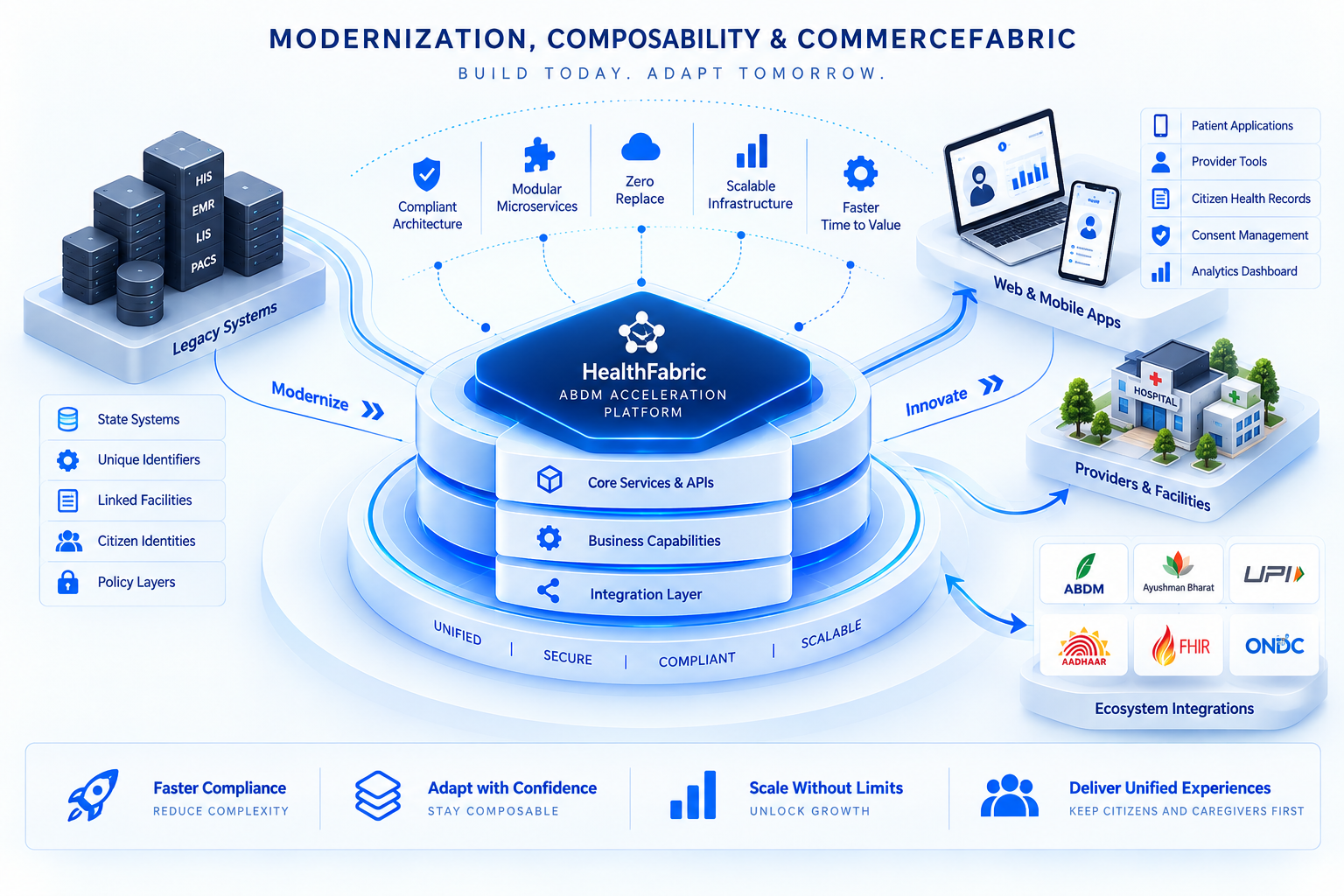
Modular Microservices, Zero Rip-and-Replace & Enterprise Playbooks
How Prologic Technologies accelerates ABDM compliance and digital transformation through HealthFabric™, complete with milestone guides and executive FAQs.
Compliance to Transformation
ProABDM Architecture
HealthFabric™ Core Engines
M1/M2/M3 Playbooks
Executive FAQs
Strategic Next Steps
Step-by-step developer guides for implementing NHA sandbox and production certified protocols.
M1
Full engineering reference for ABHA generation, Aadhaar/DL OTP authentication, HPR/HFR registry enrollment, and identity verification.
M2
Managing patient discovery, deterministic vs. probabilistic matching, care context binding, and asynchronous callback processing.
M3
Consent-driven clinical data exchange as Health Information Provider (HIP) and Health Information User (HIU) with encrypted FHIR packages.
Whether you are planning your first ABDM implementation, modernizing legacy hospital systems, or preparing your platform for AI-powered clinical workflows, let’s build healthcare that is connected, interoperable, and engineered for the future.

Why Sharing Data Isn't Enough to Transform Healthcare Executive Summary For years, digital health initiatives have focused on one primary ob...
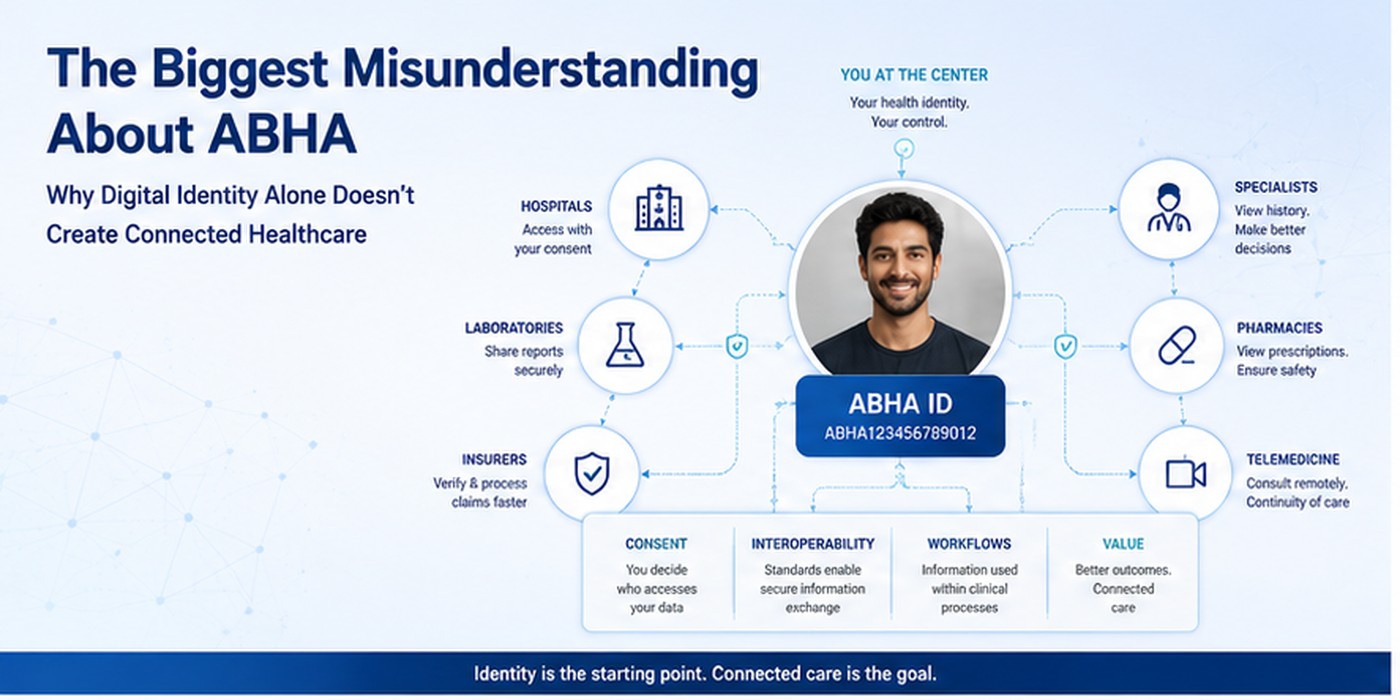
Why Digital Identity Alone Doesn't Create Connected Healthcare Executive Summary When people first hear about the Ayushman Bharat Health Acc...
Why Digital Healthcare Still Feels Fragmented Despite Hundreds of New Solutions Executive Summary Healthcare has never had more software. Ho...
