








Inventory Is Becoming an AI Problem
Why the Future of Retail Depends Less on Stock Counts and More on Intelligent Decisions Executive Summary For decades, inventory management...
Shopify changed the way businesses think about eCommerce, making sophisticated digital commerce accessible to organizations of every scale. Over time, enterprise commerce introduces a different challenge: connecting Shopify to an ERP, PIM, CRM, POS, warehouses, payment gateways, marketplaces, logistics platforms, and AI intelligence.
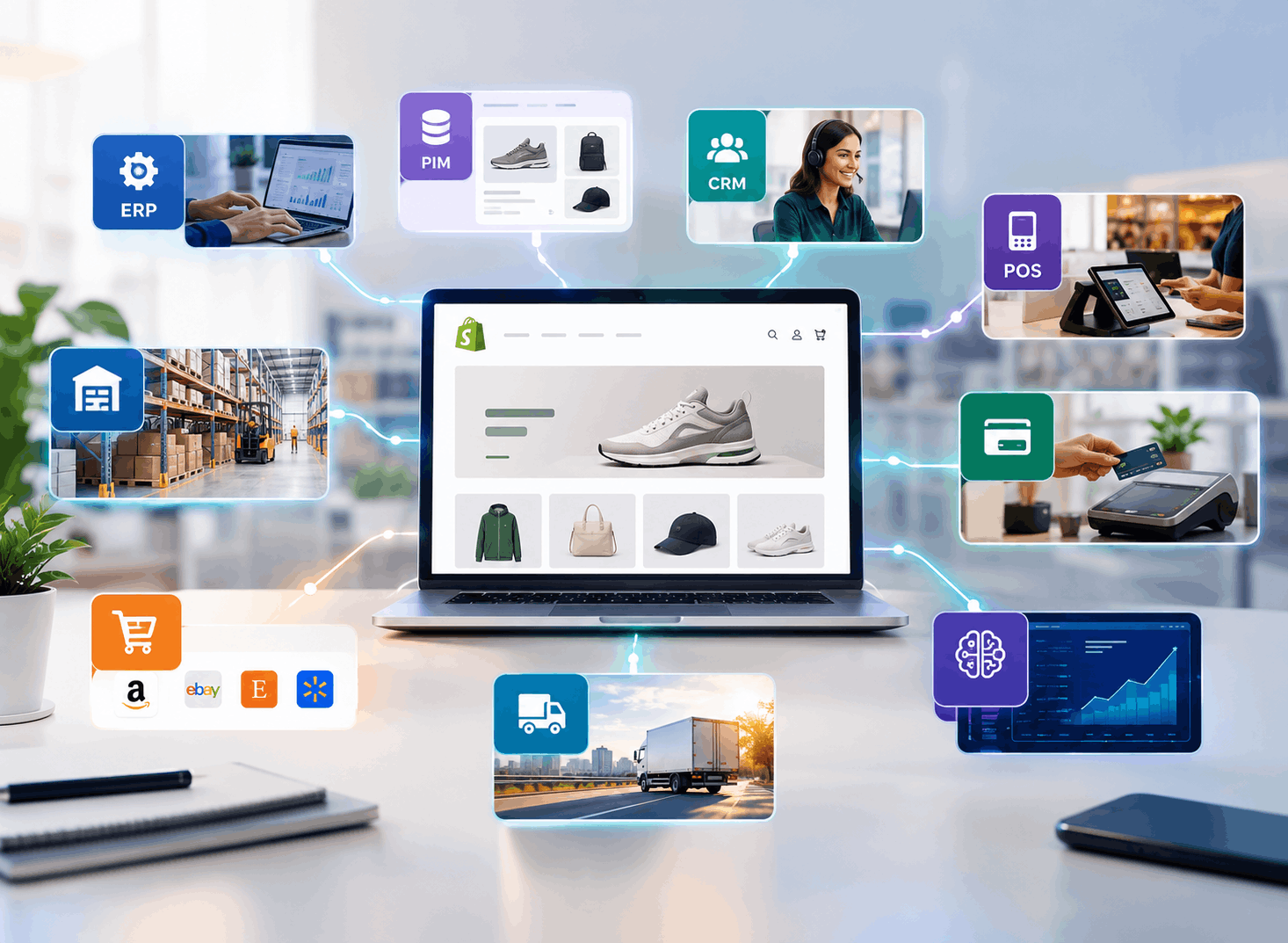
Shopify changed the way businesses think about ecommerce. It made sophisticated digital commerce accessible to businesses that previously needed large development teams and expensive enterprise platforms. Over time, Shopify has evolved from an ecommerce storefront platform into an important component of increasingly sophisticated commerce ecosystems. But enterprise commerce introduces a different challenge. A growing organization rarely needs just a Shopify store. It may need Shopify connected to an ERP, PIM, CRM, POS, warehouses, payment providers, marketplaces, logistics platforms, customer data systems, analytics and AI services. At that point, the question is no longer:
How do we customize Shopify?
The more important question becomes:
What should Shopify own within our overall commerce architecture?
That distinction is critical. Shopify can be the centre of a commerce ecosystem without necessarily being the system responsible for every commerce capability. This paper explores how enterprises can architect Shopify as part of a broader, connected and increasingly composable commerce ecosystem. The objective is not to argue for or against Shopify. It is to understand where Shopify fits, where surrounding architecture becomes necessary, and how enterprises can scale without turning Shopify customizations into another monolith.
Building a connected and increasingly composable commerce ecosystem around Shopify.

Building clear ownership across business capabilities as Shopify becomes part of a larger commerce ecosystem.
Explore how Shopify evolves from a storefront into an enterprise commerce platform, with clear ownership of business capabilities and systems.
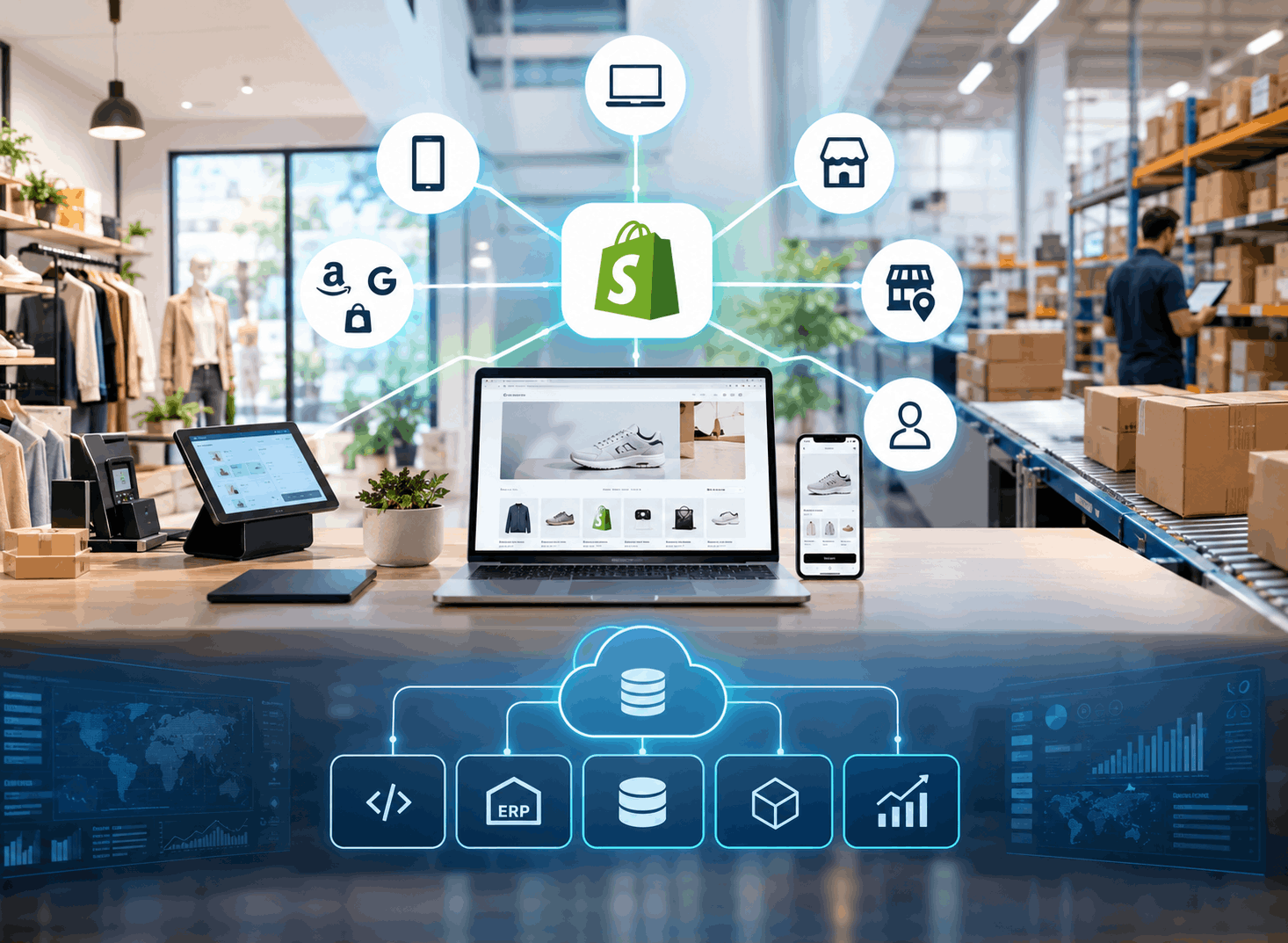
Connecting digital and physical experiences through marketplaces, payments, and a coherent commerce data architecture.
Learn how APIs, ERP integration, headless architecture, product data, and inventory ownership shape a scalable Shopify enterprise architecture.

Connecting Shopify with physical retail, marketplaces, payments, and commerce data across channels.
Explore how Shopify connects with POS, store inventory, customer identity, fulfilment, loyalty, marketplaces, payment providers, and enterprise commerce data to create continuity across digital and physical experiences.
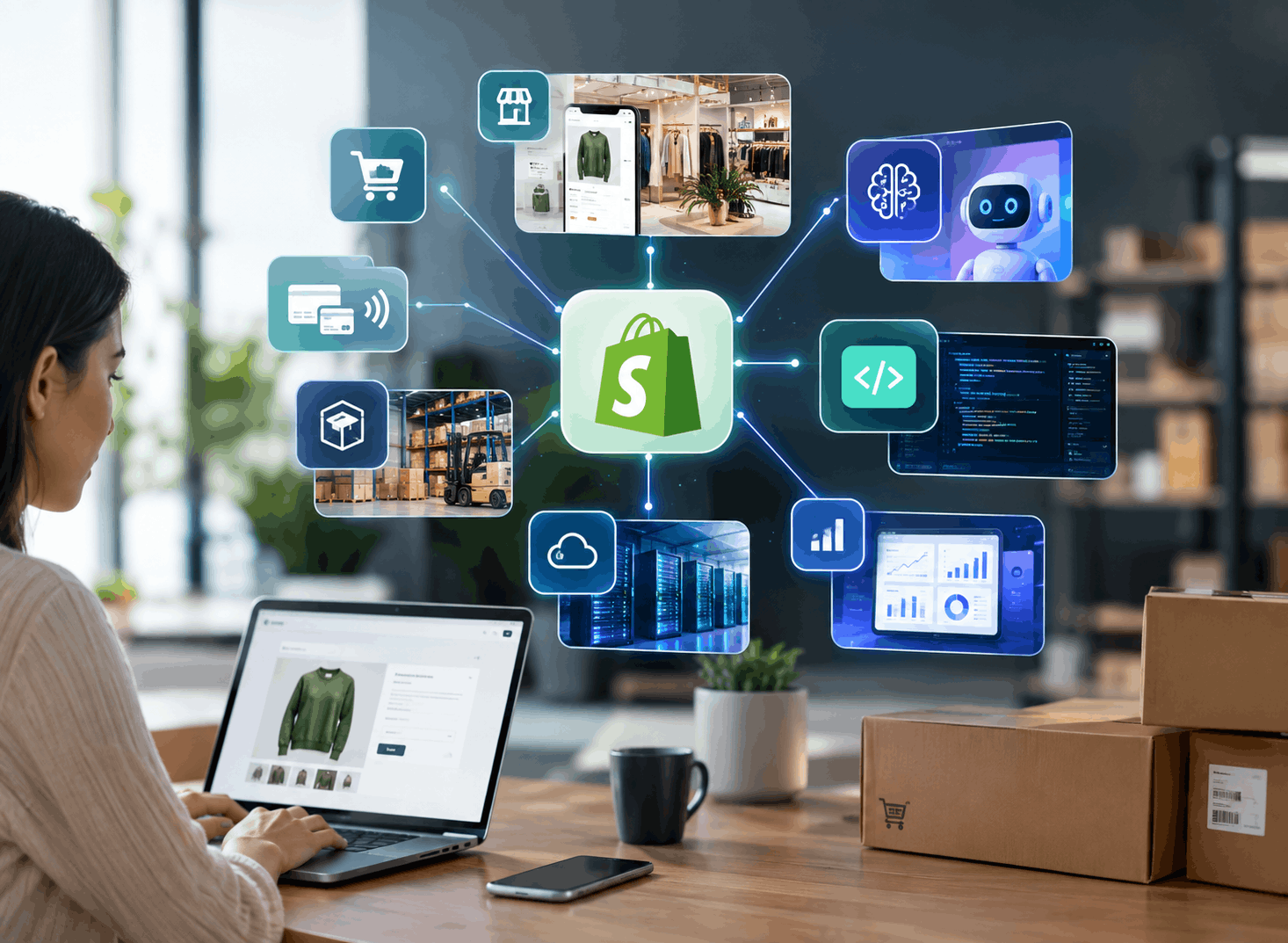
Building composable commerce capabilities and governed AI services around Shopify.
Explore how Shopify becomes one component of a larger composable architecture, where commerce capabilities, governed APIs, AI agents, and deliberate build, buy, and connect decisions support an adaptable enterprise ecosystem.

Preparing for adaptive commerce through progressive modernization, connected capabilities, and CommerceFabric™.
Explore progressive Shopify modernization, a reference enterprise architecture, and how CommerceFabric™ connects, modernizes, and extends existing commerce ecosystems.
Shopify has made ecommerce easier, but enterprise architecture must make commerce adaptable. These are different objectives that require an architecture designed for long-term flexibility.
Shopify will increasingly operate alongside ERP, CRM, PIM, OMS, WMS, POS, payment providers, marketplaces, logistics systems, data platforms, and AI services. Enterprise commerce must connect these systems without creating one large dependency.
The architecture should follow four principles: connect what already works, separate what needs to evolve, build what differentiates, and orchestrate what spans systems. This allows each capability to evolve without disrupting the wider ecosystem.
The objective is not to replace Shopify. It is to ensure that Shopify works intelligently within the broader commerce ecosystem without carrying the entire weight of enterprise commerce.
Whether evaluating progressive Shopify Plus modernization, decoupling ERP and WMS dependencies, or designing an AI-native composable commerce ecosystem, our engineering team can help.
Pre-built accelerators and cloud-native frameworks purpose-engineered to bridge legacy systems into modern unified commerce.

Autonomous Retail Infrastructure
AI-powered stores
Computer Vision
Smart Shelves
RFID
Smart Carts
Autonomous Checkout

Unified Commerce Infrastructure
Shopify Plus
Headless Commerce
ONDC
Marketplace Platforms
D2C
B2B Commerce

Intelligent Payment Infrastructure
Stripe
PayPal
UPI
Split Payments
Marketplace Settlements
Payment Orchestration
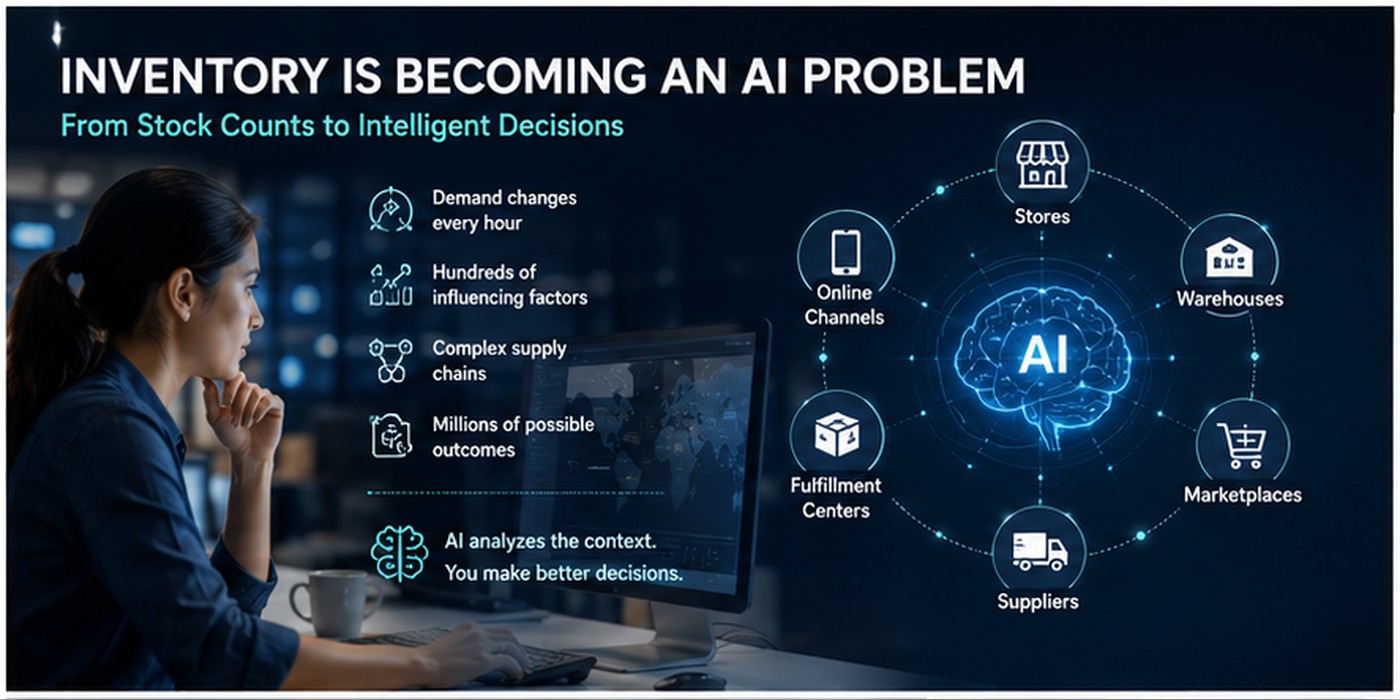
Why the Future of Retail Depends Less on Stock Counts and More on Intelligent Decisions Executive Summary For decades, inventory management...
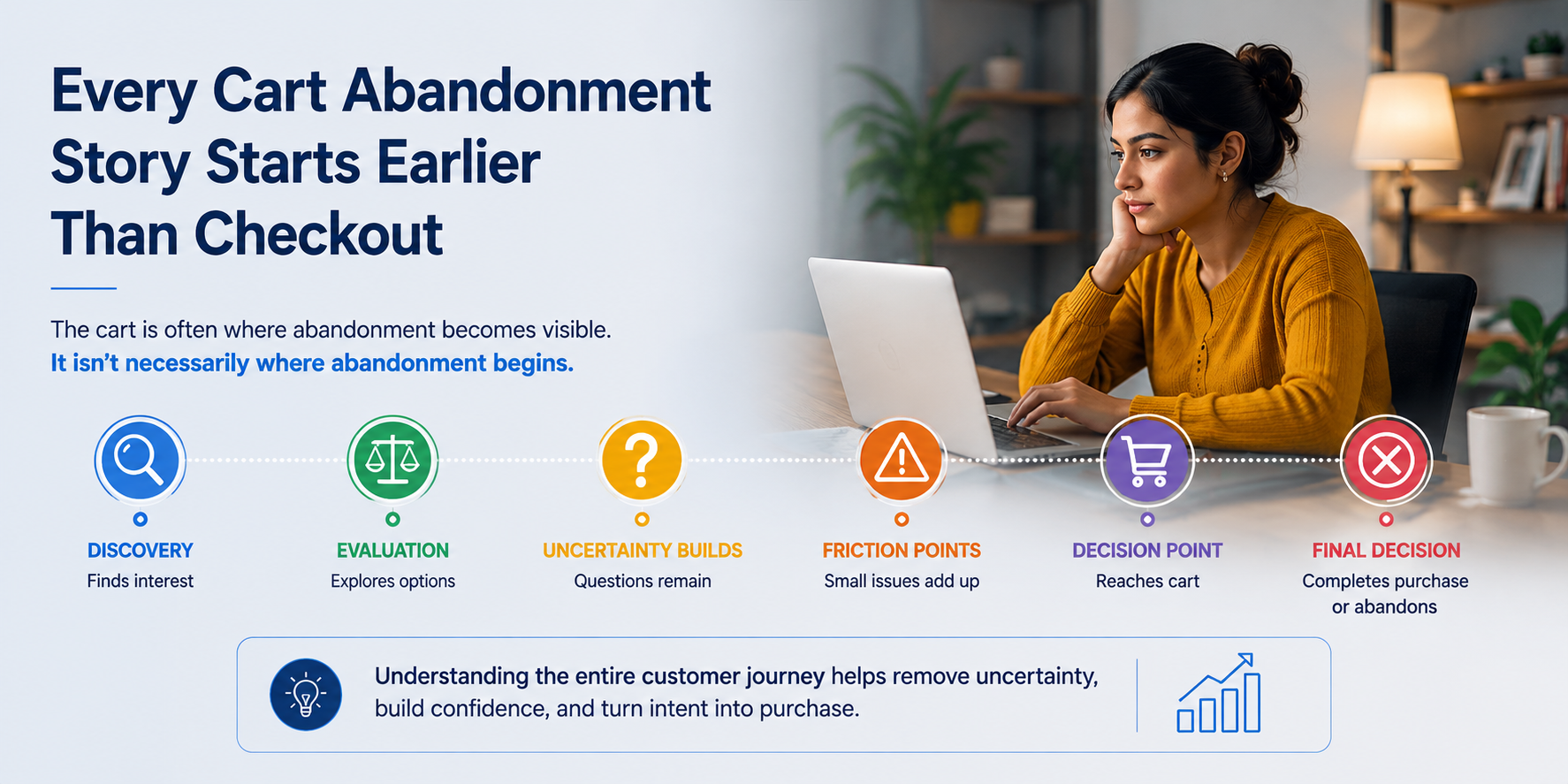
Why retailers should stop treating the cart as the problem There is a familiar conversation in eCommerce. The conversion rate has dropped. T...
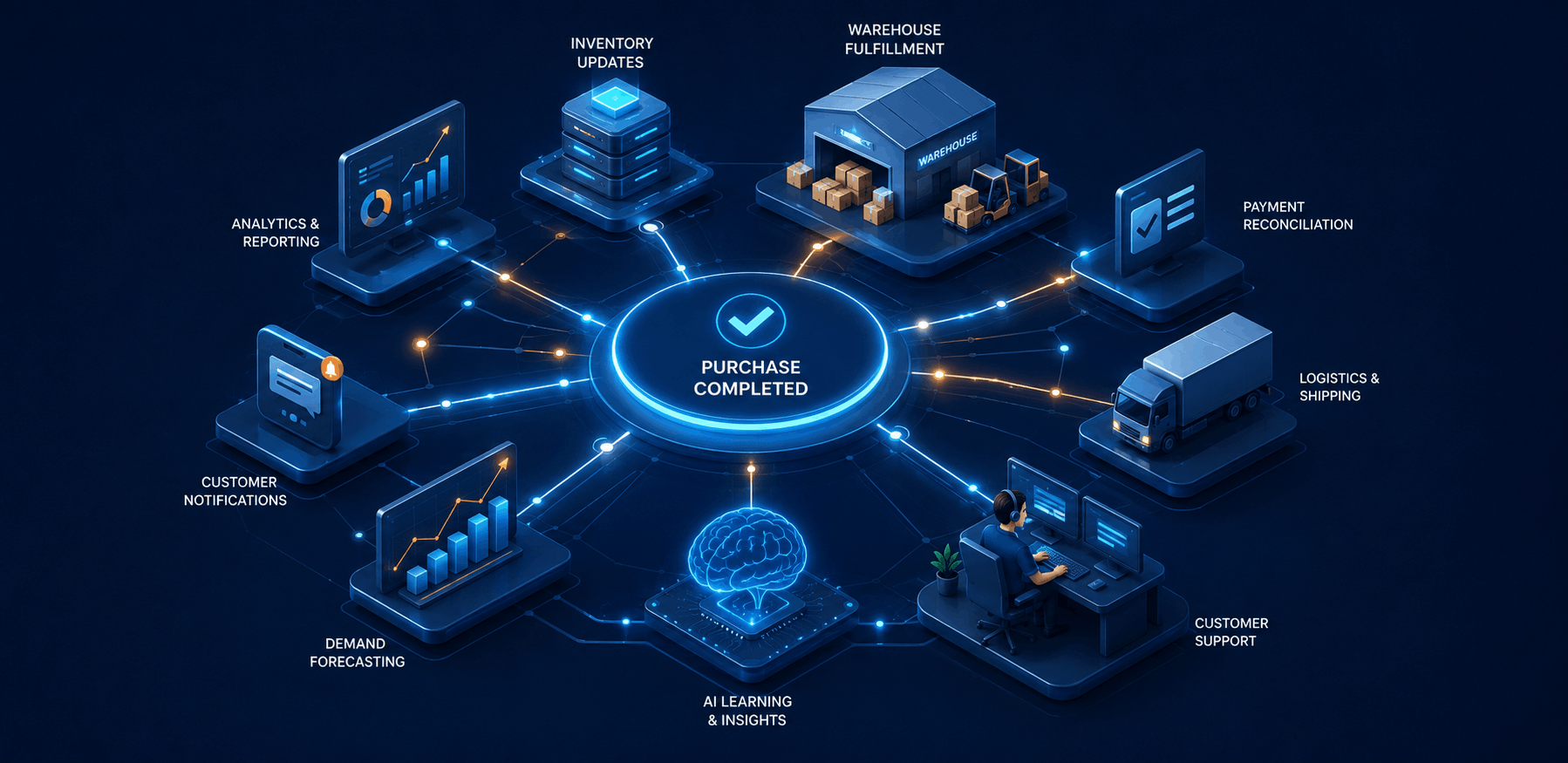
Why the Greatest Opportunities in Commerce Start When the Payment Is Complete Executive Summary For decades, retailers have invested heavily...
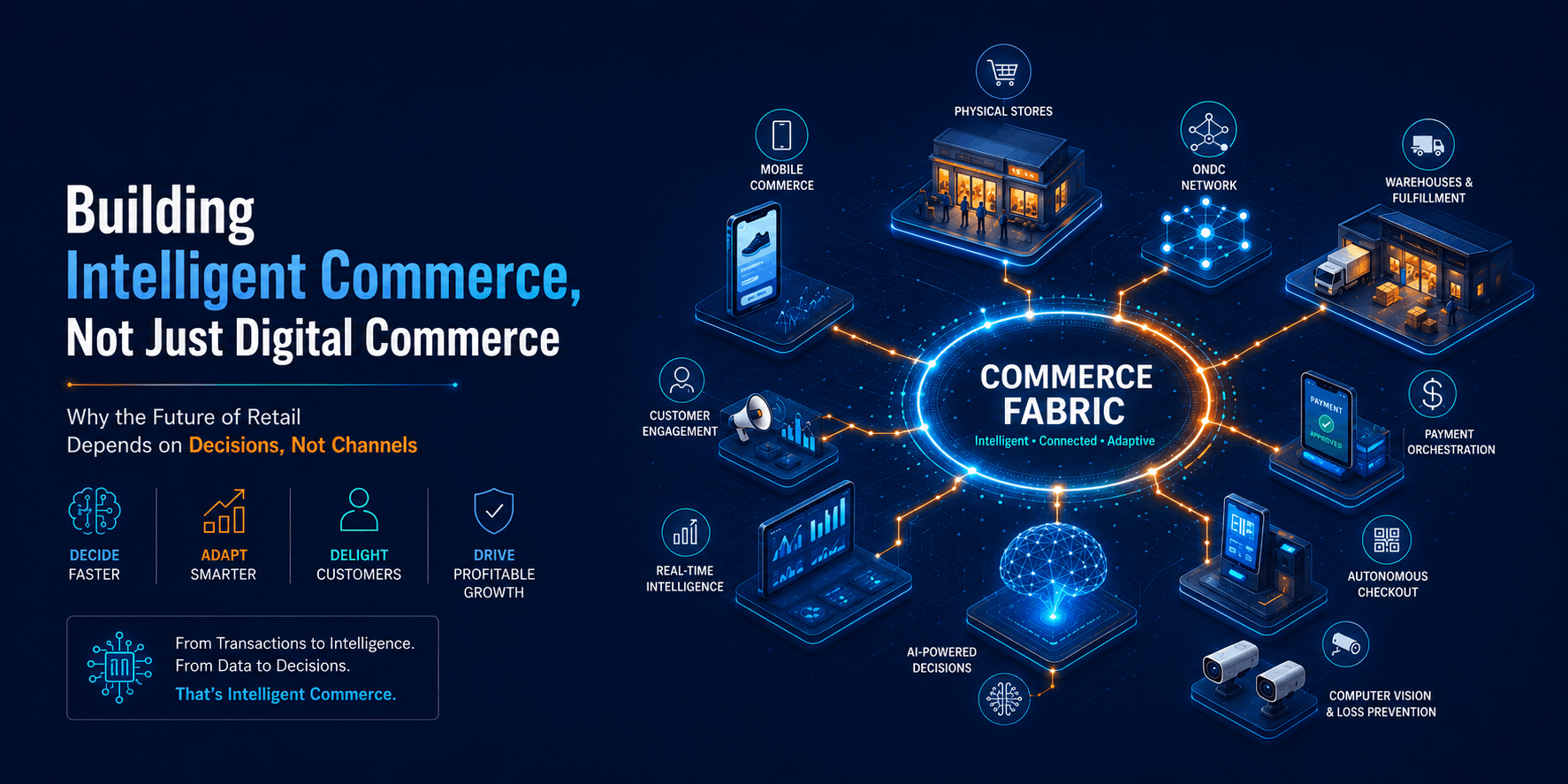
Why the Future of Retail Depends on Decisions, Not Channels Executive Summary For the past two decades, retailers have pursued digital trans...
