








Every AI Project Has One Constraint Nobody Mentions
Why Context, Not Models, Determines Success Executive Summary Every AI project begins with excitement. The conversation quickly turns to mod...

For years, digital health initiatives have focused on one primary objective: connect healthcare data.
Electronic Medical Records (EMRs).
Health Information Exchanges (HIEs).
FHIR APIs.
ABDM.
Cloud platforms.
Interoperability standards.
All of these investments have dramatically improved the ability to exchange information.
But healthcare still feels fragmented.
Patients repeat their stories.
Clinicians chase reports.
Specialists make decisions with incomplete context.
Care transitions remain inconsistent.
Why?
Because healthcare is not fundamentally a data problem.
It is a decision problem.
Every diagnosis, referral, prescription, discharge, and follow-up represents a decision made using available information at a particular moment in time.
Sharing data enables those decisions.
It does not improve them.
The next evolution of connected healthcare is not simply connecting records.
It is connecting decisions across the entire continuum of care.

Patients rarely visit a hospital because they want access to data.
They seek answers.
Should I be admitted?
Do I need surgery?
Is this medication appropriate?
Can I recover at home?
Should I see a specialist?
These are decisions.
Clinical information exists to support them.
Yet digital transformation projects often measure success by the amount of data exchanged rather than the quality or speed of clinical decision-making.
Healthcare does not improve because more records move between systems.
It improves because better decisions happen sooner.
Modern healthcare generates extraordinary amounts of information.
Laboratory reports.
Medical imaging.
Vital signs.
Wearable devices.
Prescriptions.
Clinical notes.
Remote monitoring.
The challenge is no longer collecting information.
It is determining what matters.
A physician reviewing hundreds of pages of historical records is not experiencing connected care.
They are experiencing information overload.
Connected healthcare should surface the most relevant context for the decision being made-not simply expose more data.
Consider a typical patient journey.
A primary physician orders diagnostic tests.
A radiologist interprets imaging.
A specialist recommends treatment.
A pharmacist verifies medication.
A nurse coordinates discharge.
Each transition transfers information.
More importantly, each transition transfers responsibility for the next decision.
When those decision boundaries are poorly connected, delays occur.
Patients repeat tests.
Medication conflicts increase.
Follow-ups are missed.
Healthcare becomes fragmented not because information disappeared-but because decisions became disconnected.
Artificial Intelligence is often described as the future of healthcare.
That is true-but only when its role is clearly understood.
AI should not become another source of clinical complexity.
Its purpose is to reduce uncertainty.
Prioritize relevant information.
Identify potential risks.
Recommend evidence-based pathways.
Highlight unusual patterns.
Surface missing clinical context.
Ultimately, the decision remains with the clinician.
The objective is augmented intelligence-not autonomous healthcare.
Connected care requires connected human judgment, with AI acting as an intelligent assistant rather than an independent authority.
A diagnosis alone does not improve outcomes.
Action does.
Prescriptions must reach pharmacies.
Referrals must reach specialists.
Discharge instructions must reach patients.
Remote monitoring alerts must reach clinicians.
Every decision must trigger the next appropriate workflow.
This is where many healthcare platforms fall short.
They exchange information successfully but fail to orchestrate the actions that should follow.
Healthcare is transformed when decisions automatically activate the workflows needed to deliver care.

At Prologic, we see connected healthcare as a network of connected decisions rather than connected databases.
Every patient interaction should move seamlessly from observation to assessment, from assessment to action, and from action to measurable outcomes.
HealthFabric is designed around this philosophy.
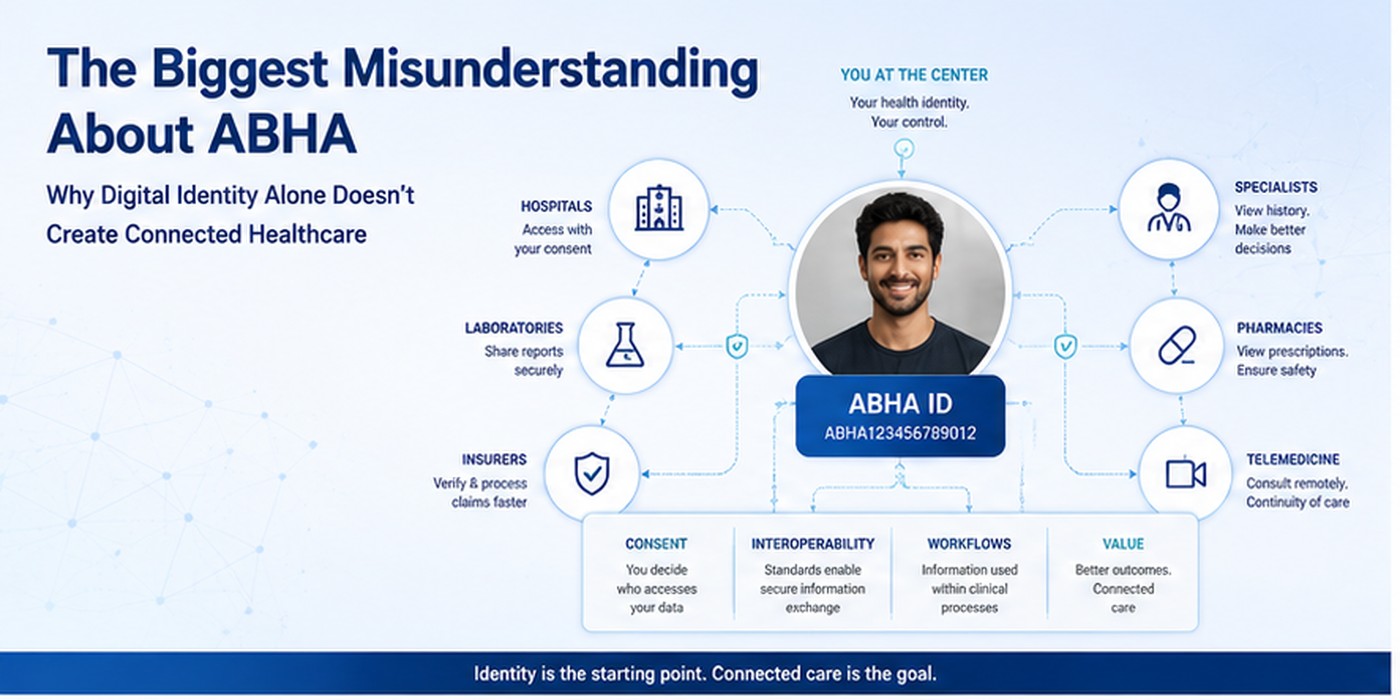
Identity establishes trust.
Interoperability enables information exchange.
Workflow coordinates execution.
Artificial intelligence strengthens decision support.
Together, these capabilities create a healthcare platform that improves not only information flow but clinical decision flow.
Traditional digital health metrics include:
Important-but incomplete.
Healthcare organizations should also ask:
How quickly were critical decisions made?
How often were duplicate tests avoided?
How much faster were referrals completed?
How many clinical decisions benefited from complete patient context?
How often were follow-up actions completed on time?
These measures better reflect the quality of connected care.
Before investing in another integration project, ask:
The answers determine whether technology creates real clinical value.

Healthcare has made enormous progress connecting information.
The next challenge is connecting judgment.
Patients do not experience APIs.
They experience decisions.
Whether treatment begins quickly.
Whether providers collaborate effectively.
Whether care feels coordinated.
Every digital health platform should ultimately be evaluated by a simple question:
Did it help the right decision happen at the right time?
Because healthcare is not transformed when systems exchange data.
It is transformed when people make better decisions together.
Why Context, Not Models, Determines Success Executive Summary Every AI project begins with excitement. The conversation quickly turns to mod...
Why Digital Identity Alone Doesn't Create Connected Healthcare Executive Summary When people first hear about the Ayushman Bharat Health Acc...
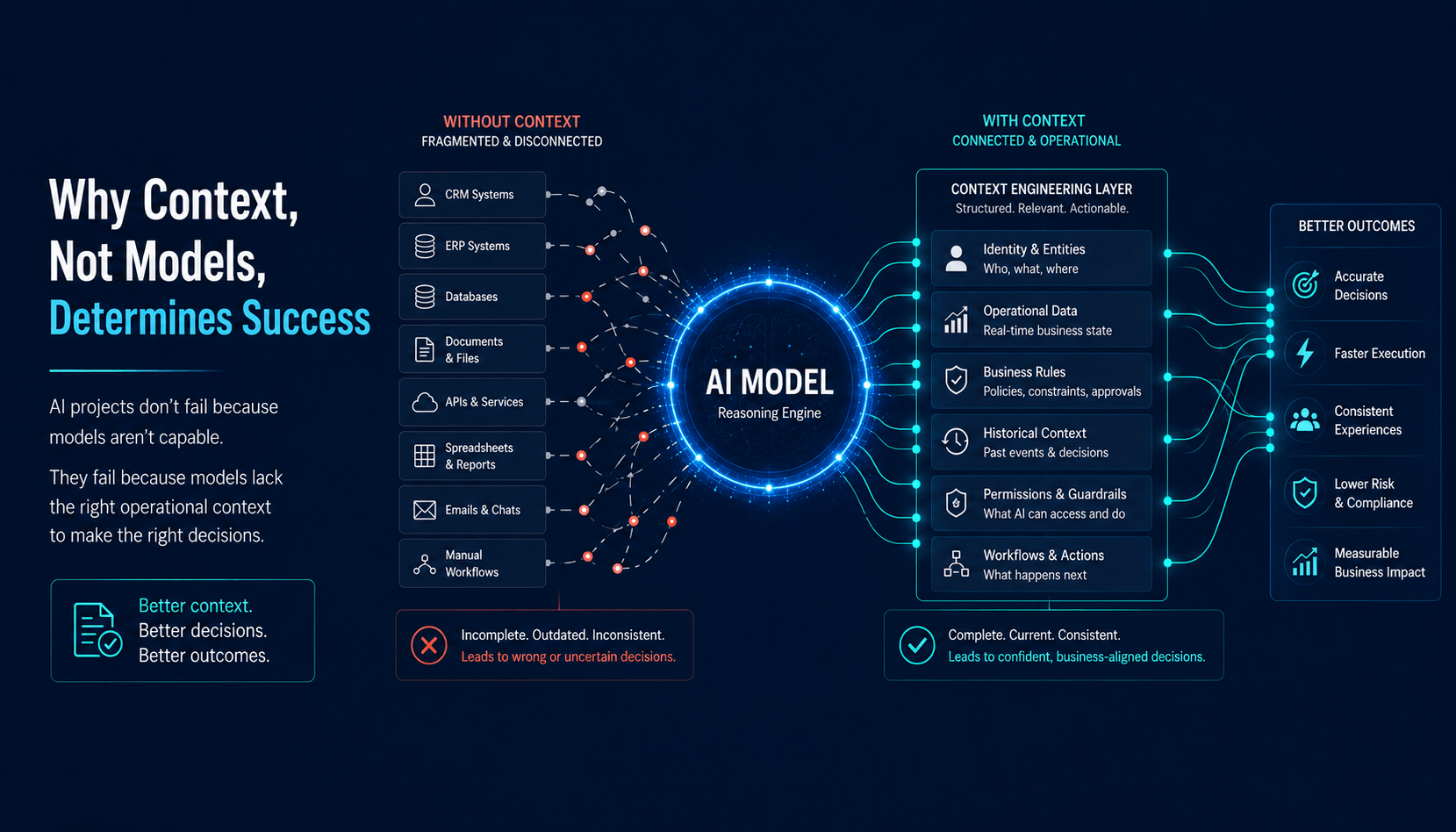
Every AI Project Has One Constraint Nobody Mentions
The Biggest Misunderstanding About ABHA
