










Healthcare Doesn’t Need More Apps. It Needs Connected Workflows.
Why Digital Healthcare Still Feels Fragmented Despite Hundreds of New Solutions Executive Summary Healthcare has never had more software. Ho...
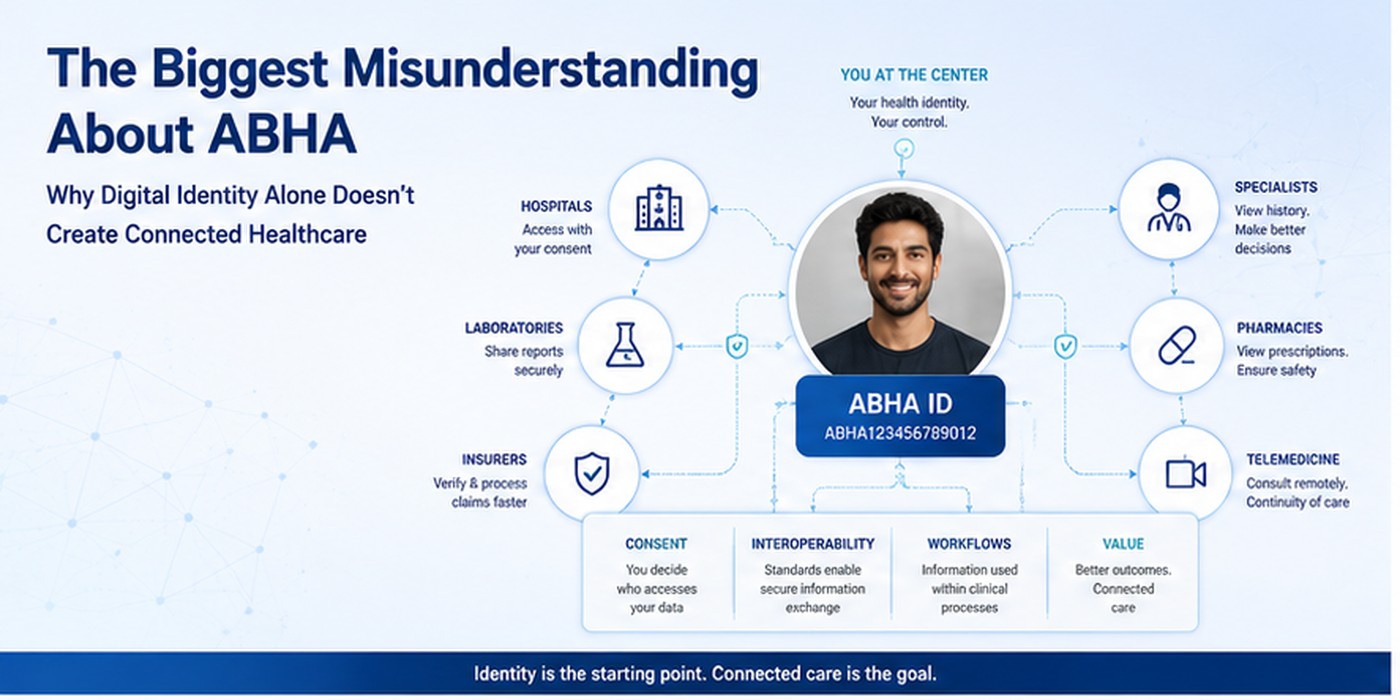
When people first hear about the Ayushman Bharat Health Account (ABHA), they often compare it to Aadhaar or assume it is simply another digital identifier issued by the government.
That perception is understandable—but incomplete.
ABHA is not valuable because it assigns every individual a unique health identifier. Its real value lies in what that identity enables: trusted, consent-driven exchange of health information across a connected healthcare ecosystem.
Without connected providers, interoperable systems, patient consent, and workflow integration, an ABHA number is little more than a digital identifier.
Healthcare organizations sometimes celebrate the number of ABHA accounts they have created. Patients are encouraged to generate their ABHA IDs, and dashboards proudly display adoption metrics.
Yet an important question is often overlooked:
What meaningful healthcare experience became possible because that ABHA existed?
Digital identity is infrastructure.
Connected care is the outcome.
Confusing the two is one of the biggest misconceptions slowing the adoption of India’s digital health ecosystem.
Every digital ecosystem begins with identity.
Banking has customer identities.
Telecommunications has subscriber identities.
Commerce has customer accounts.
Healthcare also requires trusted digital identity.
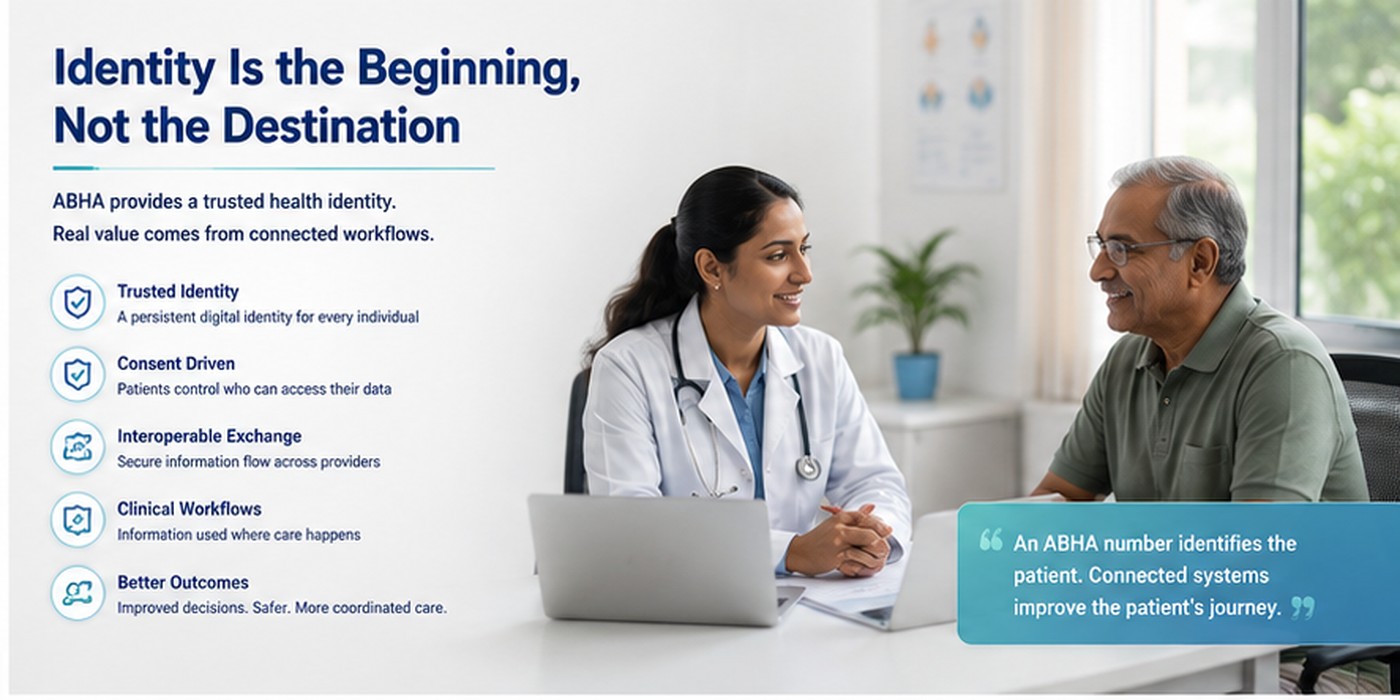
ABHA solves this foundational challenge by giving every individual a persistent health identity that can be recognized across participating healthcare organizations.
But identity alone does not improve healthcare. Knowing who the patient is does not automatically improve diagnosis. It does not eliminate repeated tests, It does not connect specialists, It does not reduce administrative burden.
Those improvements occur only when identity becomes part of a larger connected workflow. Identity opens the door.
Healthcare still has to walk through it.
Imagine walking into a hospital and presenting your ABHA number.
If the hospital cannot discover your previous records, obtain your consent, exchange information with another provider, or incorporate that data into the clinician’s workflow, the experience changes very little.
The identifier worked.
The healthcare journey did not.
The real power of ABHA emerges when it becomes the trusted link between people, providers, consent, and interoperable health records.
Identity is necessary. It is not sufficient.
Unlike many other industries, healthcare cannot prioritize convenience over trust.
Patients must know:
This is why consent is central to ABDM.
ABHA establishes identity, Consent establishes trust, Interoperability establishes communication, Clinical workflows establish value.
Removing any one of these layers weakens the entire experience.
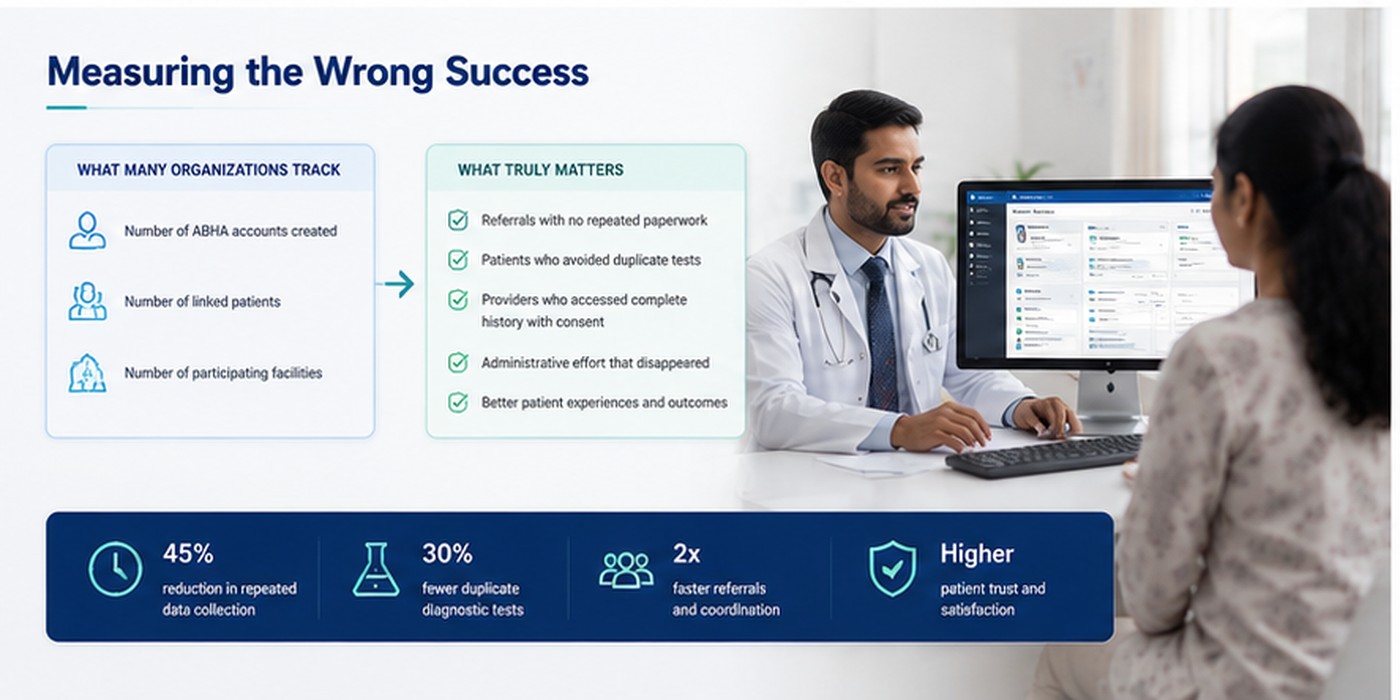
Many organizations celebrate operational metrics such as:
These numbers demonstrate adoption. They do not necessarily demonstrate connected care.
More meaningful questions include:
How many referrals required no repeated paperwork?
How many patients avoided duplicate diagnostic tests?
How many providers accessed complete clinical history with patient consent?
How much administrative effort disappeared?
Healthcare transformation should ultimately be measured through better patient journeys- not larger registration numbers.
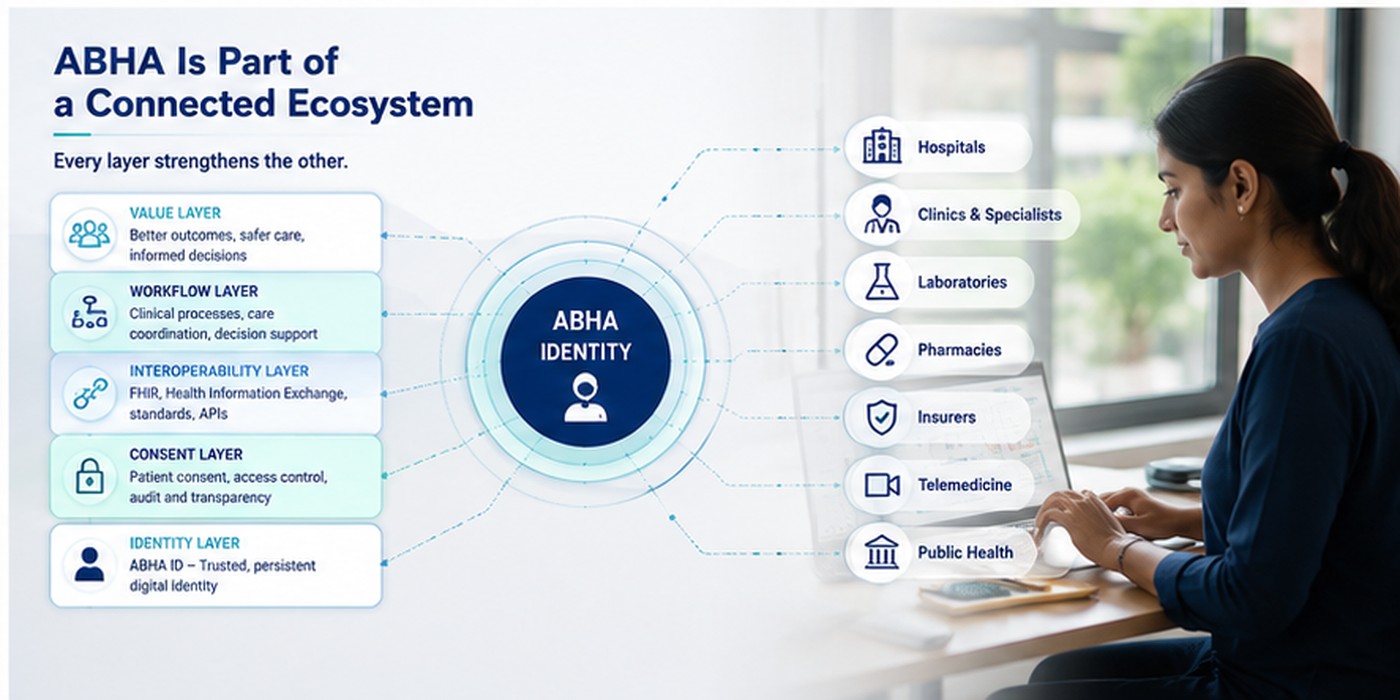
ABHA should never be viewed in isolation.
Its value increases when combined with:
Each component contributes to a connected healthcare experience.
Removing any one of them reduces the effectiveness of the others.
Healthcare infrastructure behaves as a system- not a collection of independent technologies.
At Prologic Technologies, we encourage healthcare organizations to think beyond digital identity.
The objective is not to maximize ABHA registrations. The objective is to reduce friction across the patient’s healthcare journey.
ABHA enables trusted identification.
HealthFabric focuses on engineering the workflows that transform identity into coordinated care. That includes referrals, Diagnostics, Follow-up consultations, Medication continuity, Remote care, Clinical collaboration.
Identity becomes valuable only when it improves these experiences.
Before launching another ABHA campaign, ask:
These questions move the conversation from technology adoption to healthcare transformation.
Digital identity is one of the most important foundations of connected healthcare. But foundations are rarely the final objective.
Patients do not celebrate digital identifiers,
they celebrate shorter waiting times.
Fewer repeated tests.
Better coordinated treatment.
Safer care and More informed clinicians.
ABHA makes these outcomes possible.
– It does not guarantee them.
Healthcare becomes connected not when every patient has a digital identity, but when that identity enables trusted information to flow effortlessly across the entire continuum of care.
Why Digital Healthcare Still Feels Fragmented Despite Hundreds of New Solutions Executive Summary Healthcare has never had more software. Ho...
Why Sharing Data Isn't Enough to Transform Healthcare Executive Summary For years, digital health initiatives have focused on one primary ob...
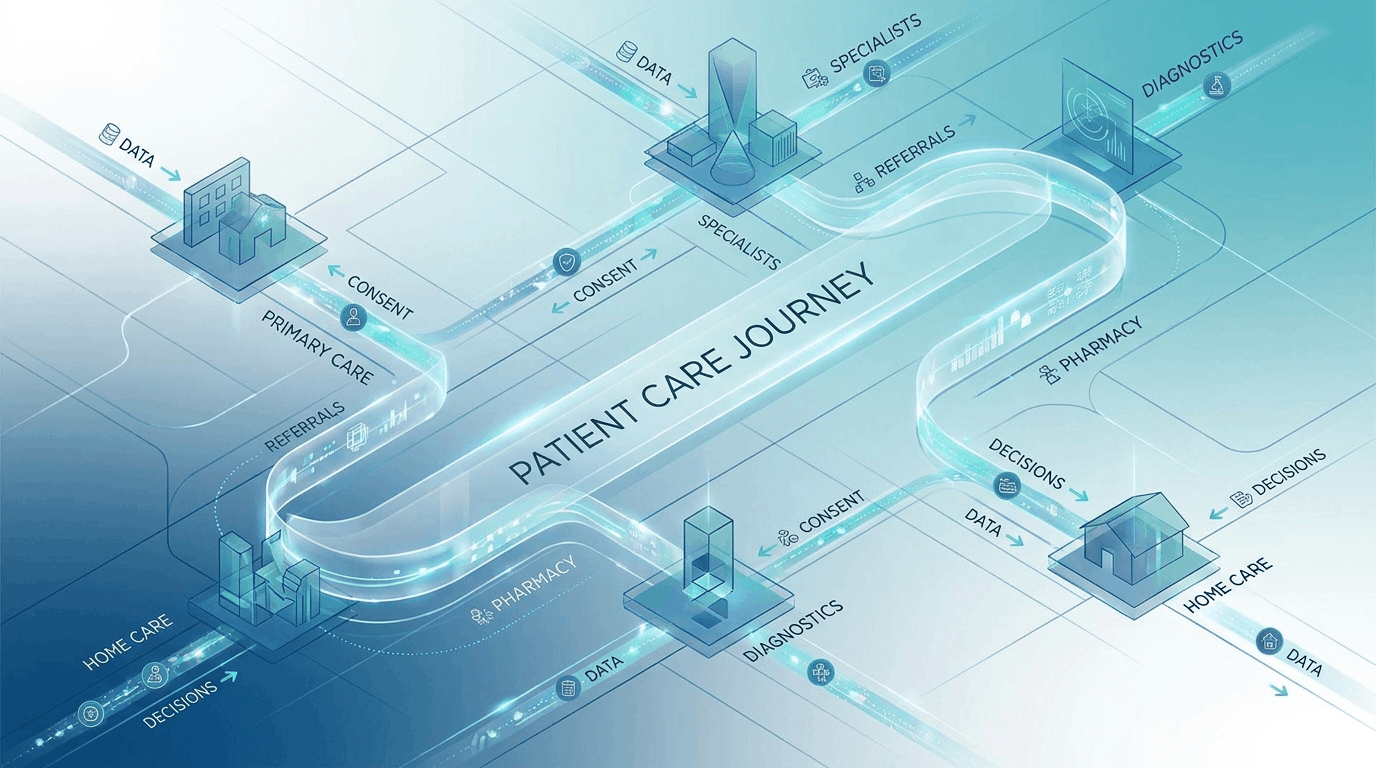
Healthcare Doesn’t Need More Apps. It Needs Connected Workflows.

Connected Care Is Really Connected Decisions
