









Retail AI Begins After Checkout
Why the Greatest Opportunities in Commerce Start When the Payment Is Complete Executive Summary For decades, retailers have invested heavily...
There is a familiar conversation in eCommerce.
The conversion rate has dropped. The analytics team points to checkout. Someone notices that a significant number of customers are adding products to their carts but not completing the purchase.
The immediate reaction is predictable.
Maybe the checkout has too many fields. Perhaps shipping charges are appearing too late. Maybe the payment experience isn’t smooth enough. Perhaps we should send more abandoned-cart emails.
All reasonable questions.
But there’s another question I think retailers should ask first:
Why did the customer lose the confidence to buy?
Because by the time someone reaches the cart, the buying decision has already been forming for quite some time.
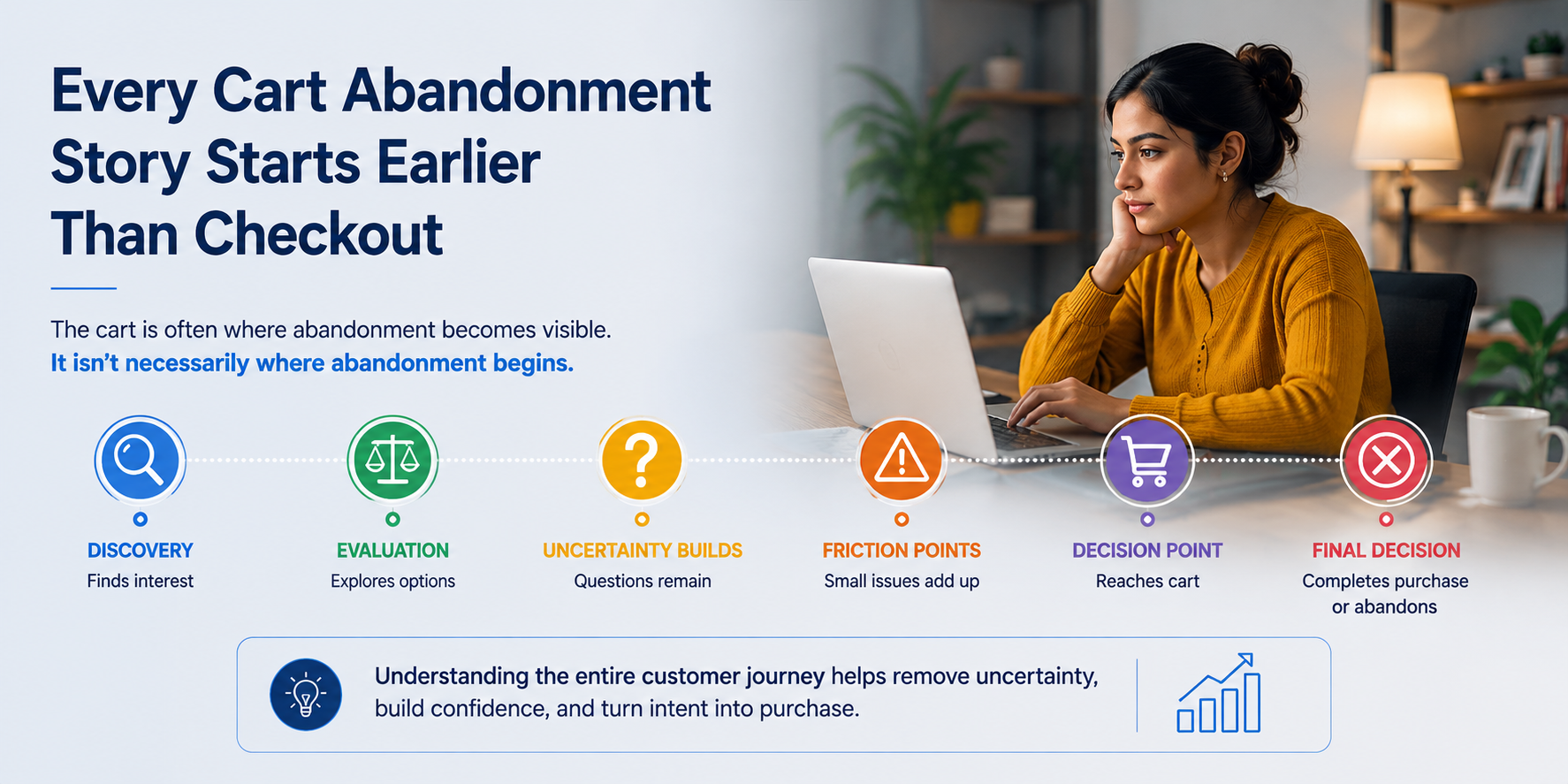
The cart is often where abandonment becomes visible.
It isn’t necessarily where abandonment begins.
This is one of the quirks of digital commerce.
The closer an event is to revenue, the easier it is to obsess over it.
We can measure product views. We can measure add-to-cart events. We can measure checkout starts and completed transactions. We can calculate exactly how many customers disappeared between each stage.
That creates a very clean funnel.
But funnels tell us where people leave.
They don’t necessarily tell us why.
A customer may reach checkout and abandon because shipping suddenly looks expensive. Or because the delivery date is unclear. Or because they’re still uncertain whether the product is right for them.
The checkout screen gets the blame because that’s where the behaviour is recorded.
The uncertainty may have started much earlier.
We’ve all done this.
You find something you’re interested in. You open the product page. Maybe you look at a few photographs, read some reviews and compare it with another product.
You add it to the cart. And then you stop.
Nothing necessarily went wrong.
The website didn’t crash. The payment gateway didn’t fail. Nobody asked you to fill out a twenty-page form. You simply weren’t convinced enough to continue.
Maybe you weren’t sure about the size.
Maybe the product description didn’t answer a basic question.
Maybe the reviews created more doubt than confidence.
Maybe the return policy wasn’t clear.
Or perhaps another retailer made the decision feel easier.
That is an important distinction.
Customers don’t always abandon because the transaction is difficult. Sometimes they abandon because the decision is difficult.
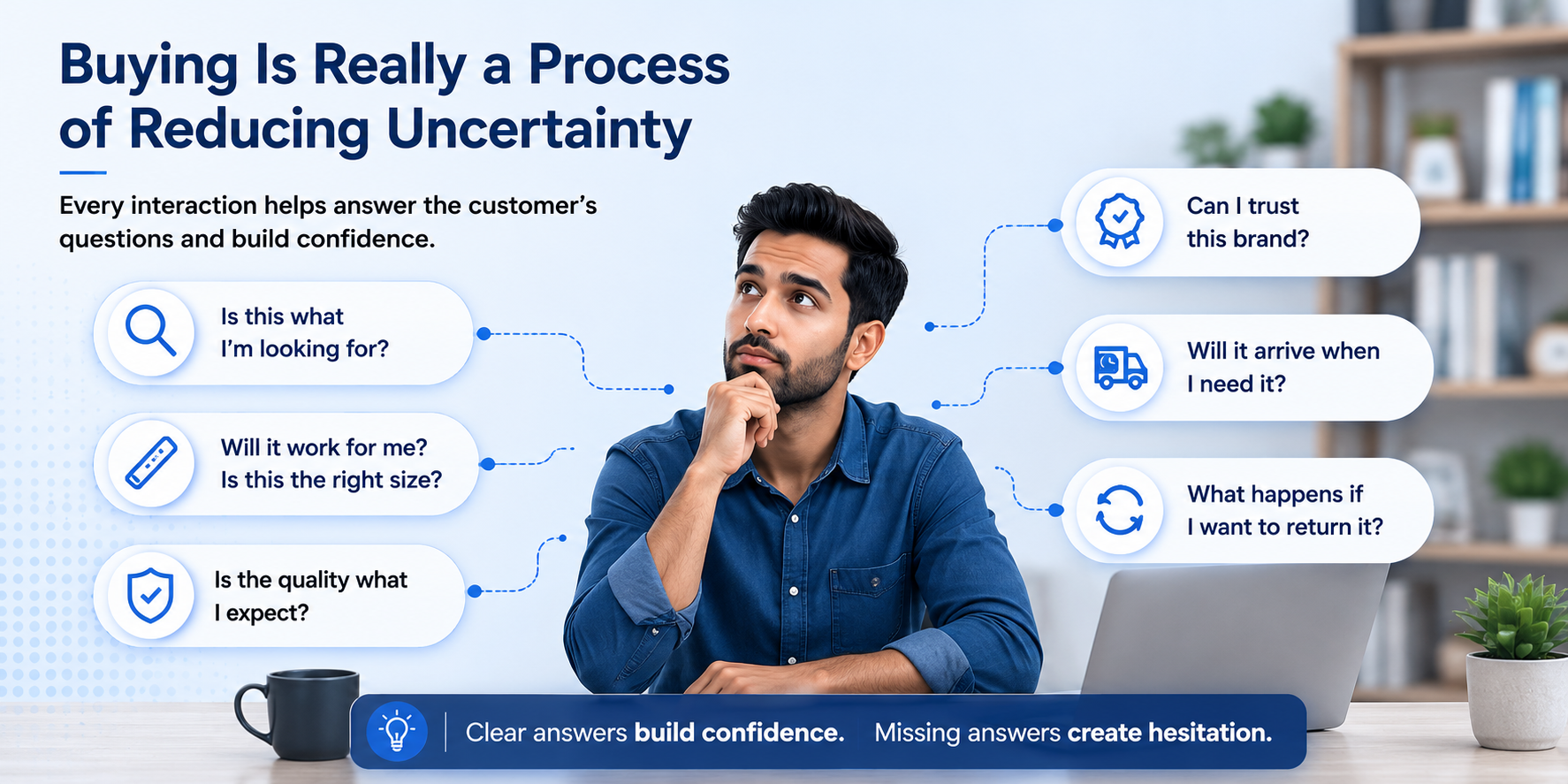
A customer visiting an online store is continuously trying to answer a series of questions.
Is this actually what I’m looking for?
Will it work for me? Is this the right size?
Is the quality what I expect? Can I trust this brand?
Will it arrive when I need it? What happens if I want to return it?
Every product image, description, review, comparison tool, delivery promise and customer-service interaction contributes to answering those questions.
When the answers are clear, confidence builds.
When they’re incomplete or contradictory, uncertainty builds.
And uncertainty has a habit of following the customer all the way to checkout.
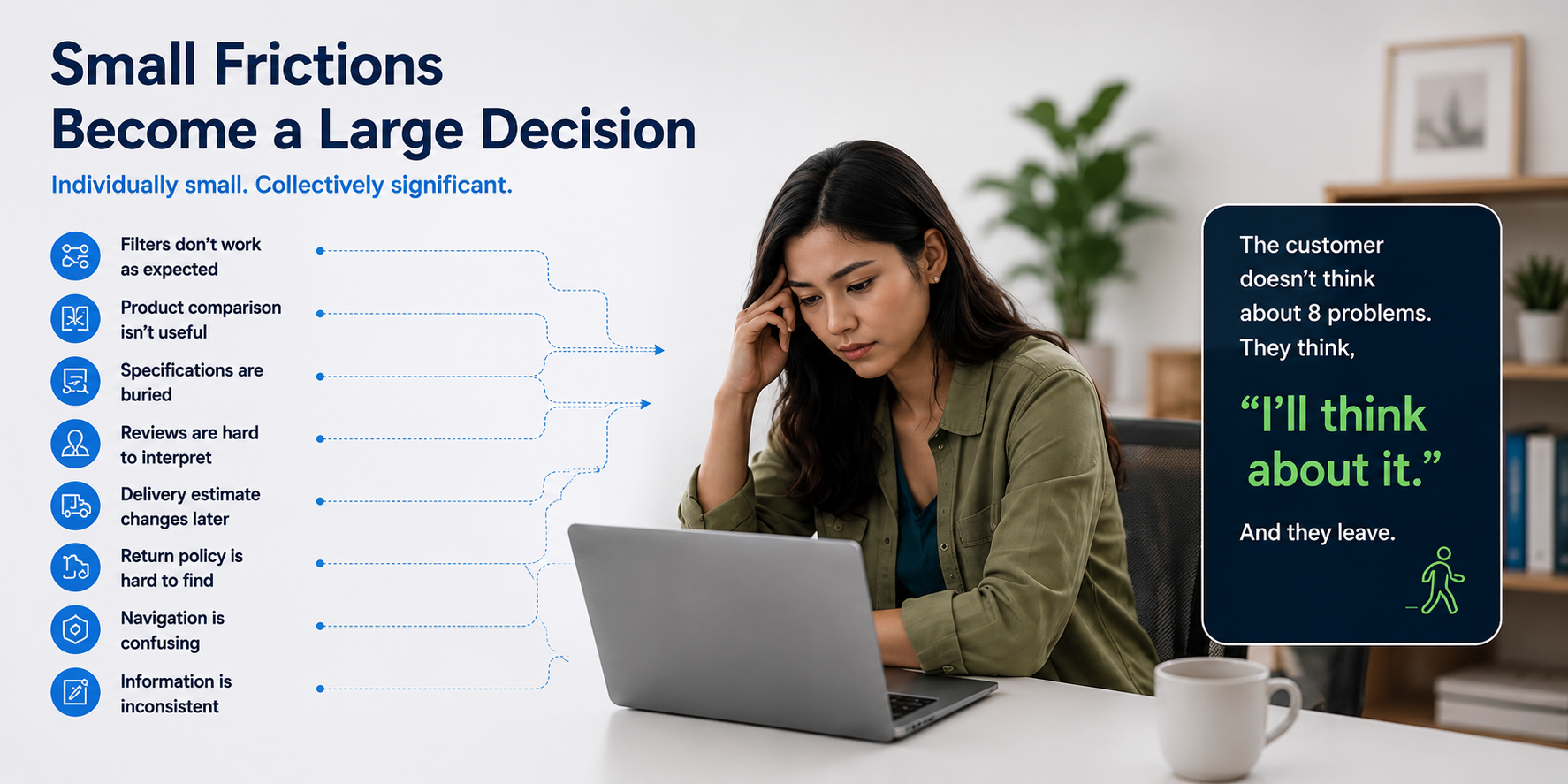
The interesting thing about customer experience is that the individual problems often look insignificant.
A filter doesn’t quite work as expected.
The product comparison isn’t particularly useful.
The specifications are buried. The reviews are difficult to interpret.
The delivery estimate changes after entering a postcode.
The return policy requires hunting through another section of the website.
None of these, individually, necessarily causes abandonment.
But customers don’t experience them individually.
They experience them as one journey.
And every small unresolved question adds another reason to postpone the decision.
Eventually, the customer doesn’t think, “This website has seven separate UX problems.”
They simply think- “I’ll think about it.”
And they’re gone.
Traditional analytics can tell us that a customer viewed six products, changed filters four times and spent eleven minutes on the site before leaving.
That’s useful information.
But intelligent systems can begin asking a more interesting question:
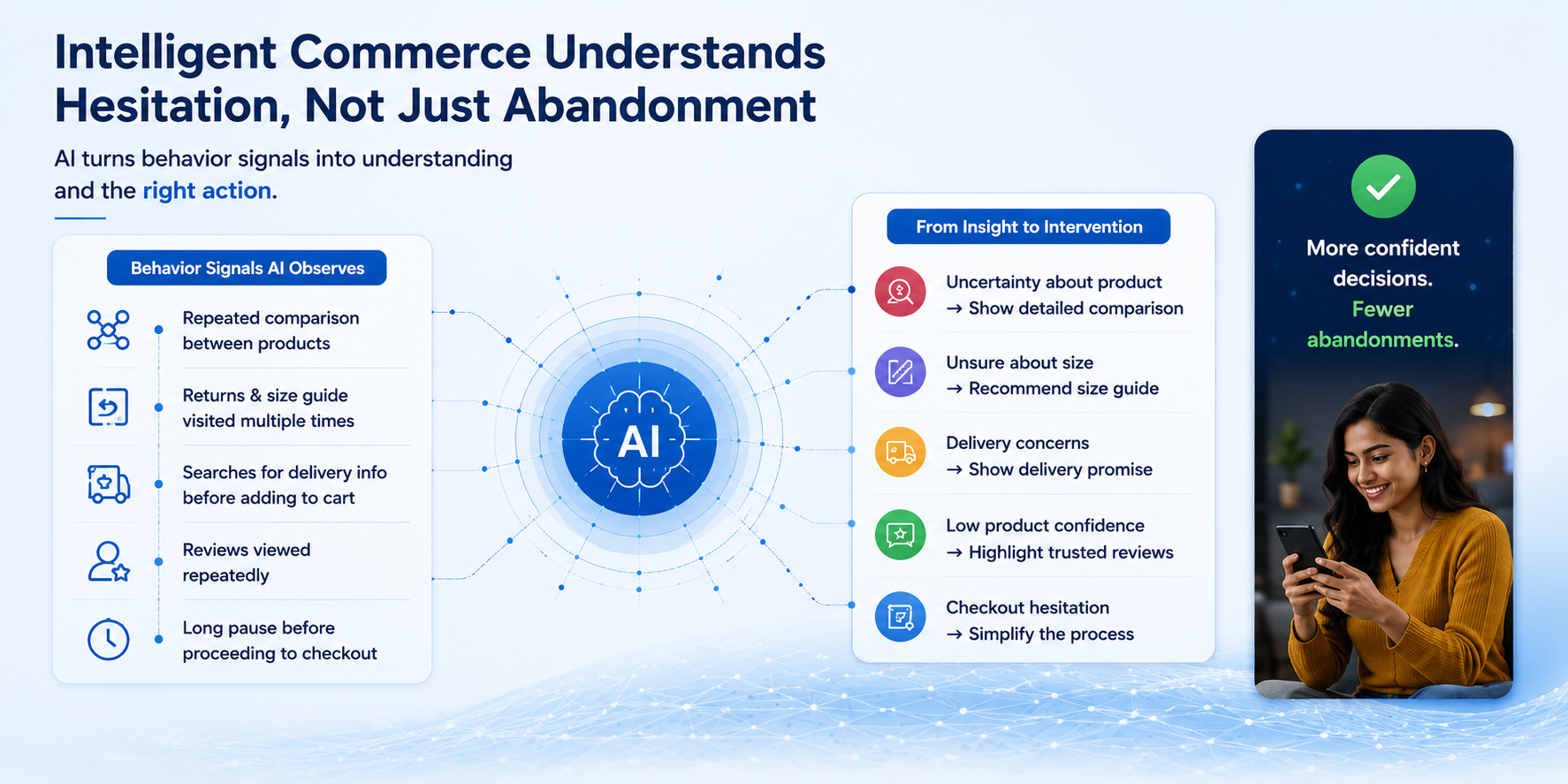
Repeatedly switching between two products might indicate comparison uncertainty.
Returning to the size guide several times might indicate purchase hesitation.
Searching for delivery information before adding to cart might reveal that fulfilment certainty matters more than the retailer expected.
Looking at reviews repeatedly could signal that product confidence is still low. None of these behaviours proves why a customer will abandon.
But collectively, they create signals.
The opportunity for AI isn’t simply to predict abandonment
– It’s to understand the friction that precedes it.
This distinction matters.
A retailer that knows a customer is likely to abandon has learned something useful.
But what happens next?
If the only response is another discount code, the system may be treating every form of hesitation as a pricing problem.
That’s rarely sophisticated enough.
A customer uncertain about sizing needs different help from a customer concerned about delivery.
Someone comparing two products may need better product information.
Someone worried about returns may need clearer policy information.
Someone who simply finds the checkout cumbersome may need a faster transaction.
Intelligence should therefore go beyond prediction.
It should help determine the appropriate intervention.
That’s where commerce systems begin moving from analytics toward decision-making.
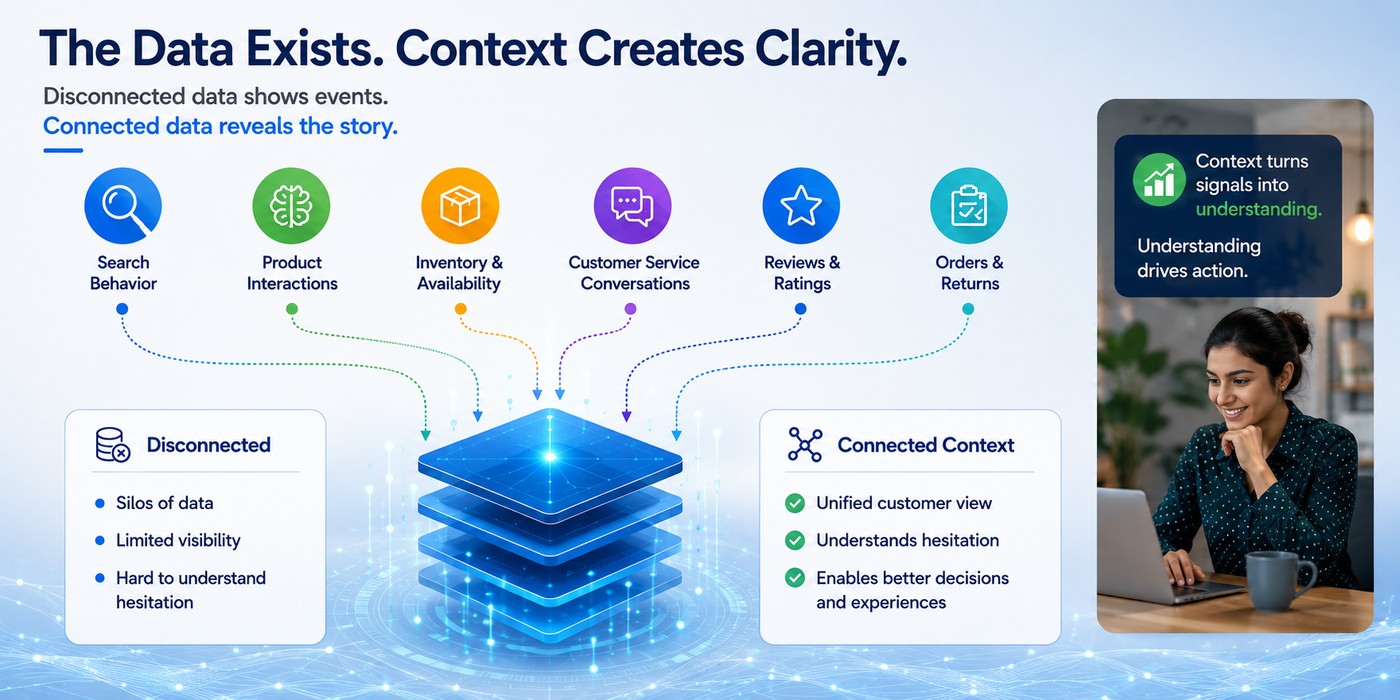
The signals needed to understand customer friction are often already available.
Search behaviour sits in one system, Product interactions in another, Inventory somewhere else.
Customer-service conversations somewhere else, Reviews on another platform, Orders and returns in yet another.
A customer’s hesitation becomes much easier to understand when these signals are considered together. That is why Intelligent Commerce is fundamentally an orchestration problem.
The value doesn’t come from collecting another dashboard- It comes from connecting the signals that already exist and turning them into useful decisions.
At Prologic, we think about the customer journey as a connected system rather than a sequence of isolated screens.
Discovery affects evaluation- Evaluation affects confidence.
Confidence affects purchase- Purchase affects fulfilment.
Fulfilment affects trust- Trust affects the next purchase.
Once you see commerce this way, cart abandonment stops looking like a single conversion problem. It becomes one observable outcome of a much larger system.
The job of technology isn’t simply to push customers through the funnel faster
– It is to remove unnecessary uncertainty along the journey.
There is nothing wrong with improving checkout.
Payment orchestration matters.
Page performance matters.
Guest checkout matters.
Clear shipping costs matter.
But optimizing the final stage while ignoring everything that came before it is a limited strategy.
Imagine spending months improving the checkout experience while customers are still struggling to understand your products.
You may have built a faster way for uncertain customers to reach the same decision.
That’s not transformation- It’s acceleration of the wrong problem.
The better approach is to understand the complete decision journey and identify where confidence begins to deteriorate.
The next generation of commerce platforms won’t simply know what customers purchased.
They’ll increasingly understand the journey that led or failed to lead to the purchase.
What did the customer compare? What information did they seek? Where did they hesitate?
What changed their mind? Which intervention helped?
Which recommendation created confidence? Which friction repeatedly caused customers to leave?
These are much more valuable questions than simply asking how many carts were abandoned yesterday.
– Because once you understand hesitation, you can begin designing it out of the experience.
Cart abandonment will always exist.
Not every customer who adds a product to a cart intends to buy it. Some are browsing. Some are comparing prices. Some change their minds. Some simply aren’t ready.
The goal isn’t to eliminate abandonment.
The goal is to understand the avoidable abandonment created by a poor or uncertain customer experience,
– And that requires looking beyond the cart.
The most intelligent commerce systems won’t wait until a customer disappears to ask what went wrong.
They’ll recognize the signals earlier. They’ll understand the context.
And, where appropriate, they’ll help the customer make a more confident decision. Because the cart is often where abandonment becomes measurable.
The real story usually started much earlier.
Why the Greatest Opportunities in Commerce Start When the Payment Is Complete Executive Summary For decades, retailers have invested heavily...
Why the Future of Retail Depends Less on Stock Counts and More on Intelligent Decisions Executive Summary For decades, inventory management...
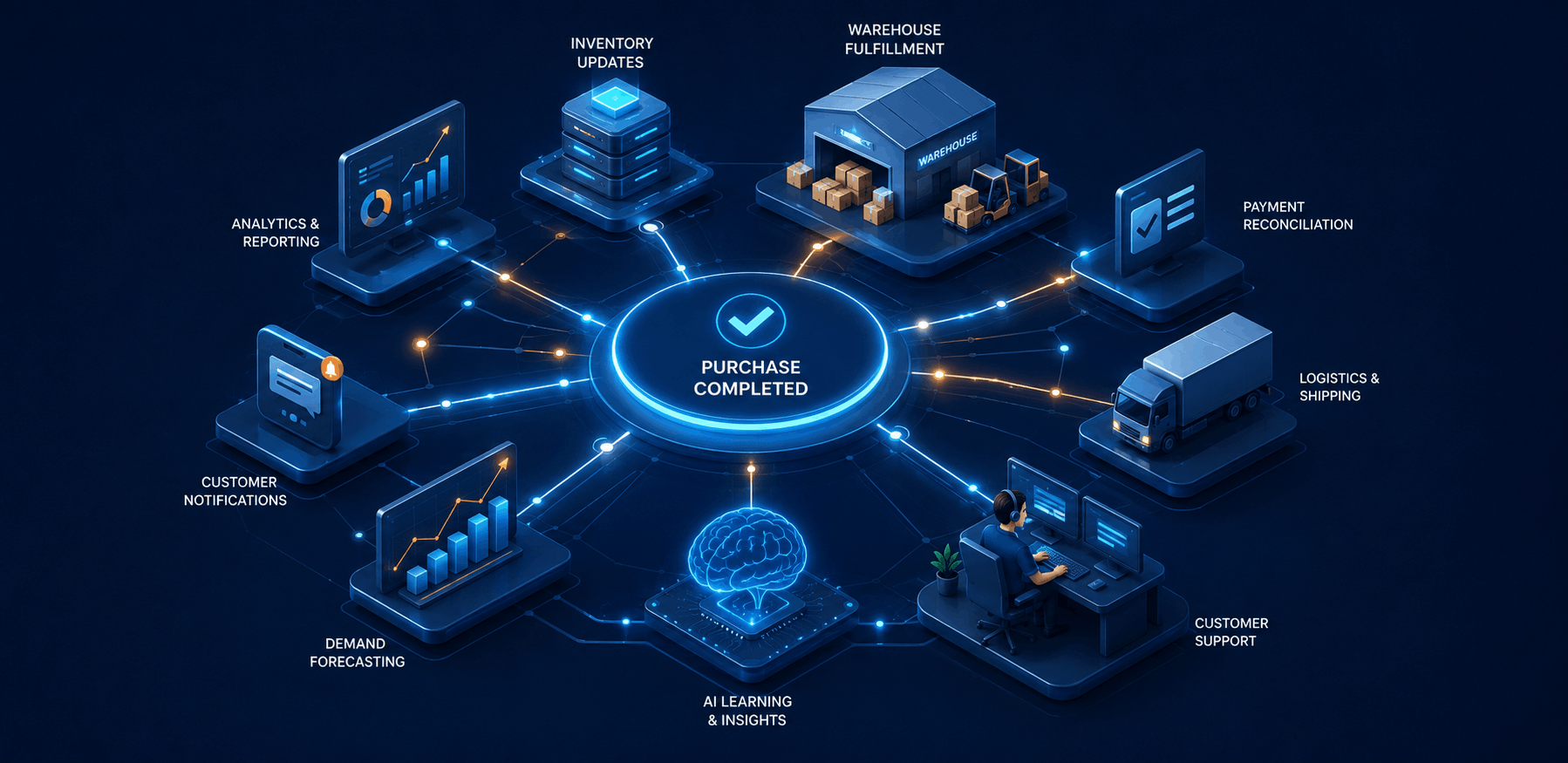
Retail AI Begins After Checkout
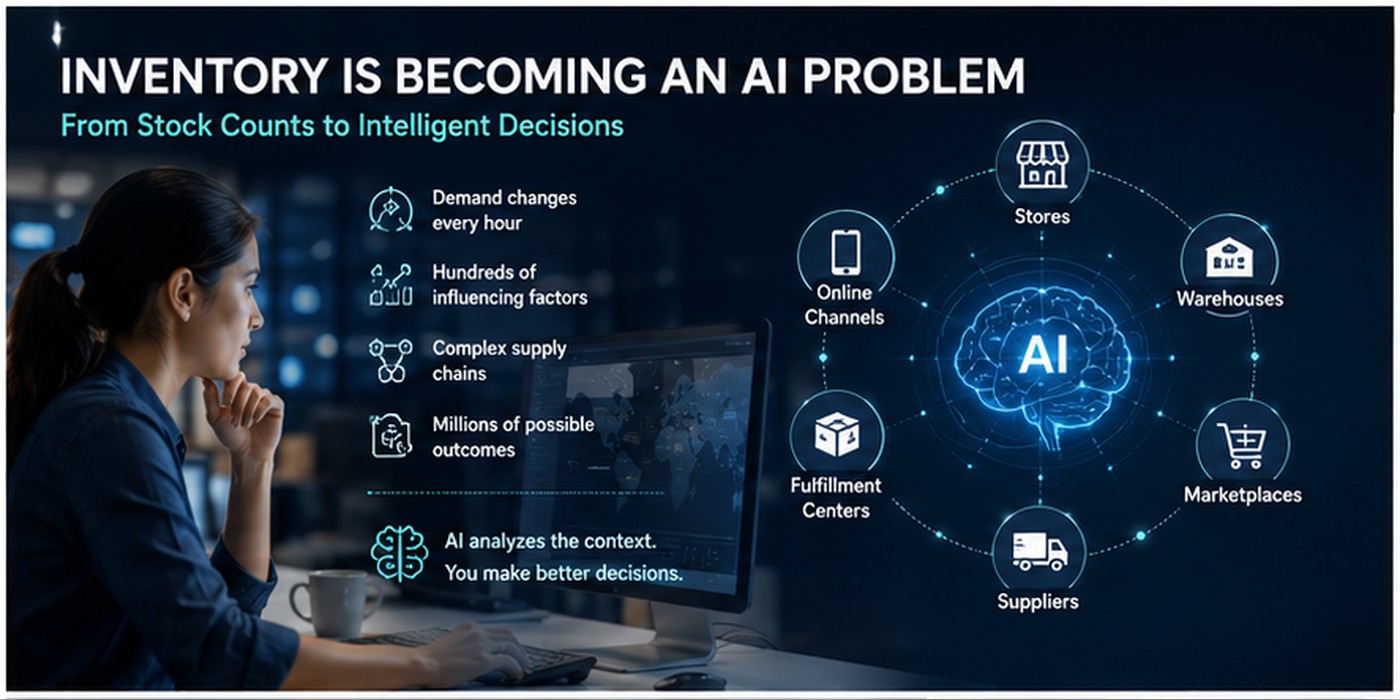
Inventory Is Becoming an AI Problem
