











Retail AI Begins After Checkout
Why the Greatest Opportunities in Commerce Start When the Payment Is Complete Executive Summary For decades, retailers have invested heavily...
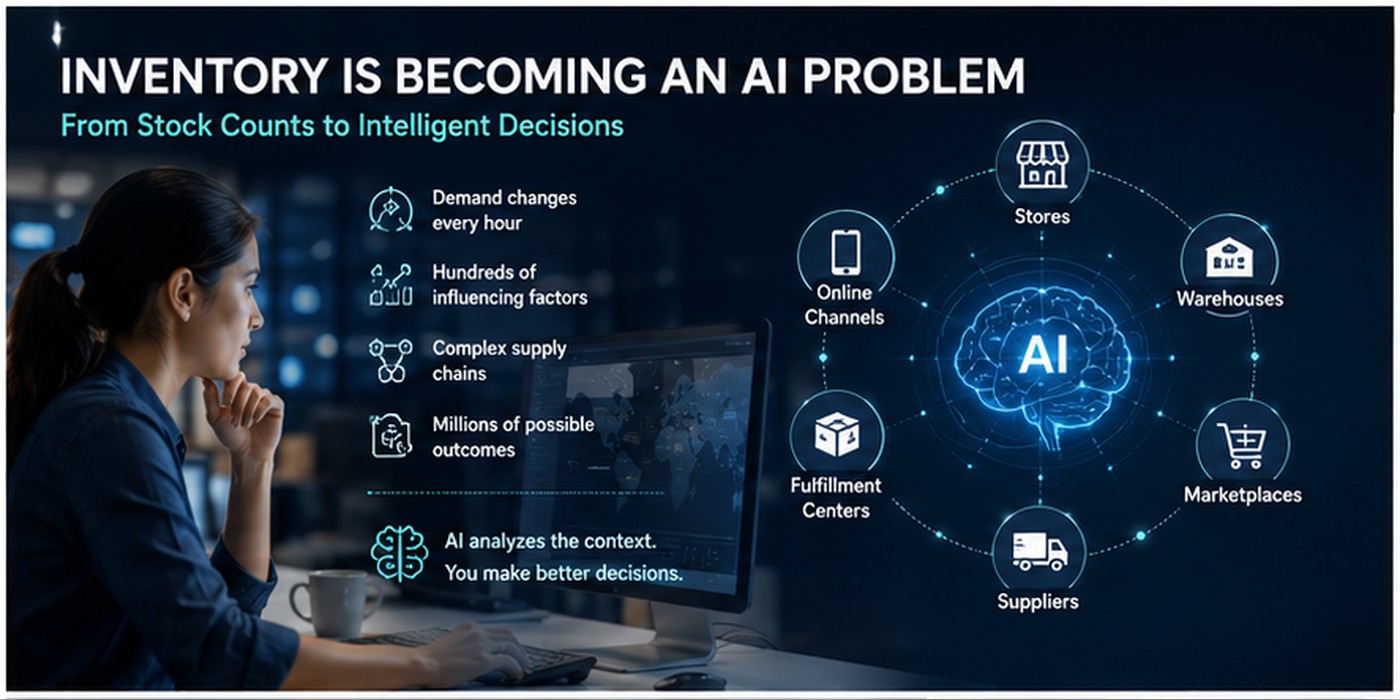
For decades, inventory management was viewed as a logistics function.
Count products.
Forecast demand.
Reorder stock.
Manage warehouses.
Reduce carrying costs.
Avoid stockouts.
The objective was simple: keep the right products in the right place at the right time.
That objective hasn’t changed.
What has changed is the complexity of achieving it.
Today’s retailers operate across physical stores, online marketplaces, mobile apps, social commerce, quick commerce, and global supply chains. Customer demand shifts daily. Promotions create unpredictable spikes. Weather influences buying behavior. Social media can turn an unknown product into a bestseller overnight.
Traditional inventory systems record what happened.
Modern commerce requires systems that anticipate what will happen next.
Inventory is no longer just a supply chain problem.
It has become an artificial intelligence problem.
The retailers that lead the next decade will not simply manage inventory better.
They will make inventory decisions faster, continuously, and with far greater context than humans alone can process.
Traditional inventory planning assumed relatively stable conditions.
Historical sales.
Seasonal demand.
Known suppliers.
Regular replenishment cycles.
Forecasts were reviewed weekly or monthly.
These methods worked because retail moved at a predictable pace.
Today’s retail environment is different.
Demand changes hourly.
Customers shop across multiple channels.
Supply chains face constant disruption.
Consumer expectations evolve faster than planning cycles.
The pace of decision-making has outgrown traditional inventory management.
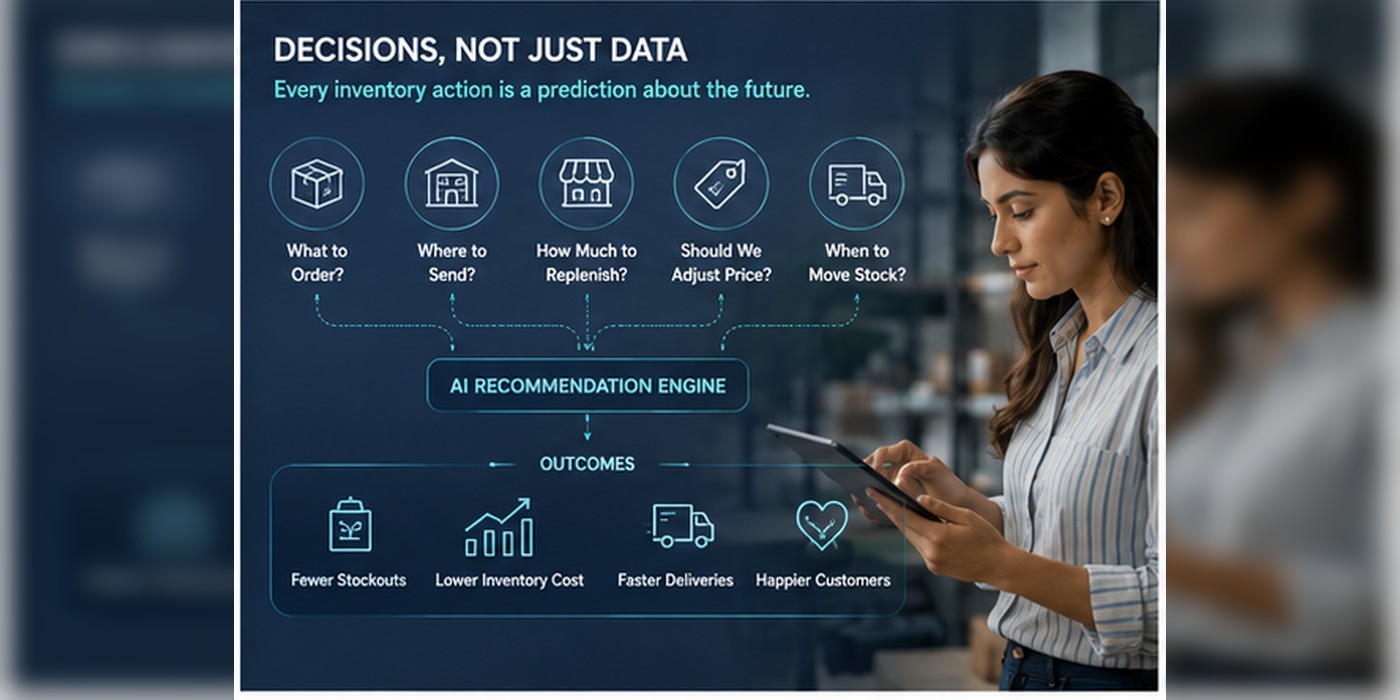
Ordering inventory is never about the present.
It is always about the future.
How many units should be purchased?
Which warehouse should receive them?
Which store should replenish first?
Should inventory remain centralized or distributed?
Should pricing change to balance stock levels?
Every inventory action reflects a prediction about future demand.
Prediction is where artificial intelligence excels.
A retailer no longer forecasts demand using sales history alone.
Inventory decisions increasingly depend on context.
Weather forecasts.
Regional events.
Marketing campaigns.
Social media trends.
Supplier reliability.
Shipping delays.
Customer behavior.
Local buying patterns.
Promotional calendars.
Economic conditions.
Each variable influences demand.
Individually they provide limited insight.
Together they create the context needed for intelligent inventory decisions.
Inventory planners remain essential.
What changes is the nature of their work.
Instead of manually reviewing spreadsheets, planners evaluate AI-generated recommendations.
Instead of reacting to shortages, they prevent them.
Instead of spending time collecting information, they spend time making strategic decisions.
AI becomes a decision-support engine rather than an automated replacement.
The objective is better judgment—not less human expertise.
Excess inventory locks working capital.
Insufficient inventory damages customer trust.
Delayed replenishment creates lost revenue.
Poor allocation increases delivery times.
Incorrect forecasts reduce profitability.
Inventory decisions influence nearly every retail metric.
Customer satisfaction.
Cash flow.
Warehouse efficiency.
Marketing performance.
Delivery promises.
Brand reputation.
Inventory has become a strategic capability rather than a back-office function.
At Prologic, we believe inventory should become a continuously learning system.
Every sale.
Every return.
Every search.
Every reservation.
Every shipment.
Every supplier update.
Every promotion.
Every weather event.
Each contributes new context.
CommerceFabric combines operational data, AI-driven forecasting, workflow automation, and real-time decision support to help retailers continuously optimize inventory rather than periodically review it.
The goal is not perfect forecasts.
It is better decisions every day.
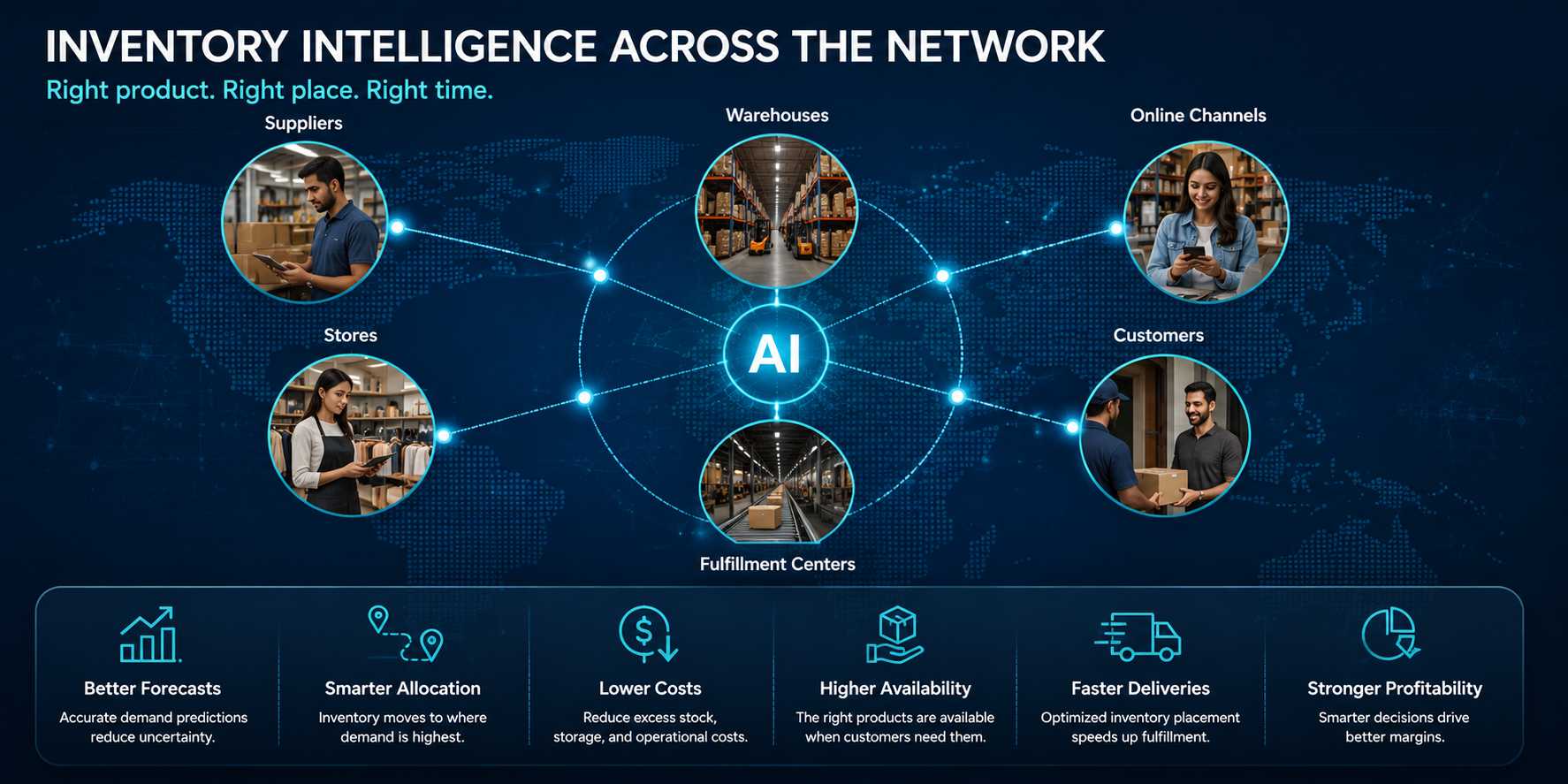
Traditional inventory systems ask:
“How much stock do we have?”
Intelligent inventory systems ask:
“What should we do next?”
Should stock move between warehouses?
Should replenishment accelerate?
Should promotions pause?
Should pricing adjust?
Should suppliers receive new orders?
Inventory becomes a continuous sequence of decisions instead of periodic reports.
Before investing in another inventory platform, ask:
The answers define whether inventory becomes a competitive advantage.
Inventory is no longer measured by how accurately products are counted.
It is measured by how intelligently decisions are made.
Retail success increasingly depends on anticipating change before competitors recognize it.
Artificial intelligence cannot eliminate uncertainty.
It can reduce it.
Every inventory decision becomes stronger when supported by broader context, faster analysis, and continuous learning.
The future of inventory is not automation.
It is intelligent decision-making.
And that makes inventory one of the most important AI challenges in modern commerce.
Why the Greatest Opportunities in Commerce Start When the Payment Is Complete Executive Summary For decades, retailers have invested heavily...
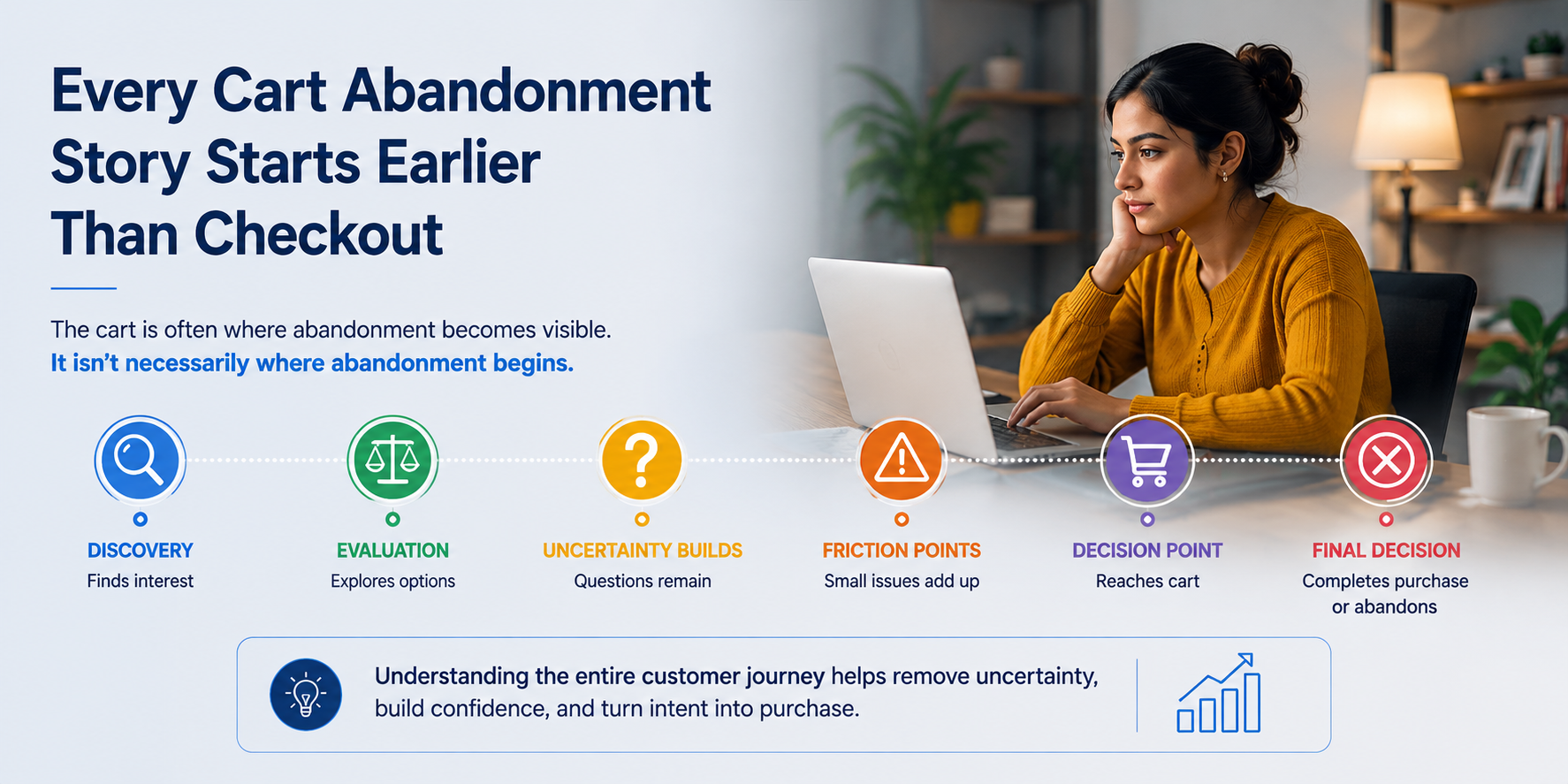
Why retailers should stop treating the cart as the problem There is a familiar conversation in eCommerce. The conversion rate has dropped. T...
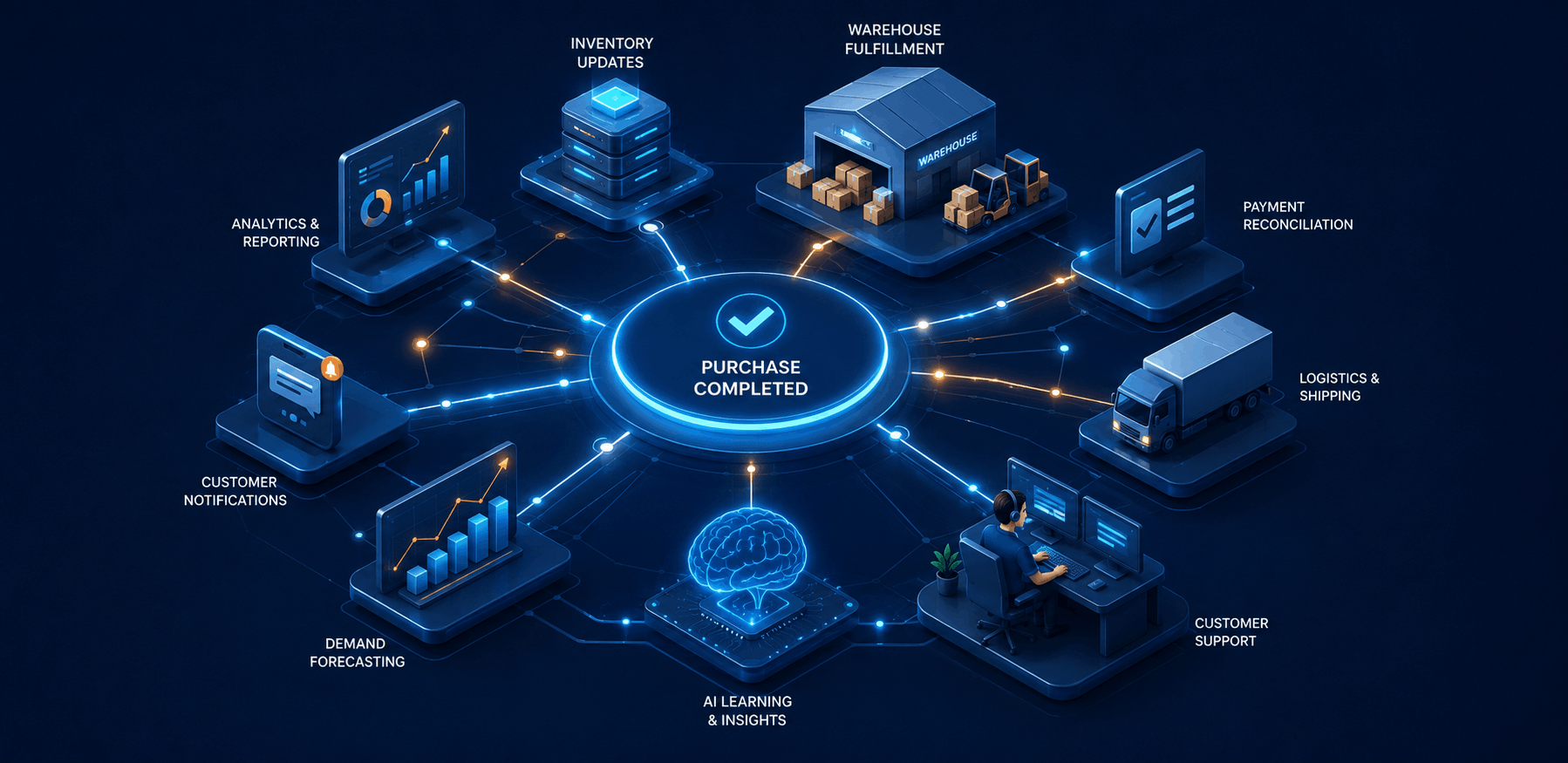
Retail AI Begins After Checkout
Every Cart Abandonment Story Starts Earlier Than Checkout
