





Why Every Indian Health Startup Should Build ABDM First
Building for India's Digital Health Startup Future Instead of Yesterday's Healthcare Executive Summary Every generation of technology has a...
Healthcare has never had more software.
Hospitals use Hospital Information Systems (HIS), Electronic Medical Records (EMR), Laboratory Information Systems (LIS), Radiology Information Systems (RIS), pharmacy software, billing platforms, telemedicine applications, patient engagement portals, wearable devices, AI assistants, and dozens of specialized clinical tools.
Yet patients continue to repeat their medical history.
Doctors continue to switch between multiple screens.
Laboratories struggle to exchange reports seamlessly.
Care coordinators spend hours following up through phone calls and emails.
Healthcare organizations are investing in more technology than ever before, but many clinical workflows remain fragmented.
The problem is not a lack of applications.
It is a lack of connected workflows.
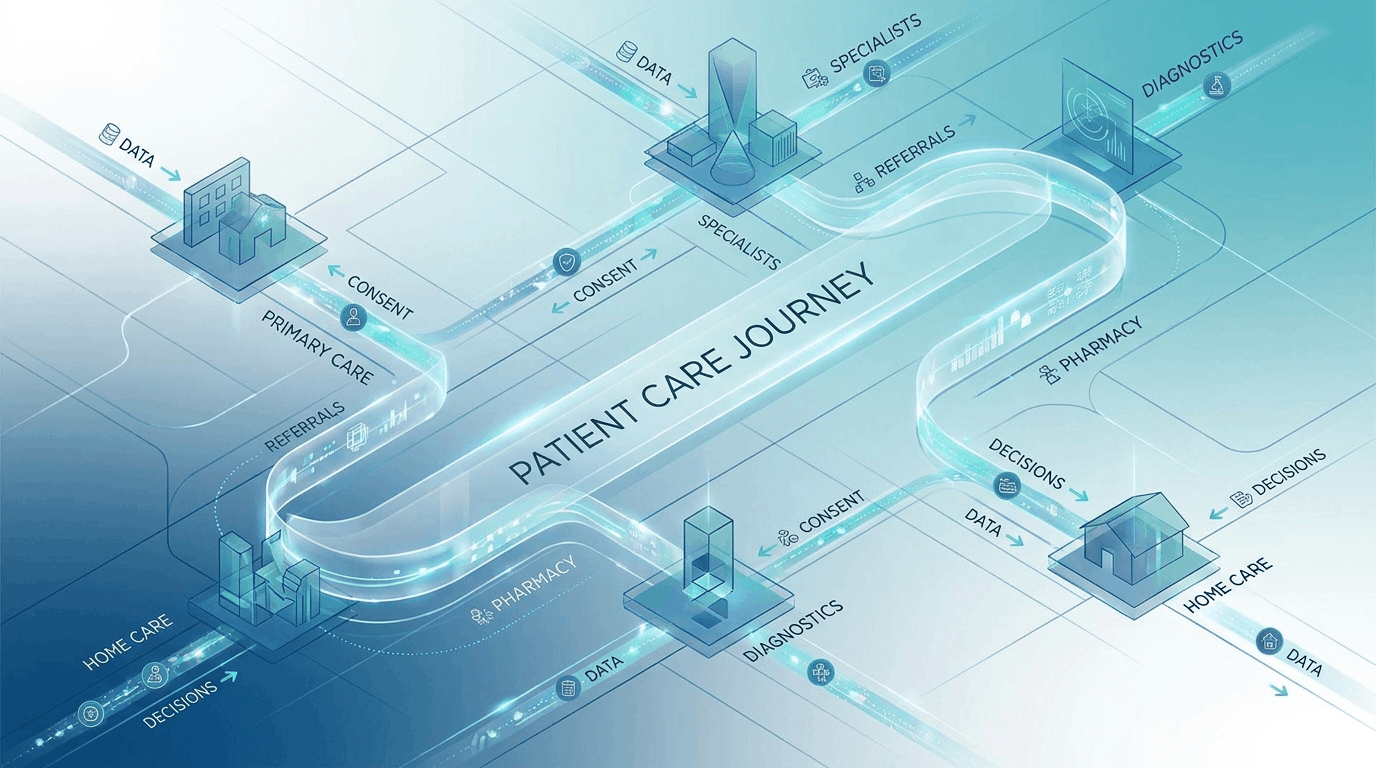
Healthcare is fundamentally a coordination problem. Every patient journey involves multiple people, organizations, systems, and decisions. When those participants operate independently, even the best applications create isolated islands of efficiency rather than a connected care experience.
Digital transformation succeeds when organizations stop asking, “Which application do we need next?” and begin asking, “How should information, responsibility, and decisions flow across the entire patient journey?”
That shift—from application thinking to workflow thinking—is what defines the next generation of connected healthcare.
Most healthcare software was designed to solve departmental problems.
Laboratories needed faster reporting.
Radiology departments required image management.
Hospitals wanted electronic medical records.
Pharmacies needed inventory systems.
Billing teams required financial workflows.
Each application solved a legitimate operational problem.
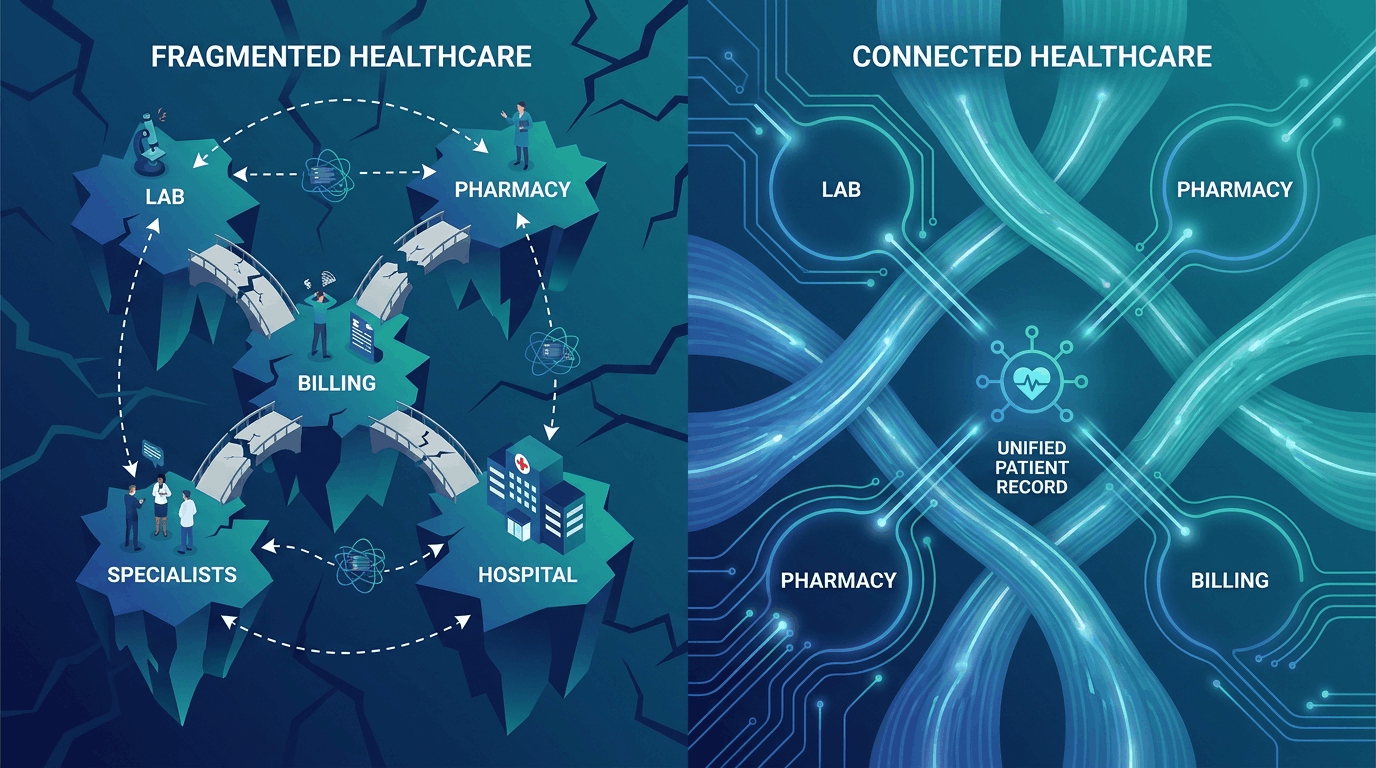
Collectively, however, they created another one.
Every department became more efficient- The patient journey did not.
The patient still moved between disconnected systems, disconnected teams, and disconnected decisions. Technology improved individual functions without improving the flow of care between them.
Healthcare organizations are structured into specialties.
– Patients are not.
A patient experiences one continuous journey.
Symptoms become diagnosis.
Diagnosis becomes treatment.
Treatment becomes recovery.
Recovery becomes follow-up.
Every transition matters.
Unfortunately, every transition is also an opportunity for information to be delayed, duplicated, misunderstood, or lost.
The patient rarely notices which software failed. They simply experience fragmented care.
Adding another healthcare application often appears to solve a problem.
Until another handoff is introduced.
Consider a simple outpatient consultation.
The appointment system schedules the visit.
The registration system verifies identity.
The EMR records clinical notes.
The laboratory receives diagnostic requests.
The pharmacy dispenses medication.
The billing system generates invoices.
The patient receives discharge instructions.
Each system may function perfectly.
Yet every transition between those systems depends on information moving accurately, securely, and at the right time.
The complexity doesn’t exist inside the applications
– It exists between them.
Healthcare interoperability discussions often focus on connecting systems.
FHIR.
HL7.
APIs.
ABDM.
These standards are essential. But connecting systems is only the first step.
The real objective is connecting workflows.
A successful workflow ensures that:
A technically integrated system can still produce fragmented clinical experiences if the workflow itself has not been designed.
Interoperability enables communication.
Workflow engineering enables coordinated care.
The distinction is important.

Some of the most important healthcare work never appears inside software.
A nurse notices a subtle change in a patient’s condition.
A specialist discusses treatment options with another physician.
A discharge coordinator arranges home care.
A patient asks questions after leaving the hospital.
These interactions influence outcomes. Yet many digital systems fail to recognize them because they occur between formal processes.
Connected workflows acknowledge that healthcare is not simply a sequence of transactions. It is a continuous exchange of information, judgment, and collaboration.
Technology should strengthen those interactions
– not replace them.
At Prologic, we believe healthcare platforms should be designed around journeys, not applications.
Every patient interaction should contribute to a connected workflow that spans providers, facilities, diagnostic services, pharmacies, insurers, and caregivers.
ABDM provides the infrastructure.
FHIR enables interoperability.
AI assists clinical decisions.
But none of these technologies automatically produce connected care. That happens only when workflows are intentionally designed across organizational boundaries.
Healthcare is not a collection of software products. It is a living network of coordinated decisions.
HealthFabric exists to engineer those connections.

The healthcare organizations that differentiate themselves over the next decade may not have the largest number of digital applications.
They will have the most coordinated workflows. Appointments will trigger preparation automatically.
Diagnostic reports will reach the appropriate clinicians without manual follow-up. Care plans will evolve collaboratively across providers.
Patients will move through healthcare without repeatedly carrying information from one organization to another.
The competitive advantage will not come from digitizing another department. It will come from reducing friction across the entire continuum of care.
Before investing in another healthcare application, ask:
These questions often reveal larger opportunities than selecting another software platform.
Healthcare has spent decades digitizing activities.
The next decade must focus on connecting them.
Patients do not measure healthcare by the number of systems their providers own.
They measure it by how easily their care progresses.
Every repeated form.
Every delayed report.
Every missing referral.
Every unnecessary phone call.
These are symptoms of disconnected workflows
– not inadequate applications.
The future of healthcare will not be built by organizations that deploy the most software. It will be built by those that engineer the smoothest flow of information, collaboration, and care.
Healthcare doesn’t need more apps.
– It needs connected workflows.
Building for India's Digital Health Startup Future Instead of Yesterday's Healthcare Executive Summary Every generation of technology has a...
Why Digital Identity Alone Doesn't Create Connected Healthcare Executive Summary When people first hear about the Ayushman Bharat Health Acc...
Why Sharing Data Isn't Enough to Transform Healthcare Executive Summary For years, digital health initiatives have focused on one primary ob...
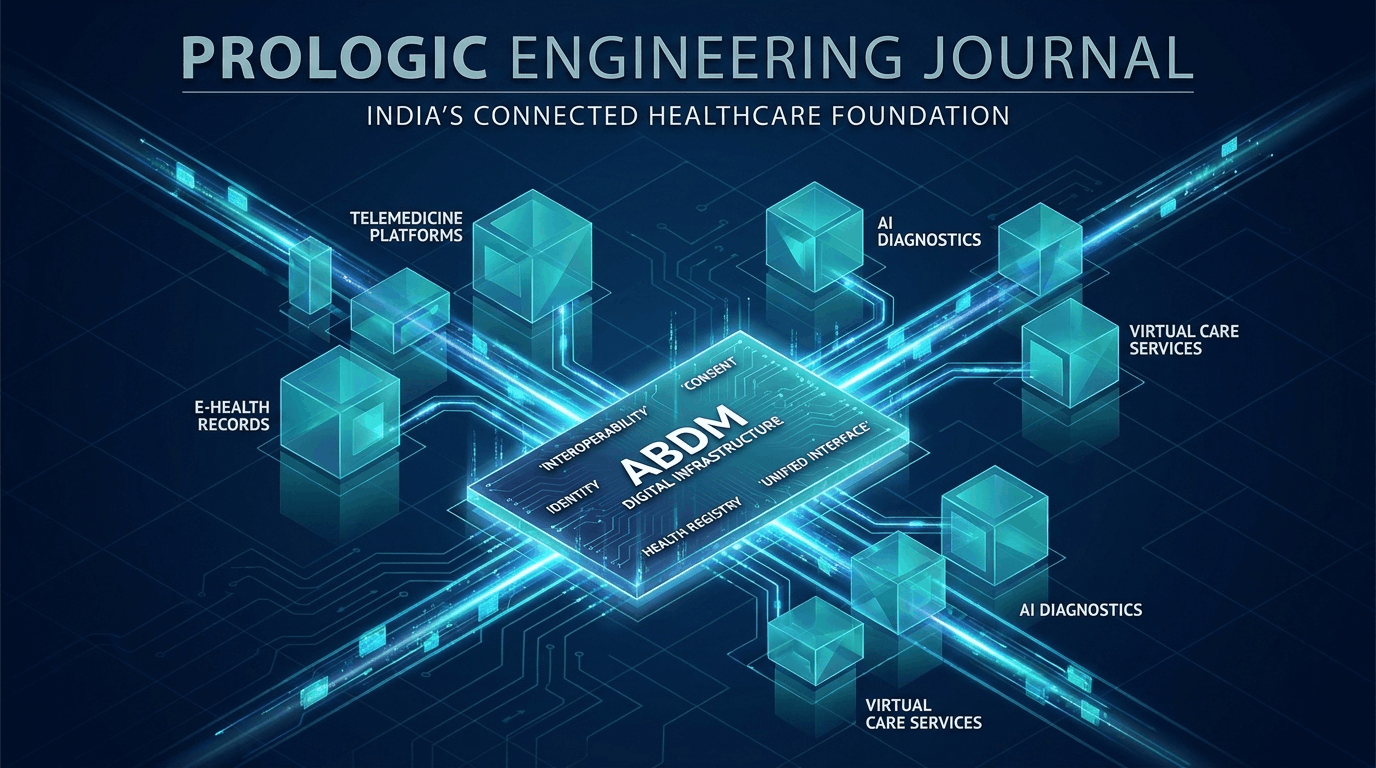
Why Every Indian Health Startup Should Build ABDM First
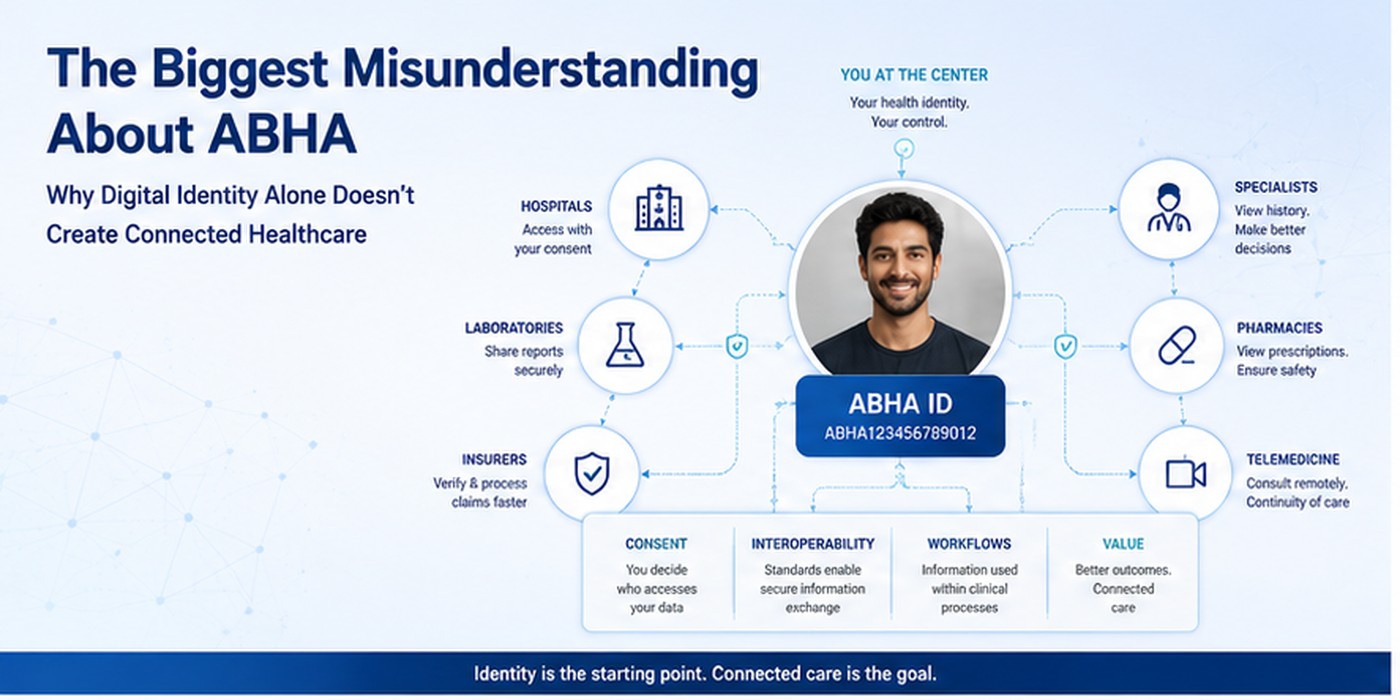
The Biggest Misunderstanding About ABHA

Connected Care Is Really Connected Decisions
