







What is FHIR?
The Foundation of Connected Healthcare
FHIR (Fast Healthcare Interoperability Resources) is rapidly becoming the global standard for exchanging healthcare information. From Electronic Health Records (EHRs) and laboratory systems to telemedicine platforms, patient apps and AI-powered clinical tools, FHIR enables healthcare systems to communicate using a common language.
Whether you're a hospital executive, healthcare product leader, architect or developer, understanding FHIR is essential to building connected, interoperable and future-ready healthcare ecosystems.
Healthcare Has a Communication Problem
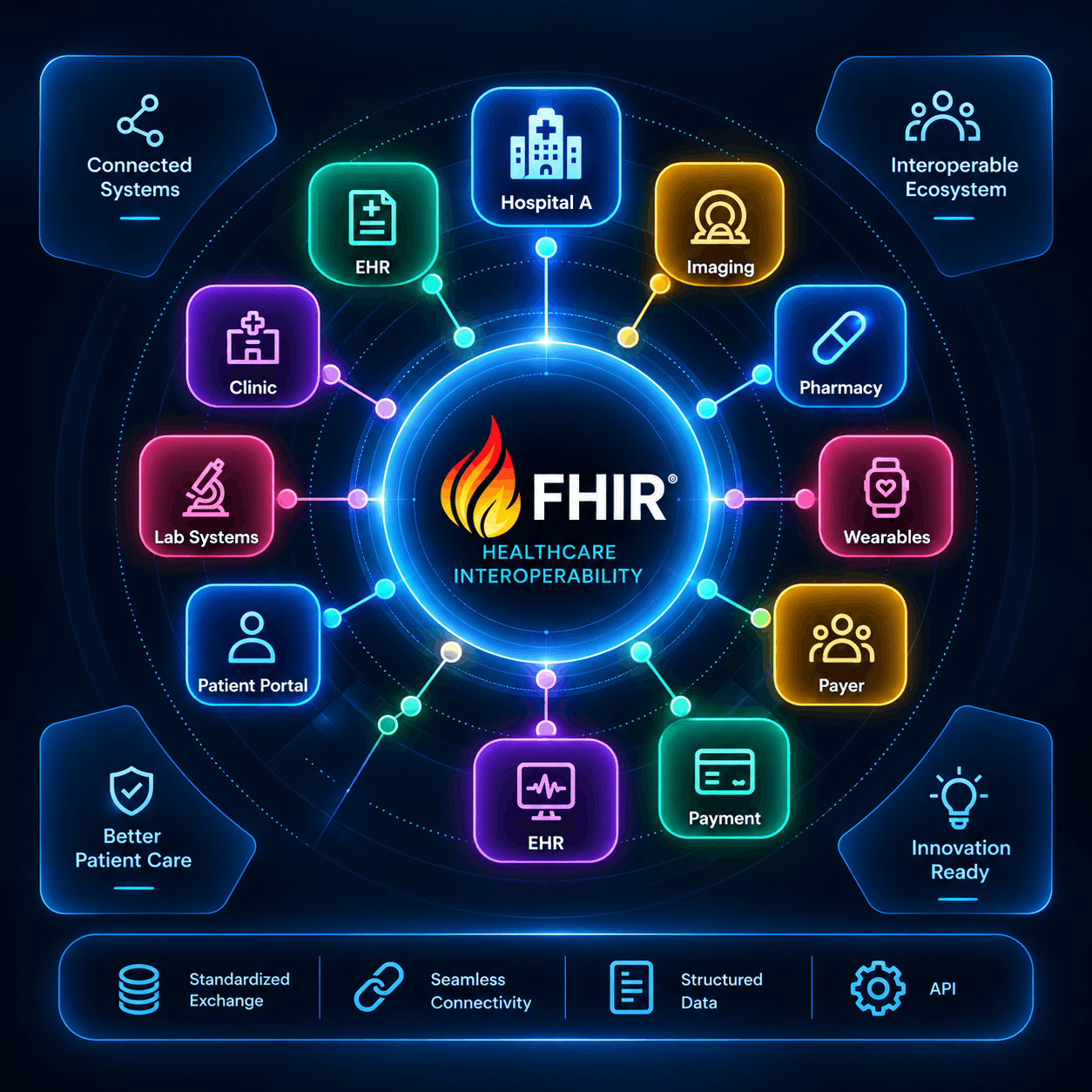
Healthcare has embraced digital transformation, yet most organizations continue to face a familiar challenge- systems that cannot easily communicate with one another. A patient may undergo diagnostic tests at one hospital, consult a specialist at another, receive medication from a pharmacy and participate in virtual follow-up care through a telemedicine platform. Although each interaction generates valuable clinical information, that data often remains confined within separate applications and databases.
Healthcare Needs a Common Language
FHIR helps healthcare applications exchange structured information through standardized resources, APIs and implementation patterns.
Prologic Perspective
The challenge is not the absence of digital systems. It is the absence of a common language that allows those systems to exchange information securely and consistently. FHIR was created to solve exactly this problem.
The Evolution of Healthcare Interoperability
Healthcare interoperability has evolved significantly over the past three decades. Each generation of standards addressed the limitations of its predecessor while moving the industry closer to seamless information exchange.
1980s - 1990s
Early 2000s
2011 onwards
Earlier standards played a vital role in advancing digital healthcare but were designed for a different technological era. They often relied on proprietary messaging formats, complex implementation processes and tightly coupled integrations.
FHIR builds on those foundations while embracing modern web technologies, RESTful APIs, JSON and XML, making healthcare interoperability significantly easier to implement and scale.
What Exactly Is FHIR?
FHIR stands for Fast Healthcare Interoperability Resources. Developed by Health Level Seven International (HL7), FHIR is a modern interoperability standard that defines how healthcare information can be structured, exchanged and accessed across different healthcare applications.
Unlike earlier standards that primarily focused on exchanging messages or documents, FHIR organizes healthcare information into modular building blocks called Resources. Each Resource represents a real-world healthcare concept, such as: A patient, A doctor, A medical observation, A prescription, A laboratory result, An appointment, An allergy, and A healthcare organization.
These Resources can be combined, extended and exchanged through standardized APIs, enabling applications developed by different vendors to work together without custom integrations for every use case.
Think of FHIR as a common digital language for healthcare. Just as web browsers can display websites built by different companies because they follow common web standards, healthcare applications can exchange information because they follow the FHIR standard.
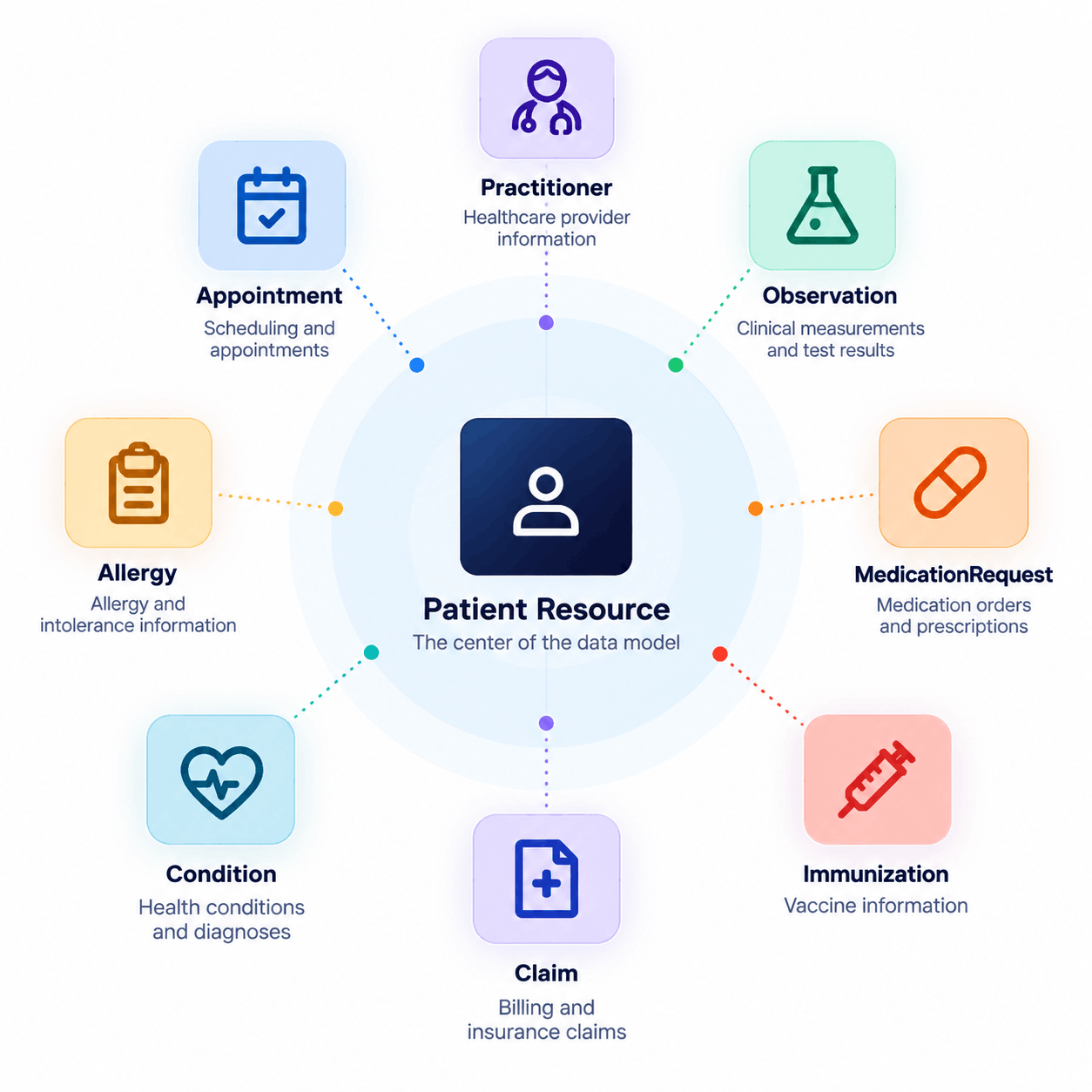
The Building Blocks of FHIR
At the heart of FHIR are Resources - small, reusable components that represent specific pieces of healthcare information.
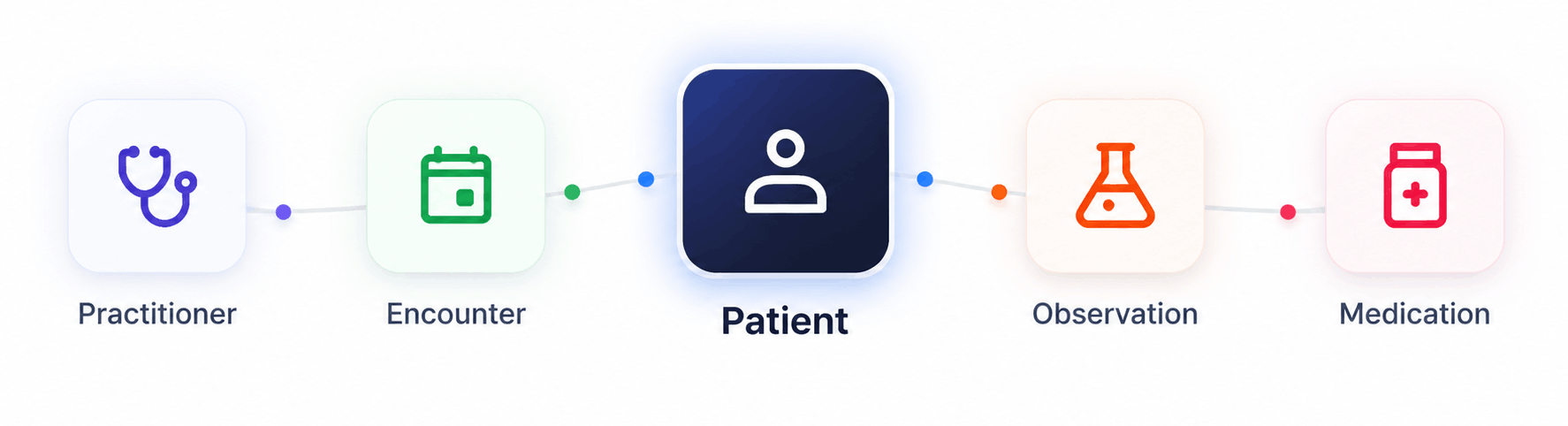
Together, these Resources form a standardized data model that can be shared across healthcare systems while preserving clinical meaning and context.
Why FHIR Matters
FHIR is more than a technical specification—it is an enabler of modern healthcare. Organizations adopting FHIR can:
FHIR helps healthcare organizations move from isolated digital systems to connected healthcare ecosystems.
Chapter Directory
Ready for the Next Chapter?
From understanding FHIR to putting it into practice.
Continue your journey through the FHIR series and explore how modern healthcare organizations can move from basic interoperability to connected, scalable, and innovation-ready healthcare ecosystems.