







CHAPTER 05
The Connected Healthcare Framework
Unifying disparate health systems into a cohesive, interoperable ecosystem. The future of care is no longer siloed—it's a living, breathing fabric of intelligence.
Engineering Healthcare as an Intelligent Ecosystem
Many healthcare organizations begin their digital transformation by purchasing software.
They implement an Electronic Medical Record.
They deploy a patient portal.
They launch telemedicine.
They invest in analytics.
Later, they add AI.
Each initiative solves an immediate problem.
Yet over time, these isolated investments often create an increasingly complex technology landscape where every new system requires another integration, another interface and another workflow.
Connected Healthcare takes a fundamentally different approach.
Rather than asking,
"Which application should we implement next?"
it asks,
"How should our healthcare ecosystem function as one connected platform?"
This shift in thinking changes everything.
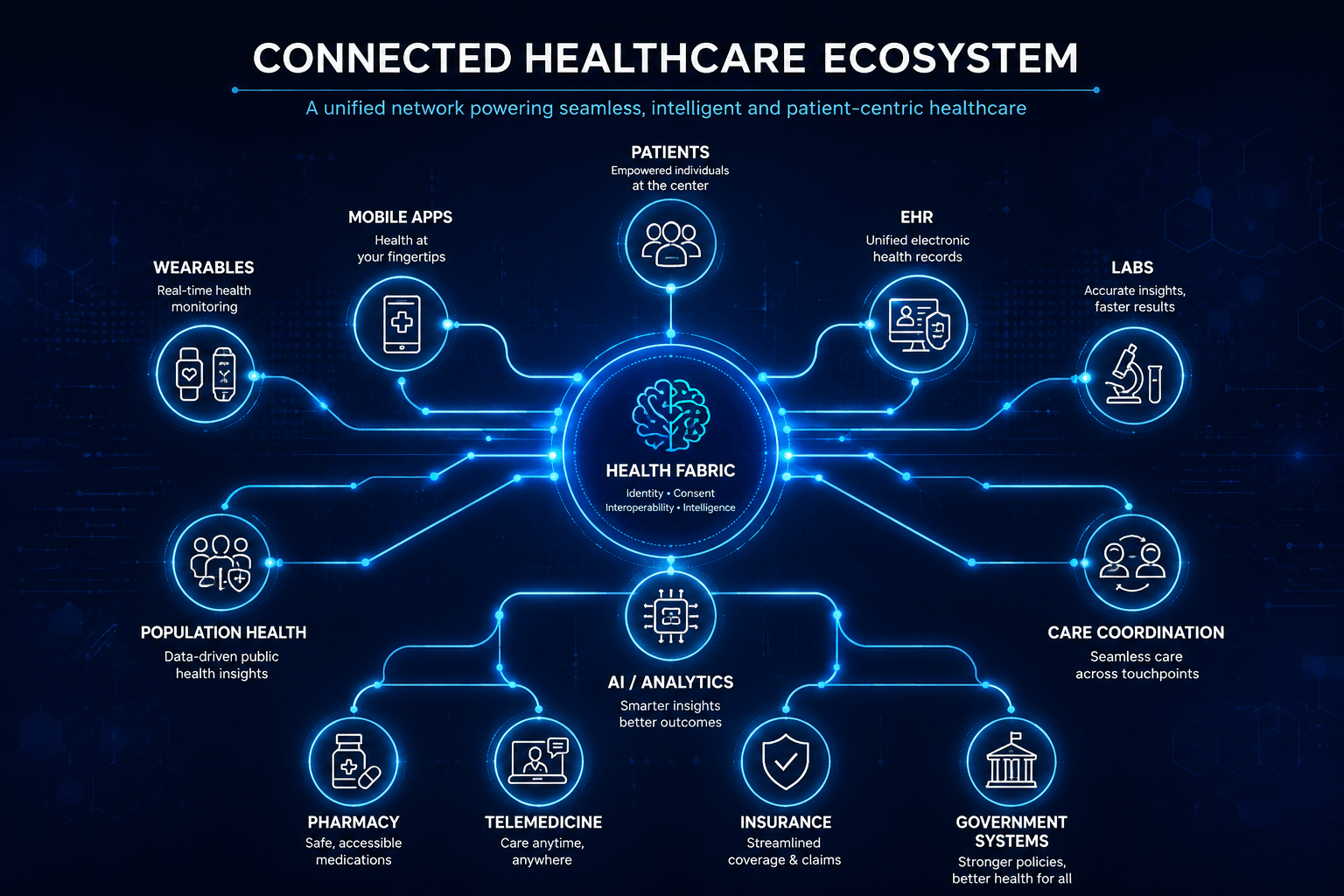
Instead of building individual applications, organizations begin engineering an integrated healthcare operating model where people, systems, data and intelligence work together seamlessly.
The Five Foundations
Connected Healthcare is built upon five interconnected capabilities.
Each capability strengthens the others.
Together, they create an ecosystem capable of delivering coordinated, intelligent and scalable healthcare.
Connected Systems
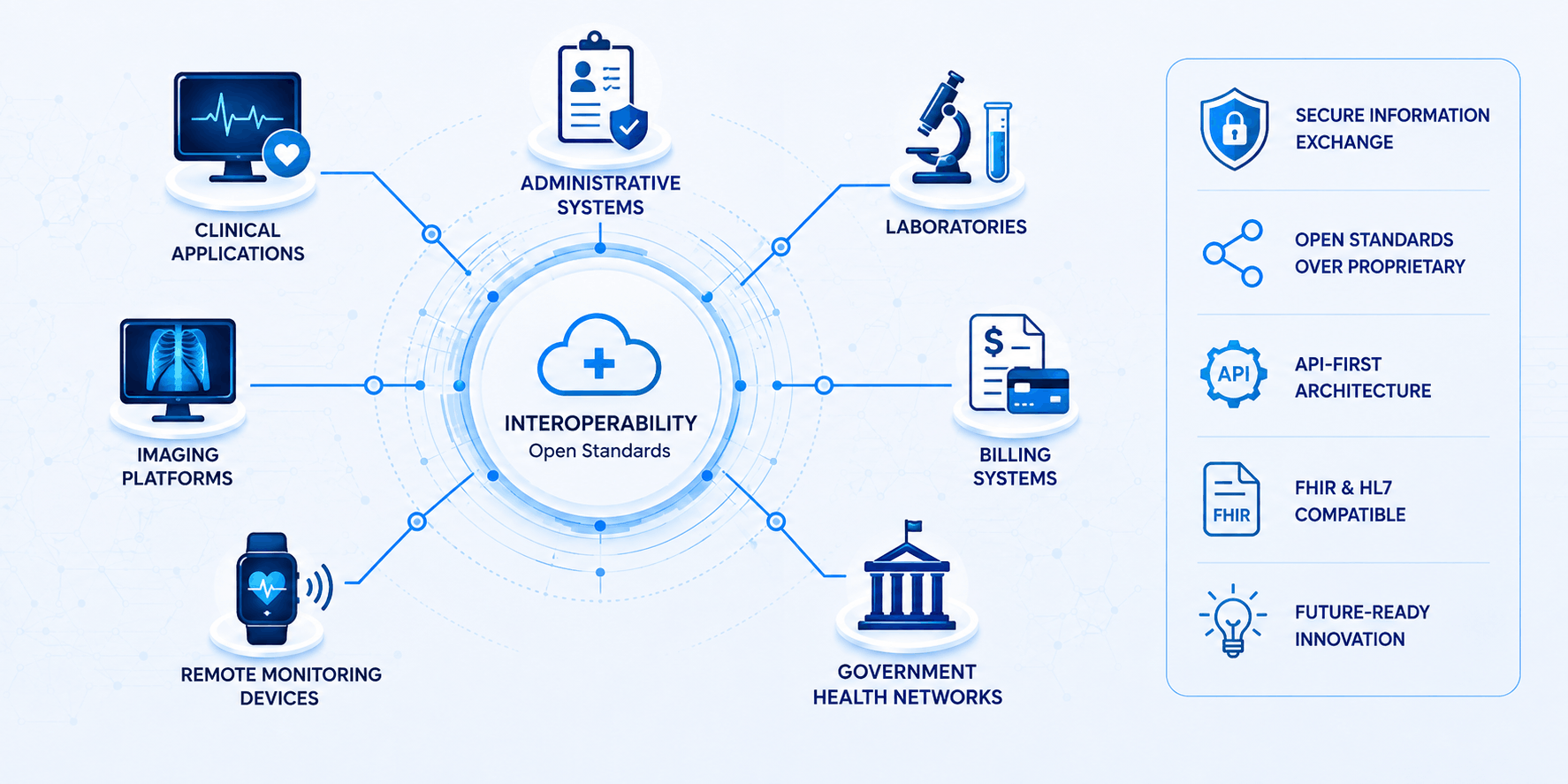
Everything begins with interoperability.
Clinical applications.
Administrative systems.
Laboratories.
Imaging platforms.
Billing systems.
Remote monitoring devices.
Government health networks.
These systems must exchange information securely using open standards rather than proprietary integrations.
Healthcare organizations that embrace API-first architecture, FHIR, HL7 and modern interoperability frameworks reduce complexity while enabling future innovation.
Technology should communicate seamlessly.
Not through manual intervention.
But through trusted, standardized digital connections.
Connected Care
Healthcare is no longer delivered by individual clinicians.
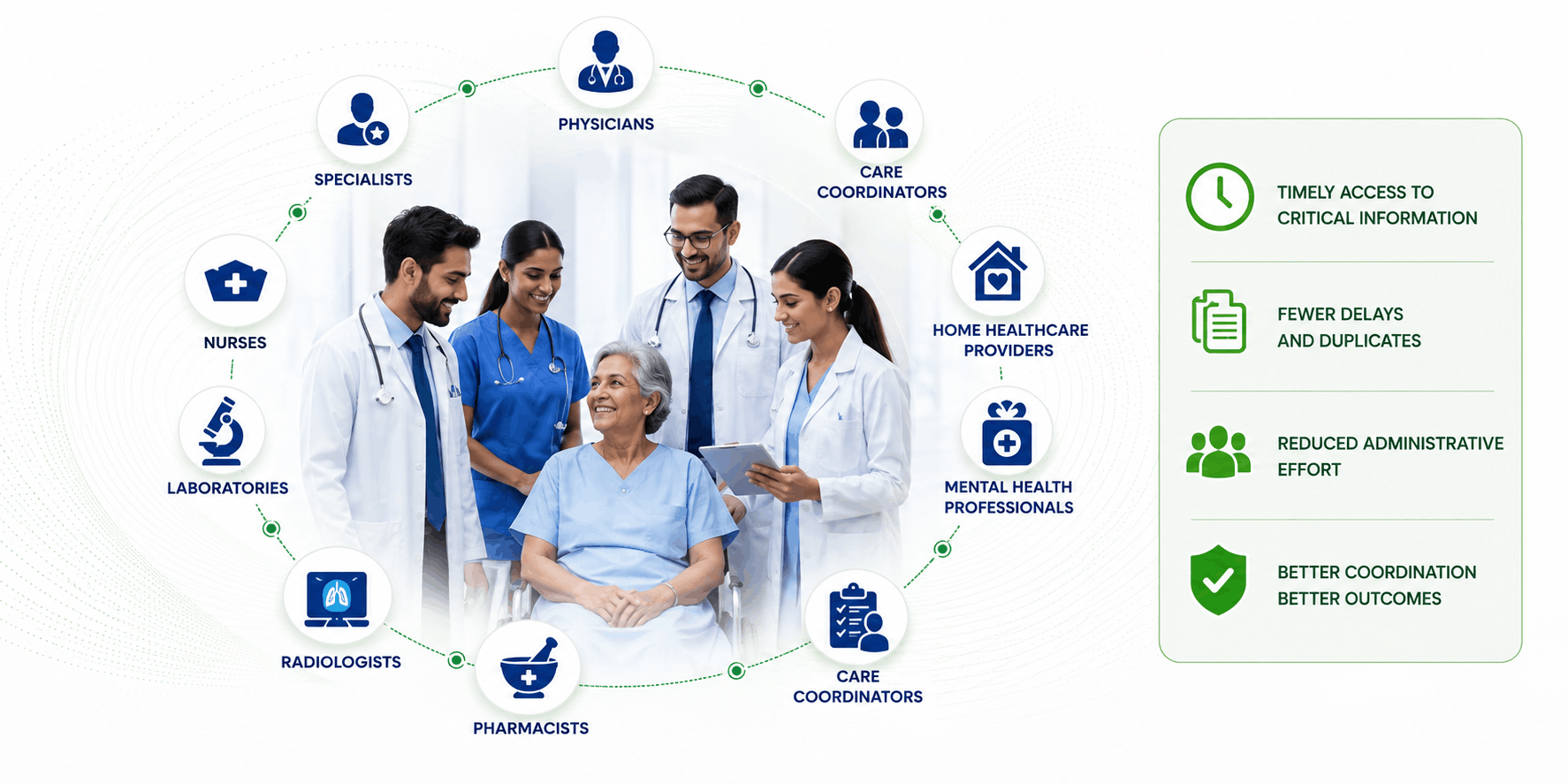
It is delivered by multidisciplinary teams.
Physicians.
Specialists.
Nurses.
Laboratories.
Radiologists.
Pharmacists.
Care coordinators.
Mental health professionals.
Home healthcare providers.
Each participant contributes to a patient's journey.
Connected Healthcare ensures every member of the care team has timely access to the information they need, reducing delays, duplication and unnecessary administrative effort.
Care becomes collaborative instead of fragmented.
Connected Patients
Patients should no longer be passive recipients of healthcare.
They should become active participants in their own health journey.
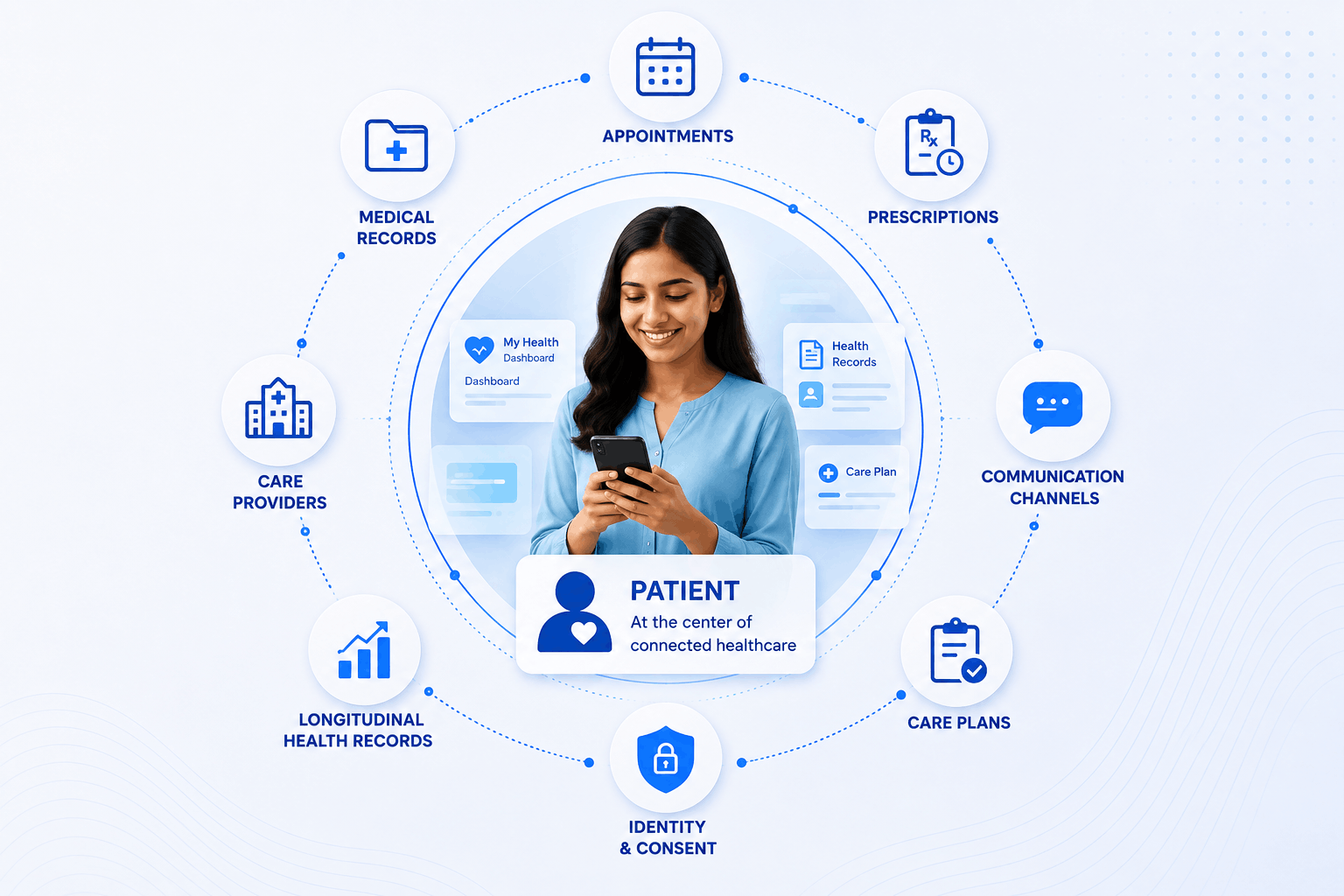
Modern patients expect digital access to appointments, medical records, prescriptions, care plans and communication channels.
More importantly, they expect continuity.
They should not need to repeat their medical history every time they visit a different provider.
Connected Healthcare places the patient-not the institution-at the center of the ecosystem.
Identity, consent and longitudinal health records become the foundation of continuous care.
Connected Intelligence
Healthcare organizations generate extraordinary amounts of information every day.
But data alone does not improve outcomes.
Intelligence does.
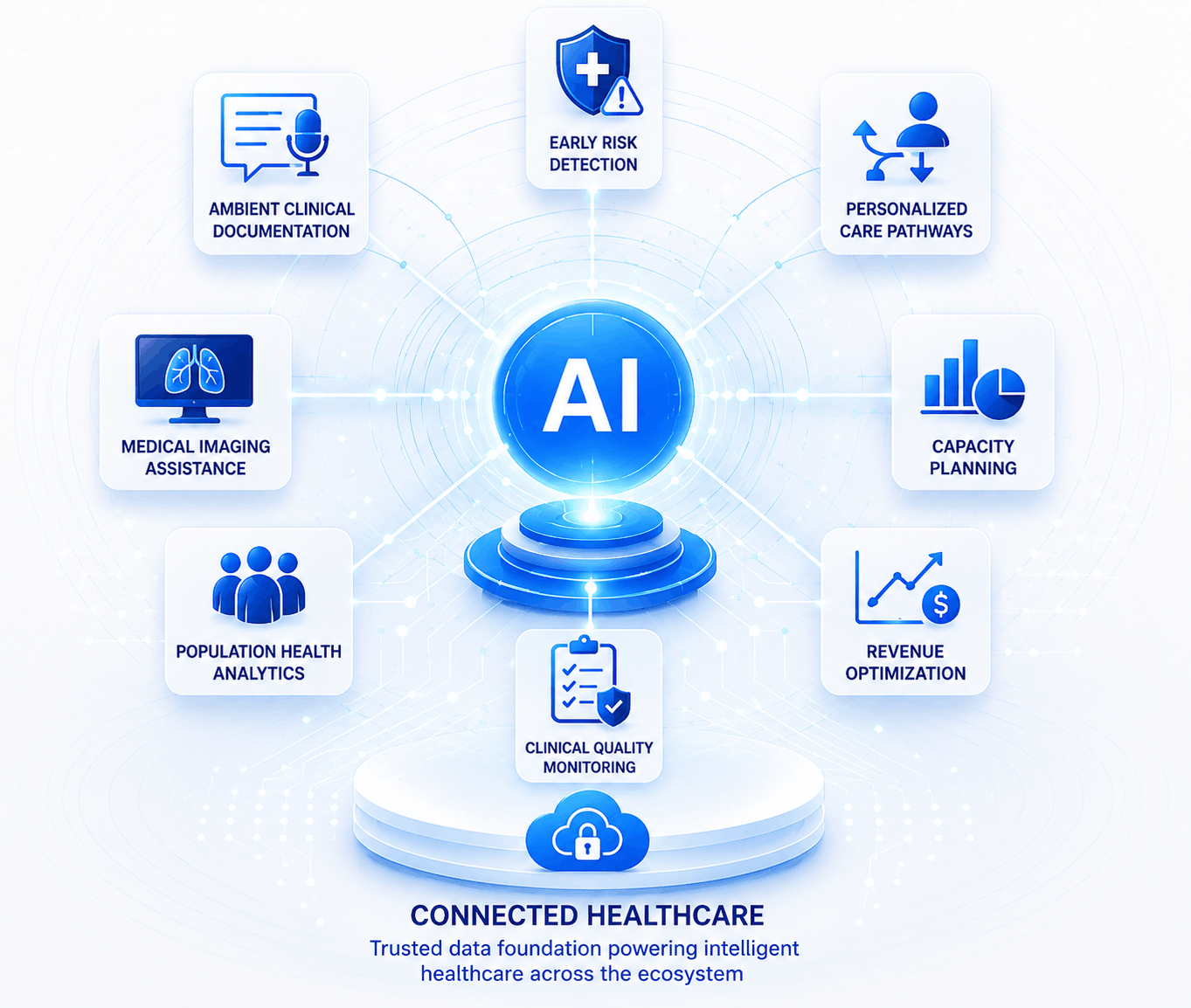
Artificial Intelligence transforms healthcare data into clinical recommendations, operational insights and predictive decision support.
Examples include:
AI should not operate as a separate product.
It should become an invisible capability embedded across the healthcare ecosystem.
Connected Healthcare provides the trusted data foundation that makes this possible.
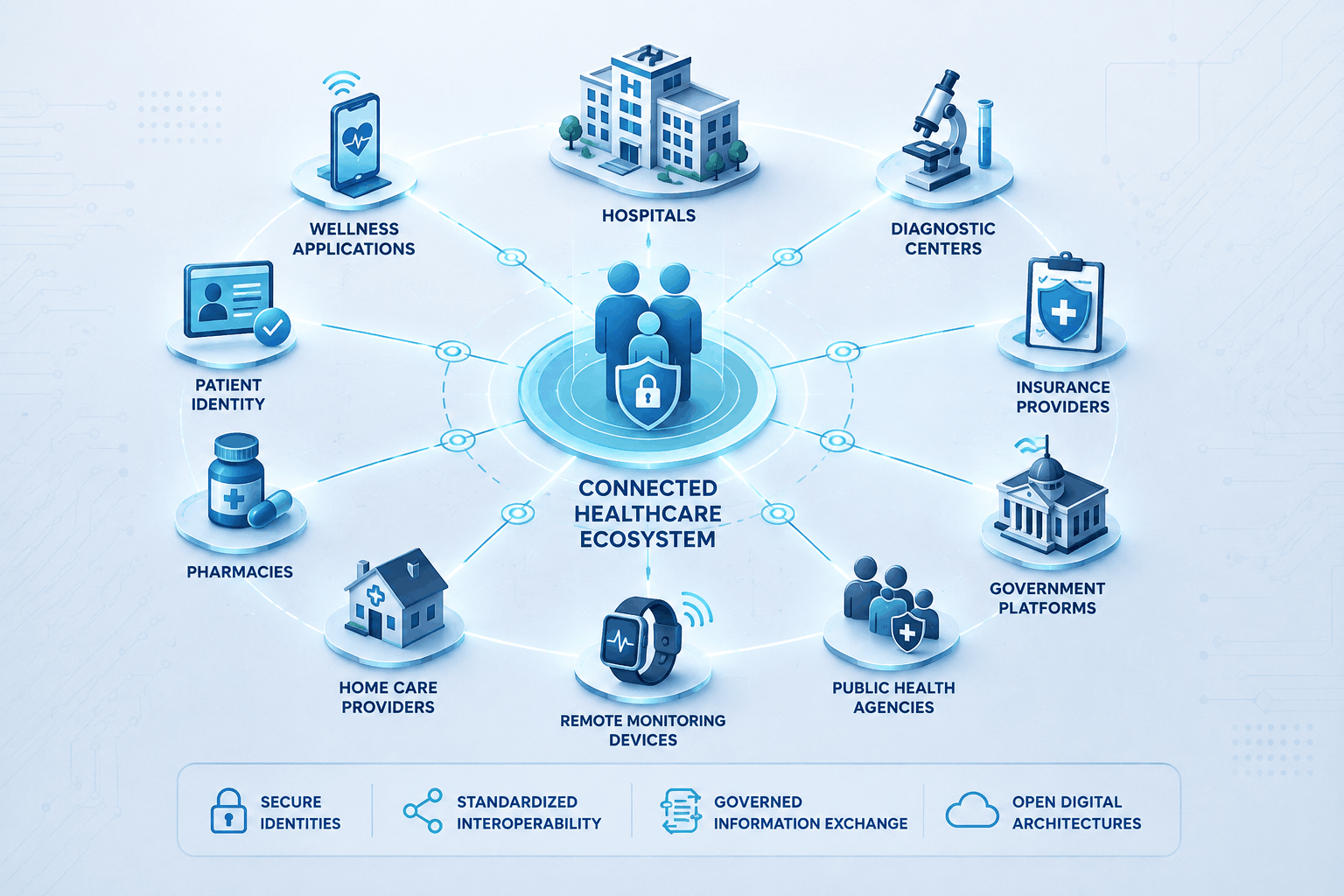
Connected Ecosystems
Healthcare extends far beyond the walls of a hospital.
Patients interact with pharmacies.
Diagnostic centers.
Insurance providers.
Government platforms.
Home care providers.
Public health agencies.
Wellness applications.
Remote monitoring devices.
Future-ready healthcare organizations recognize that value is created not by optimizing one institution but by enabling collaboration across the broader healthcare ecosystem.
Connected Healthcare supports this collaboration through secure identities, standardized interoperability, governed information exchange and open digital architectures.
Every disconnected interaction increases operational costs, introduces delays and creates opportunities for clinical errors.
Conversely, organizations that establish secure, standards-based interoperability gain faster clinical decision-making, improved care coordination and a stronger foundation for digital innovation.
Interoperability is no longer about connecting applications.
It is about connecting healthcare.
Connected Healthcare Is an Engineering Challenge
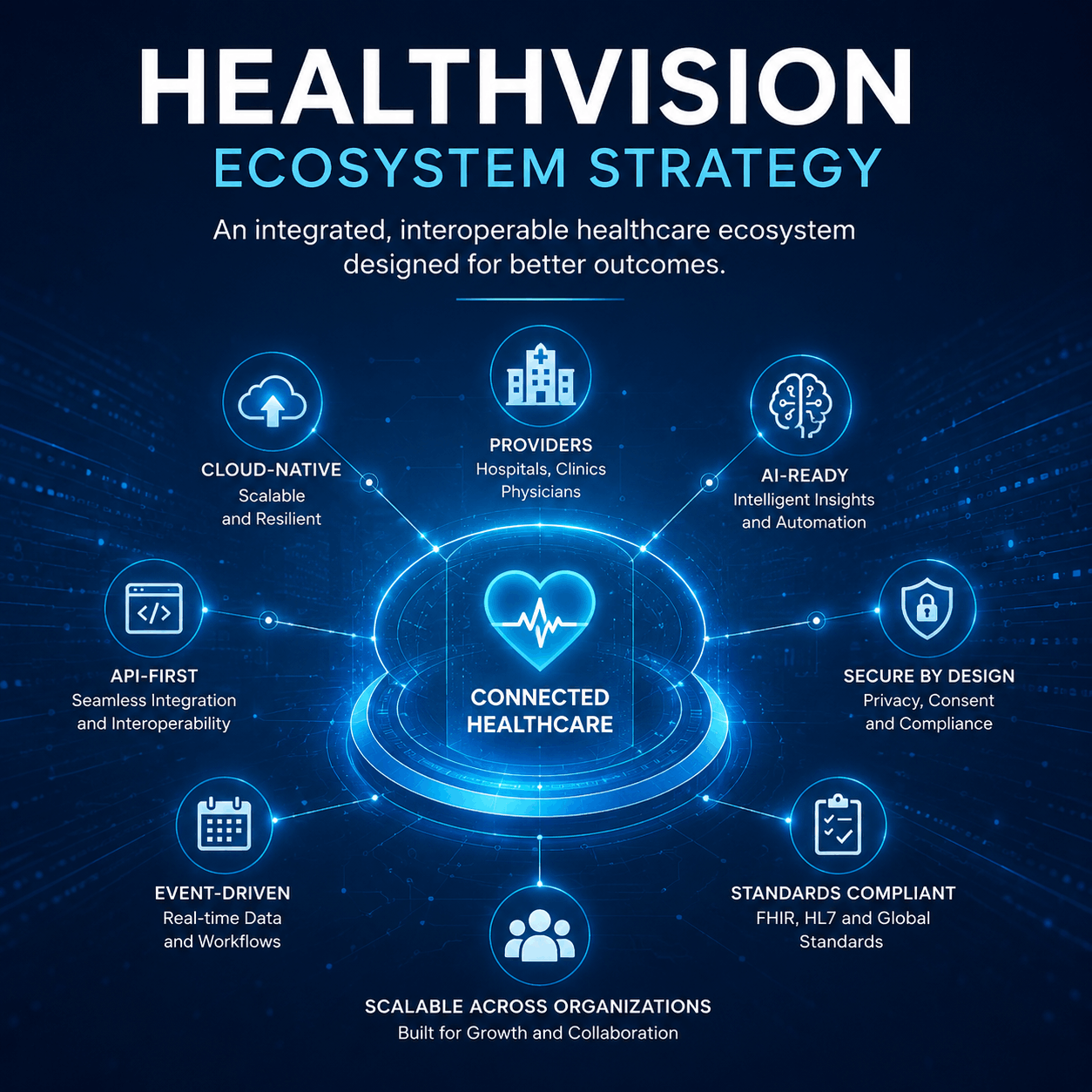
Connected Healthcare is frequently described as a technology initiative.In reality, it is an engineering discipline.Success depends on designing systems that are:
These are architectural decisions- not software purchases.Organizations that establish these engineering foundations today will be able to adopt emerging technologies far more rapidly than those continuing to build isolated digital solutions.
Prologic Perspective
Healthcare organizations often attempt to modernize one department at a time.
The organizations seeing the greatest transformation are engineering healthcare as an ecosystem- where every new capability strengthens the entire network instead of becoming another disconnected application.
Chapter Directory
CONTINUE READING