










- What is computer vision?Computer vision is a field of AI that enables systems to interpret visual information from images and video.
- Why does computer vision need context?Visual patterns often have different operational meanings depending on location, time, inventory, business rules and surrounding conditions.
- What is the difference between detection and interpretation?Detection identifies a visual pattern; interpretation determines what that pattern means in a specific operational situation.
- Why can computer vision performance decline after deployment?Changes in lighting, camera position, obstruction, materials, and other environmental conditions can make production inputs differ from evaluation data.
- Should computer vision automatically trigger actions?Only when the action is appropriately bounded by confidence, risk, policy, and safety requirements. Other cases should involve escalation or human review.
Reading Time: 8 min
Computer Vision Is Only as Good as the Context Around It
Computer vision has become one of the most visible applications of artificial intelligence. A camera can identify objects, recognise patterns, detect movement, inspect products, and flag events that would otherwise require continuous human observation. For businesses operating physical environments, the possibilities are compelling. Retailers can monitor shelf availability, manufacturers can inspect products, warehouses can track movement, and healthcare facilities can explore visual assistance for selected workflows.
The technology is impressive, but there is a distinction that is often overlooked: recognising what is visible is not the same as understanding what is happening.
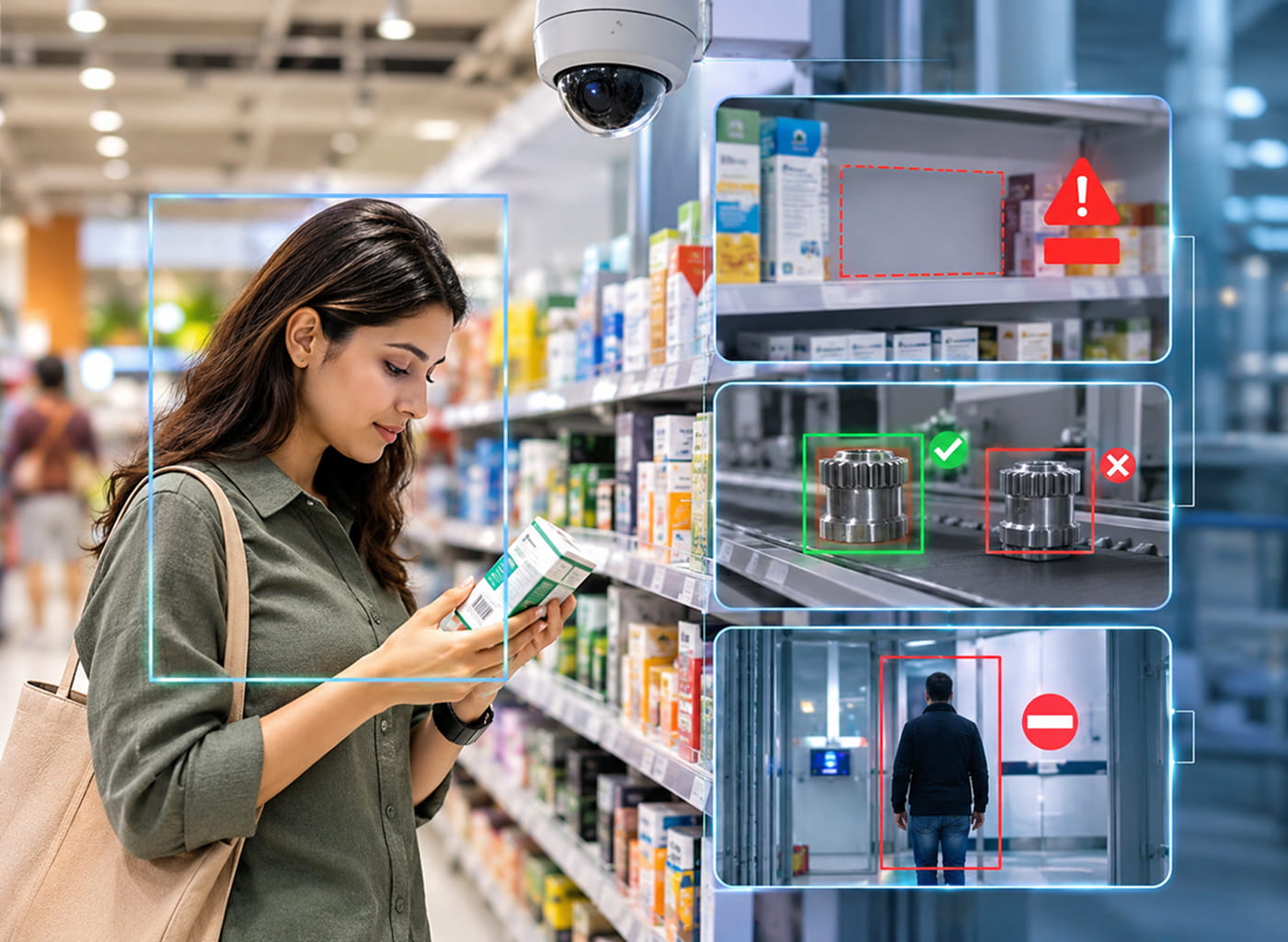
A camera may identify an empty space on a shelf, but it cannot automatically determine whether the product is out of stock, temporarily moved, awaiting replenishment, or deliberately removed. A manufacturing system may detect a visual difference, but that difference may be acceptable under one production condition and a defect under another. A person entering a restricted area may be detected accurately, but the system still needs to understand whether that person is authorised to be there.
The challenge is not simply to make a camera intelligent. It is to build a system that interprets visual information in the context of an operational process. This is part of a broader shift towards real-world AI engineering, where reliable outcomes depend on connecting model capabilities with physical environments, operational context and workflows.
Recognition is not understanding
Computer vision models are trained to identify patterns in images or video. Depending on the task, they may classify objects, detect their locations, segment regions, track movement, or recognise specific visual conditions. These capabilities can be extremely useful, but the model’s output is still an interpretation of the visual input.
The operational meaning of that output usually comes from information outside the image. Consider a retail shelf. A model may detect that a particular product is not visible in its expected location. To determine what should happen next, the system may need inventory records, planogram information, store layout, replenishment schedules, and the product’s current status. This connects directly to inventory intelligence, where visual observations become more useful when combined with stock availability, demand signals and replenishment decisions. Without these sources, the system can report a visual condition but cannot reliably determine the appropriate business response.
The same distinction appears in industrial inspection. A model may detect a surface variation, but whether it represents a defect depends on product specifications, manufacturing tolerances, inspection rules, and sometimes the stage of production. Treating every visual variation as a failure can create unnecessary rework. Missing a genuine defect can be more costly still.
This is why model accuracy must be interpreted in relation to the task. A high-performing object detector does not automatically create an effective operational system. The organisation needs to know what the detection means, what evidence supports that interpretation, and what action is justified.
Context connects the image to the business process
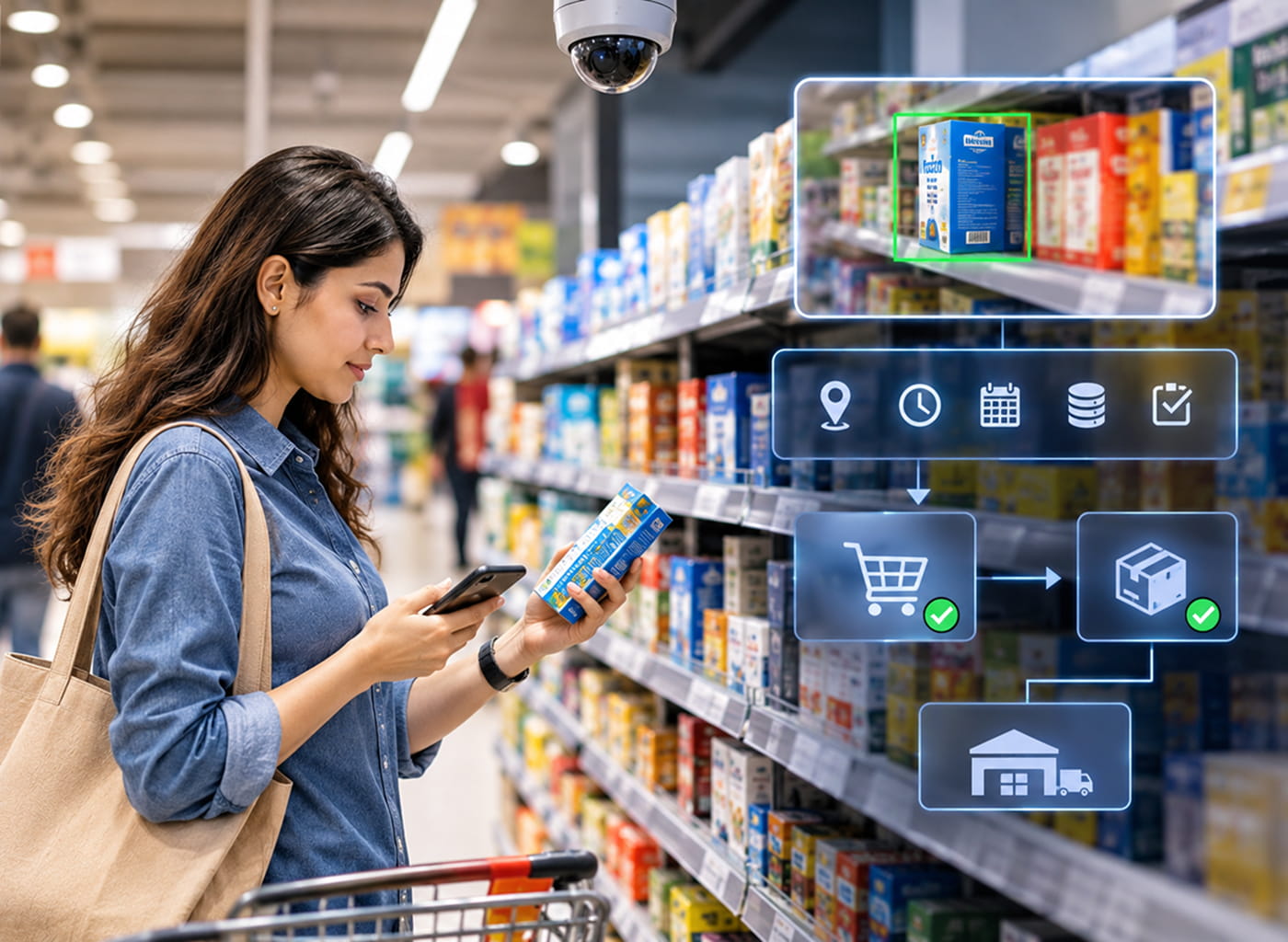
A dependable computer vision solution needs more than images and a trained model. It needs a contextual layer that connects visual observations to the state of the environment.
That context may include location, time, product or equipment identity, historical observations, business rules, operational schedules, and data from other systems. It also needs to account for the conditions under which the image was captured. Camera angle, lighting, distance, obstruction, movement, and image quality can all influence the reliability of a prediction.
Context should not be treated as an unlimited collection of data. More information can introduce noise, inconsistency, and additional dependencies. Engineering teams must identify which information is necessary to interpret a particular event and establish how that information will be validated. This is also an example of engineering context: making relevant requirements, domain rules, and system knowledge available to the people and AI components responsible for interpreting and acting on information.
For example, a retail shelf-monitoring system may need to combine product recognition with a store-specific planogram and inventory availability. If the product is not visible but inventory records show zero available units, the system may classify the event differently from a situation where stock is available in the back room. That distinction can determine whether the next action is replenishment, inventory reconciliation, or an exception for store staff.
The model detects. The contextual system interprets. The operational workflow responds. Keeping these responsibilities clear makes the solution easier to test, govern, and improve.
The operating environment is part of the model’s reality
Computer vision demonstrations often take place in controlled conditions. The camera is positioned carefully, the lighting is predictable, the target objects are visible, and the test environment resembles the data used during development. Production environments are rarely so cooperative.
A retail camera may be affected by seasonal displays, changing store layouts, reflections, or customers obstructing the view. A manufacturing camera may encounter new materials, equipment vibration, or changes in product presentation. A warehouse may have different lighting and movement patterns across shifts. Even a small change in camera placement can alter the visual characteristics of the input.
These differences can create what is commonly described as data drift or distribution shift: the conditions encountered in operation no longer match those represented adequately in the development or evaluation data. The resulting performance degradation may not be obvious immediately. A system can continue producing outputs while becoming less dependable.
For this reason, deployment should include monitoring of input quality, model performance, and operational outcomes. Teams should establish how new conditions will be identified, how examples will be reviewed, when retraining or recalibration is appropriate, and how model updates will be validated before release. A camera installation is not the end of a computer vision project; it is the beginning of an ongoing operational responsibility.
A detection should not automatically trigger an action
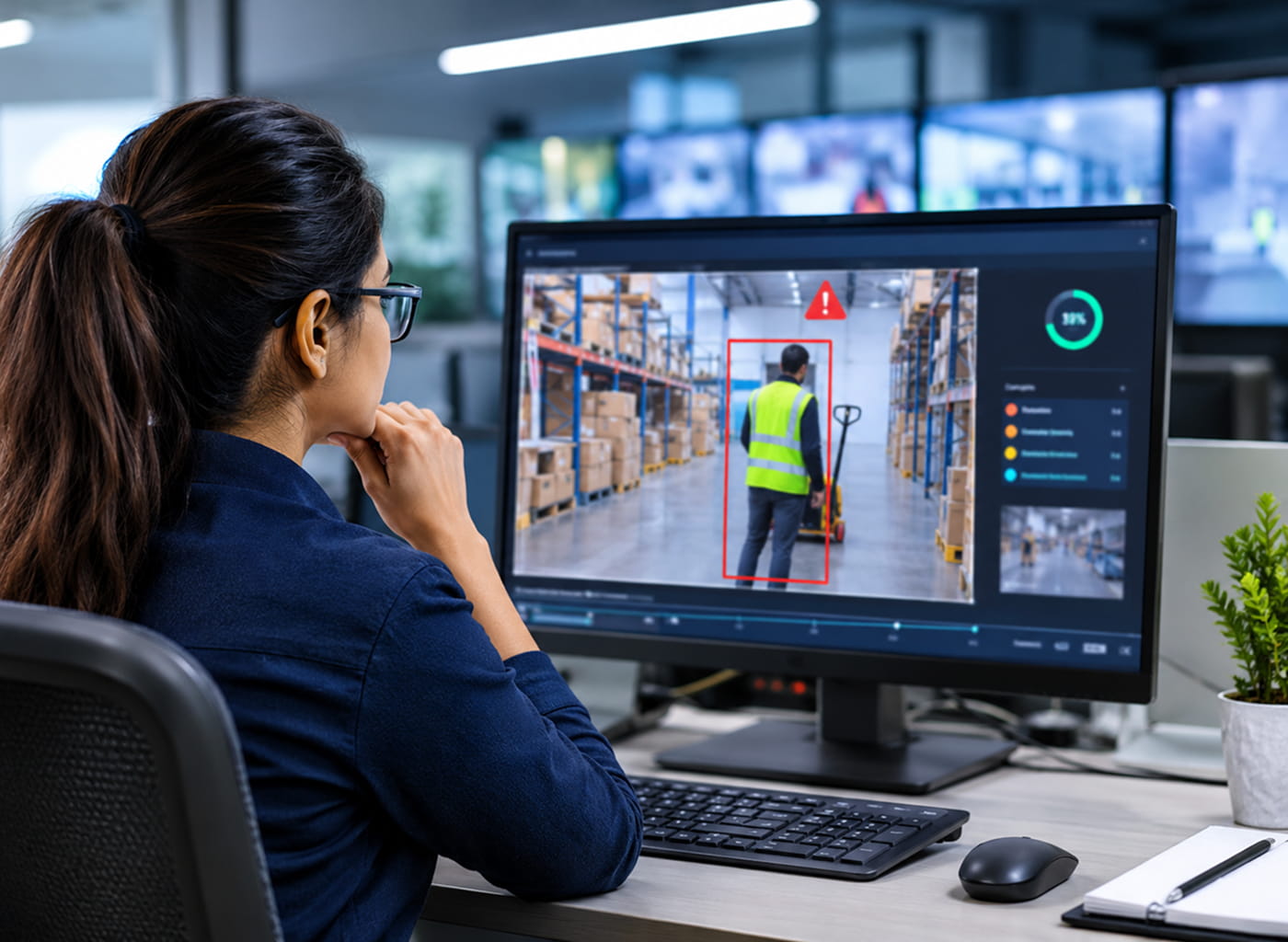
One of the most important architectural decisions is separating what the model observes from what the system is authorised to do.
A model might detect a possible safety violation, identify a damaged product or recognise an unusual movement pattern. But the consequences of acting on that output vary significantly. Some events may justify an immediate automated response. Others may require a second signal, a rule check or human confirmation. In high-consequence environments, the system may need to record the observation and escalate it rather than act autonomously.
The decision layer should therefore consider confidence, severity, business rules, permissions and the cost of false positives and false negatives. A low-confidence detection should not be treated in the same way as a repeatedly confirmed event. Likewise, an alert that is harmless when raised once may become disruptive when generated hundreds of times.
This separation also improves accountability. It becomes possible to trace what the model detected, what contextual information was considered, which rule was applied, and why a particular action was taken. Such traceability is important when a system influences operational decisions.
Human oversight should be designed into the workflow rather than added after deployment. Staff need to understand why an alert was raised, have a practical way to correct an error, and know what happens when the system cannot reach a reliable conclusion. This reflects a failure-first engineering approach: defining fallback workflows, safe defaults and recovery paths before a system is exposed to unpredictable operating conditions.
Measure operational value, not just visual accuracy
Computer vision projects can become overly focused on model metrics. Precision, recall, false-positive rates, and detection latency are important, but they do not tell the entire business story.
A retailer should also examine whether visual detection reduces the time required to identify and resolve shelf gaps. A manufacturer should measure whether inspection improves defect detection without creating excessive false rejections. A warehouse should determine whether tracking improves throughput or reduces the time spent locating inventory. These outcomes connect technical performance to operational value.
The evaluation must also include the cost of running the system. Cameras, edge devices, connectivity, cloud processing, storage, integration, maintenance, and human review all contribute to the total cost of ownership. A solution that performs well but requires constant manual correction may not be commercially viable.
A sensible pilot begins with a narrow operational problem, a clearly defined environment, and an agreed baseline. The team should identify what the system is expected to detect, which contextual sources it needs, what actions may follow, and how success will be measured. It should also define conditions under which the system must abstain, escalate, or fall back to an existing process.
This approach produces more useful evidence than a broad demonstration designed primarily to show that a model can recognise objects.
The camera is not the solution. The system is.
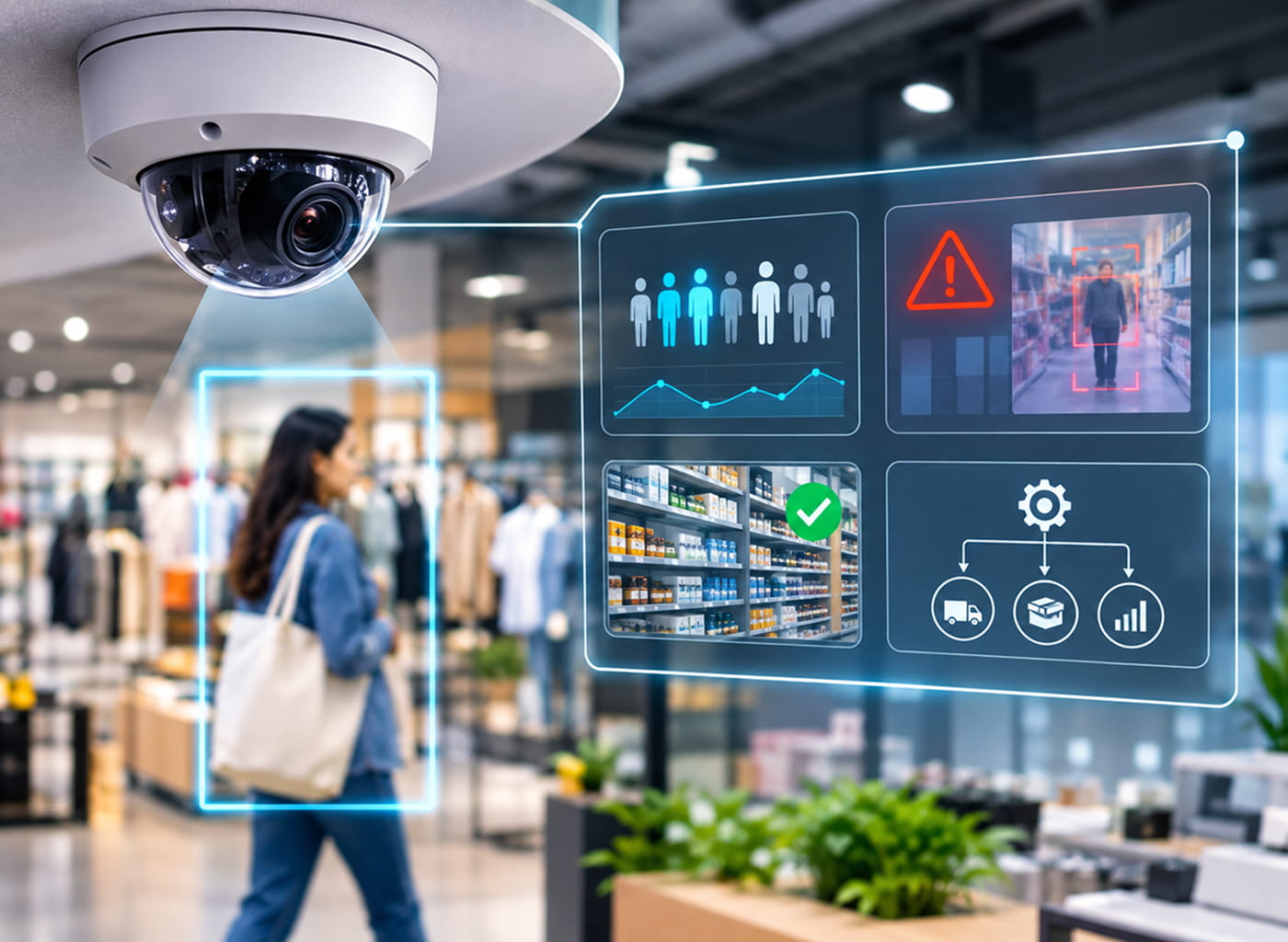
Computer vision will continue to improve, and its applications across retail, healthcare, manufacturing and logistics will expand. Yet better models will not eliminate the need for sound engineering. They will make it even more important to distinguish visual recognition from operational understanding.
The organisations that get lasting value from computer vision will be those that connect images to reliable data, business rules, human workflows and measurable outcomes. They will treat the camera as one source of information within a larger system, not as an independent source of truth.
For technology leaders, the question should therefore extend beyond what a model can see. The more important question is whether the organisation can interpret what it sees, understand the consequences, and respond appropriately.
That is where computer vision becomes operational intelligence rather than an impressive demonstration.