






Every AI Project Has One Constraint Nobody Mentions
Why Context, Not Models, Determines Success Executive Summary Every AI project begins with excitement. The conversation quickly turns to mod...

A software system can be technically correct and still fail in practice.
The database can be well designed. The APIs can follow clean contracts. The code can pass its tests. The infrastructure can scale exactly as expected. Yet users may still avoid the system, work around it, enter incorrect information, or invent their own processes to get their jobs done.
This happens because software rarely operates in isolation. It operates inside organizations, workflows, habits, incentives, and relationships. People bring experience, assumptions, shortcuts, preferences, frustrations, and occasionally simple resistance to every system they use. As a result, engineering a reliable product requires more than engineering the technology itself.
This is the central challenge of human-centered software engineering. Instead of treating human behavior as an external variable that users must adapt to, it treats human behavior as one of the conditions the system must be designed around.
That doesn’t mean allowing every existing habit to dictate the architecture. Sometimes software should deliberately change how people work. However, when a system ignores how people actually behave, users eventually create workarounds, and those workarounds become part of the real system whether the engineering team intended them or not.
The most successful software therefore sits somewhere between technical design and human reality. It provides structure without creating unnecessary friction, automation without removing appropriate control, and consistency without pretending that every situation will follow the same path.
Imagine a hospital introducing a new digital system for managing patient consultations.
The workflow looks sensible on paper. The receptionist registers the patient, the nurse records the preliminary information, the physician completes the consultation, the prescription is generated, and the patient moves to the next stage of care.
The software works exactly according to the approved workflow.
Then reality arrives.
A physician sees an emergency patient before completing the previous record. A nurse needs to correct information entered earlier. A patient arrives without one of the documents the registration process expects. A specialist wants to record an observation that doesn’t fit neatly into the predefined fields. Someone temporarily loses connectivity and continues working from memory.
None of these situations necessarily indicates poor discipline.
They are simply part of operating a real healthcare organization.
The same pattern appears in retail, banking, logistics, manufacturing, education, and almost every other domain. Software enters an environment where people have already developed ways of getting work done. Those existing behaviors may be inefficient, but they often exist for reasons that aren’t immediately visible in a requirements document.
That is why building software for people requires understanding the environment in which the software will live.

Organizations often have two versions of a process.
The first is the official workflow. It appears in policy documents, process diagrams, SOPs, and requirements specifications. It describes how the organization believes work should happen.
The second is the operational workflow. It describes how work actually happens when deadlines, exceptions, incomplete information, competing priorities, and real customers enter the picture.
The difference between the two can be surprisingly large.
A sales team may be expected to record every customer interaction in a CRM, for example, but representatives may maintain private notes because the CRM takes too long to update. A warehouse may have a formally defined inventory process, while experienced employees use additional checks because they know where discrepancies usually occur. A hospital may have a standard patient journey, while clinicians frequently move between stages depending on the patient’s condition.
If engineering teams design only around the official workflow, they may create software that looks correct during demonstrations but becomes inconvenient during actual use.
That is where workarounds begin.
And once workarounds become common, the organization effectively has another software system—one built out of spreadsheets, messages, phone calls, personal notes, and human memory.
There is an interesting paradox in enterprise software.
New users often follow the system exactly as designed because they haven’t yet learned the shortcuts.
Experienced users behave differently.
They know which fields are rarely used. They know which steps can be postponed. They know which colleague can resolve a particular problem faster than the official workflow. They know which system occasionally produces incorrect information and where to verify it.
In other words, experienced users develop a mental model of the gaps between the software and the real process.
Those gaps are extremely valuable engineering information.
Instead of dismissing experienced users as people who “don’t follow the process,” engineering teams should ask why the workaround exists. Sometimes the user has discovered an inefficient habit that should be eliminated. In other cases, the workaround reveals a genuine limitation in the product.
The distinction matters because blindly enforcing the software’s workflow can make a system technically more consistent while making the organization less productive.

Human-centered software engineering does not mean that engineers should simply reproduce every existing behavior inside a digital interface.
That would create a different problem.
Organizations often carry inefficient processes for years because changing them is difficult. Software provides an opportunity to challenge those processes.
Suppose employees manually copy information from one system into another because that is how the organization has always operated. Automating that transfer may be far better than designing a convenient interface for the manual process.
Similarly, if a retail employee spends twenty minutes performing a repetitive reconciliation task every evening, the answer may not be a better reconciliation screen. The better answer may be to remove the task entirely through automation.
Understanding people doesn’t mean accepting every behavior.
It means understanding why the behavior exists before deciding whether to preserve, change, or eliminate it.
That distinction is central to good product engineering.
There is also a tendency in product design to treat every additional step as friction.
Sometimes it is.
Sometimes it is protection.
A financial transaction may require additional verification because the cost of an incorrect transaction is significant. A healthcare system may require confirmation before changing a clinical record because the consequences of an accidental modification can be serious. A privileged administrative action may deliberately require several steps because convenience should not outweigh security.
The goal isn’t to eliminate every form of friction.
The goal is to distinguish between useful friction and unnecessary friction.
Human-centered software engineering asks whether a particular step exists for a meaningful reason. If it does, the system should make that step clear and efficient. If it doesn’t, the team should question why the user is still being asked to perform it.
That is a much more useful design conversation than simply counting clicks.
One of the easiest mistakes in software design is treating exceptions as something that can be dealt with later.
The main workflow receives careful attention because it represents most users and most transactions. Edge cases are pushed into future releases.
But in many real-world systems, exceptions are not rare.
Healthcare contains exceptions because patients don’t behave like predictable records. Commerce contains exceptions because inventory, delivery, payments, and customer expectations don’t always align. Enterprise systems contain exceptions because organizations contain people with different responsibilities and levels of authority.
The more consequential the workflow, the more important those exceptions become.
A good system therefore doesn’t simply ask, “What should happen normally?” It also asks, “What should happen when the normal process doesn’t apply?”
That question often reveals the most important product requirements.

Traditional enterprise software often treats people as data-entry operators.
The system presents a form. The user enters information. The system stores it. Another user retrieves it later.
Modern software needs to do more.
It should help people understand situations, make decisions, recognize anomalies, and determine what deserves attention.
This becomes especially important as artificial intelligence enters operational workflows.
An AI assistant that simply generates another block of information may increase the amount of information a person has to process. A well-designed AI system should instead help reduce cognitive burden by presenting relevant context, highlighting uncertainty, recommending appropriate actions, and making it clear when human judgment remains necessary.
The technology becomes valuable not when it replaces every decision, but when it helps people make better decisions with less unnecessary effort.
At Prologic, we approach software architecture with the understanding that every system eventually becomes part of someone’s working life.
That means we need to understand more than APIs, databases, integrations, and interfaces. We need to understand who uses the system, what they are trying to accomplish, what information they already have, where decisions occur, which exceptions appear regularly, and where people currently compensate for limitations in existing tools.
This perspective becomes particularly important in the domains we work in.
A healthcare platform has to fit the realities of clinicians, administrators, patients, laboratories, and other participants in the care journey. An intelligent commerce platform has to work for customers, store employees, operations teams, warehouse staff, customer-service teams, and business leaders. An AI-native engineering system has to accommodate both human judgment and increasingly capable machine-generated work.
In each case, the technical architecture is only part of the solution.
The larger challenge is designing a system that works with the people and processes around it.
Software has enormous power to change how organizations operate.
That is one of its greatest advantages, but also one of its greatest risks.
A system can make a good process easier. It can make a bad process more difficult. It can encourage better data quality, reduce unnecessary decisions, automate repetitive work, and make important information visible at the right moment.
However, behavior changes most successfully when people understand the benefit.
If employees believe a new system exists primarily to monitor them, they may resist it. If clinicians believe an AI assistant is second-guessing them, they may ignore it. If retail employees believe automation is being introduced solely to remove jobs, adoption will become more difficult.
The technology may still work perfectly.
The implementation can still fail.
Human-centered software engineering therefore includes the experience of organizational change. Good software should make the better behavior easier, explain why important changes matter, and provide people with enough control to trust the system.

The deeper lesson is that software engineering isn’t only about controlling technical complexity.
It is also about managing the complexity created when technology meets human behavior.
People will misunderstand interfaces. They will find shortcuts. They will make mistakes. They will develop preferences. They will encounter situations the original product team never considered. They will sometimes use the system in ways that look strange until someone understands the context behind the behavior.
A mature engineering team doesn’t treat these events merely as problems to eliminate.
It treats them as signals.
They tell us where the product doesn’t match reality. They reveal assumptions that need reconsideration. They expose workflows that require better support. They sometimes uncover opportunities for automation that weren’t visible during the original discovery process.
The system becomes better because the team pays attention to how people actually use it.
The hardest part of software engineering is rarely getting a machine to follow instructions. Computers are remarkably good at that.
The harder challenge is building a system that remains useful when imperfect humans, imperfect information, changing priorities, and unexpected situations enter the equation.
That is why human-centered software engineering matters.
It does not ask engineers to choose between technical excellence and user needs. Instead, it recognizes that technical excellence becomes meaningful only when the resulting system works reliably within the world it was built to serve.
The best software doesn’t force people to behave like machines.
It understands where people need structure, where they need flexibility, where automation can help, and where judgment must remain human.
And when those decisions are made well, something important happens: the software stops feeling like another system people have to work around.
It starts becoming part of the way they work.
Why Context, Not Models, Determines Success Executive Summary Every AI project begins with excitement. The conversation quickly turns to mod...
What production failures teach us about building systems that can survive reality There is a moment in almost every software project when th...
Why Great Software Is Discovered Through Use, Not Designed in Isolation Executive Summary There is a comforting idea in software development...
Why Digital Healthcare Still Feels Fragmented Despite Hundreds of New Solutions Executive Summary Healthcare has never had more software. Ho...
Why retailers should stop treating the cart as the problem There is a familiar conversation in eCommerce. The conversion rate has dropped. T...
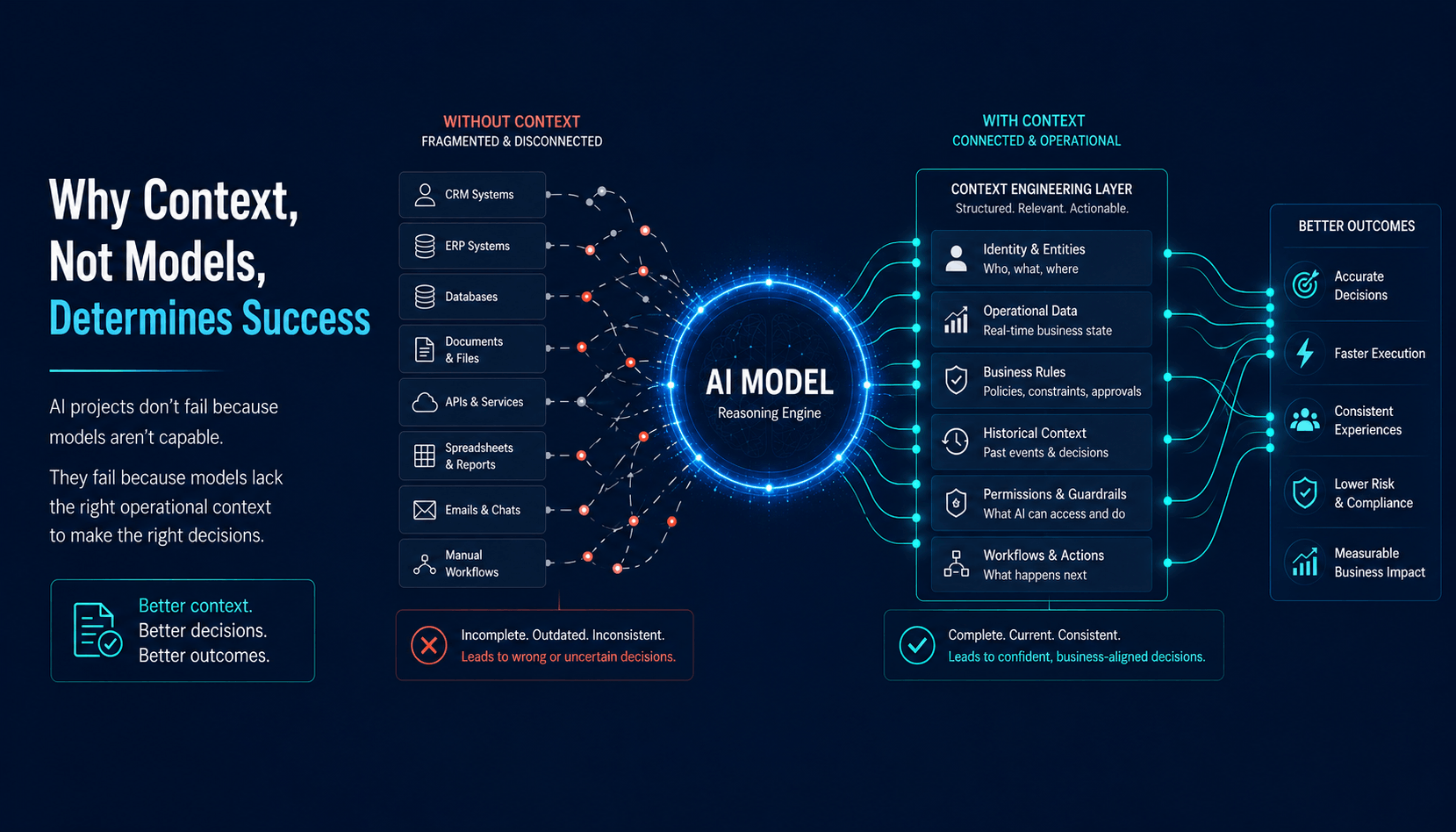
Every AI Project Has One Constraint Nobody Mentions

Why We Design Failure Before Features
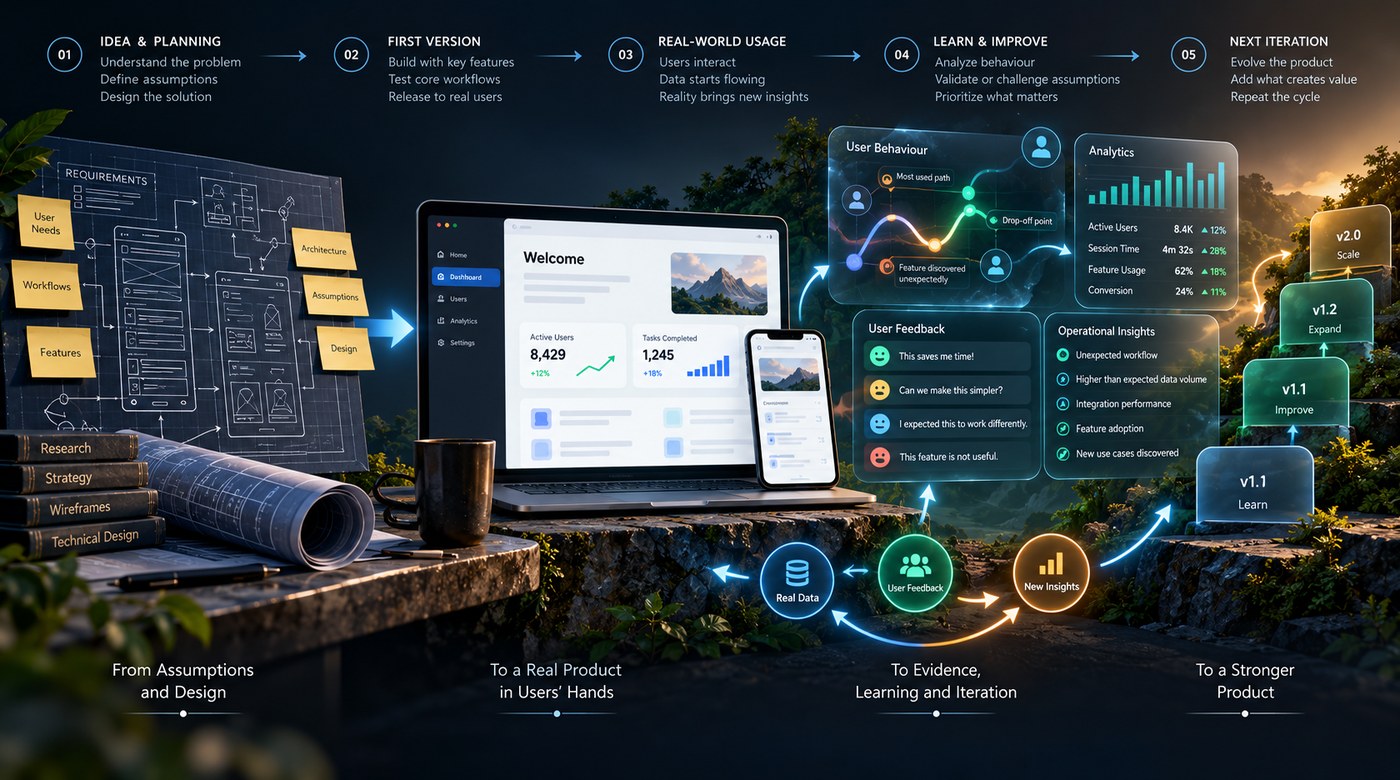
The First Version Is Rarely the Real Product
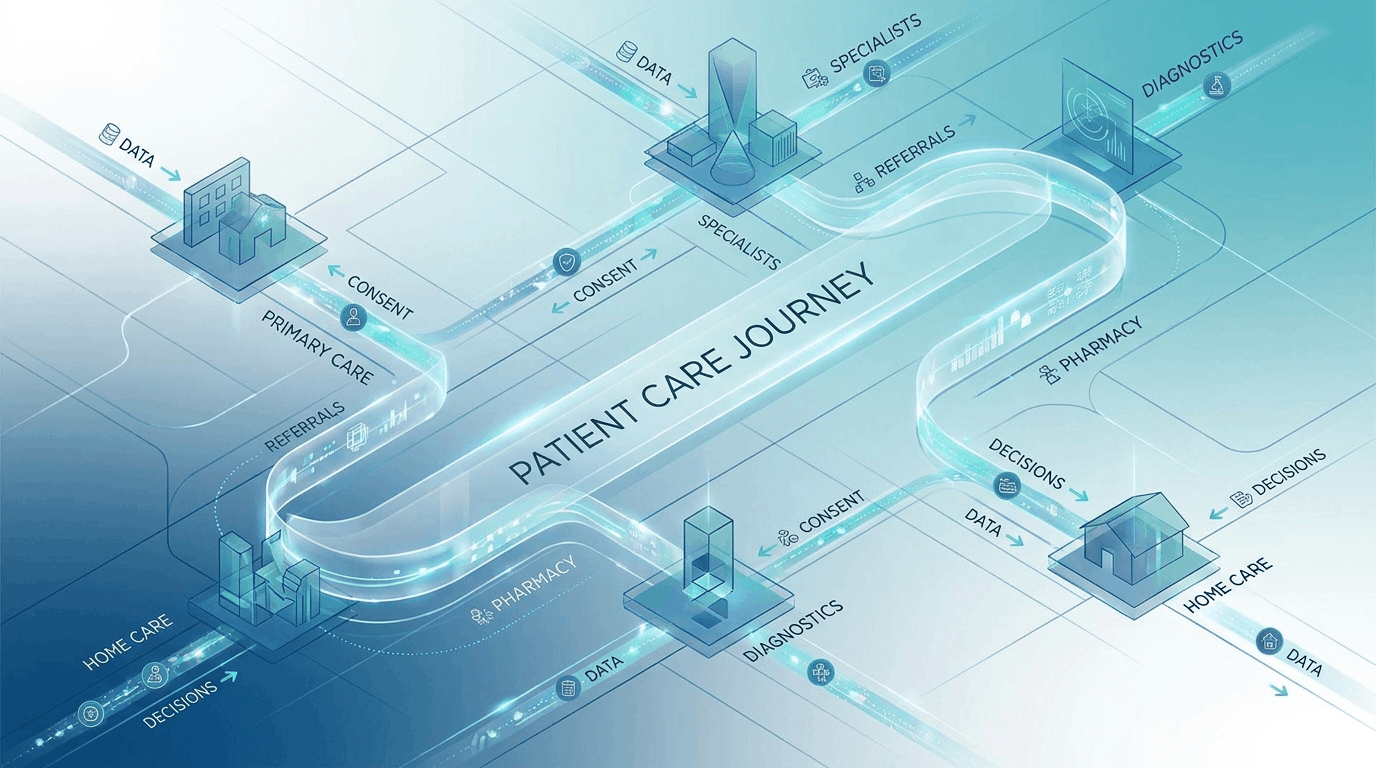
Healthcare Doesn’t Need More Apps. It Needs Connected Workflows.
Every Cart Abandonment Story Starts Earlier Than Checkout
