










Connected Care Is Really Connected Decisions
Why Sharing Data Isn't Enough to Transform Healthcare Executive Summary For years, digital health initiatives have focused on one primary ob...
Healthcare has spent decades digitizing information without truly connecting it. The next decade will be defined by how healthcare systems exchange information, understand it, act upon it, and protect patient identity, consent and privacy.

Interoperability is the bridge between digital healthcare and truly connected care. When information remains trapped inside applications, organizations incur slower clinical decisions, administrative overhead, duplicated investigations, and fragmented patient journeys. This executive brief explores the engineering decisions, standards, and architectures shaping connected care through 2030.
Healthcare leaders preparing for the next decade should evaluate their architectural readiness across these 8 core dimensions:
1
Is patient identity persistent and portable across your health systems without creating duplicate records?
2
Can your systems exchange standardized clinical resources (FHIR R4) via modern RESTful web APIs?
3
Can consent be captured, enforced, revoked, and audited digitally for every data exchange?
4
Can new digital health applications plug into your ecosystem without extensive architectural redevelopment?
5
Can existing legacy hospital systems participate in modern data sharing without requiring total replacement?
6
Is clinical data structured and standardized well enough to feed into generative AI and analytical models?
7
Can you deploy automated intelligence and clinical decision support without compromising physician oversight?
8
Can you demonstrably verify who accessed sensitive health records, when, and under what authorization?
Follow the strategic journey from fragmented systems to an intelligent, interoperable healthcare ecosystem.

Why the healthcare system was never designed to talk to itself, interoperability as a business imperative, the transition from HL7 to FHIR, and establishing patient identity (ABHA) as the persistent foundation.
Disconnected Systems
Business Imperative
FHIR Resources
Patient Identity (ABHA)
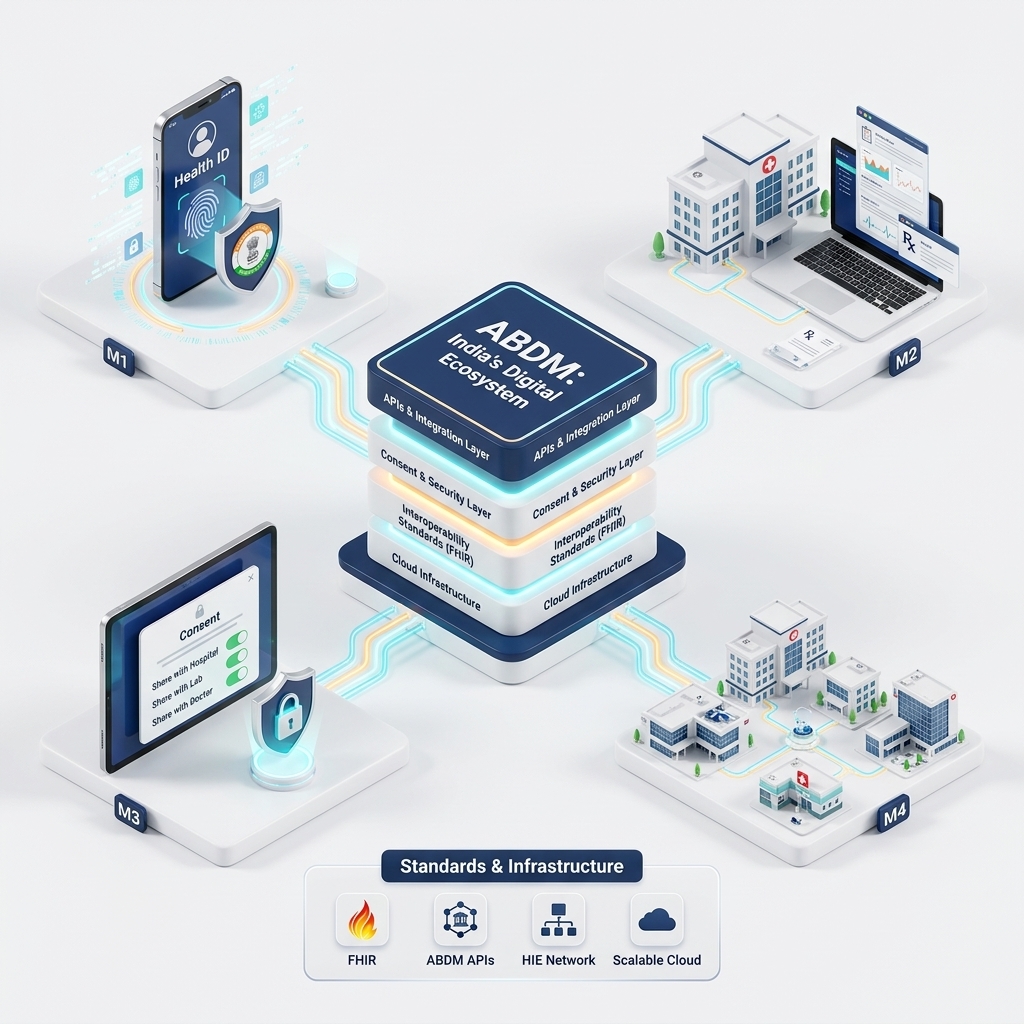
Consent as the architectural control plane, interoperability-powered AI, the emergence of the Healthcare API Economy, India’s national ABDM opportunity, and the layered healthcare architecture of 2030.
Consent Control Plane
Interoperability AI
API Economy
India ABDM Public Infra
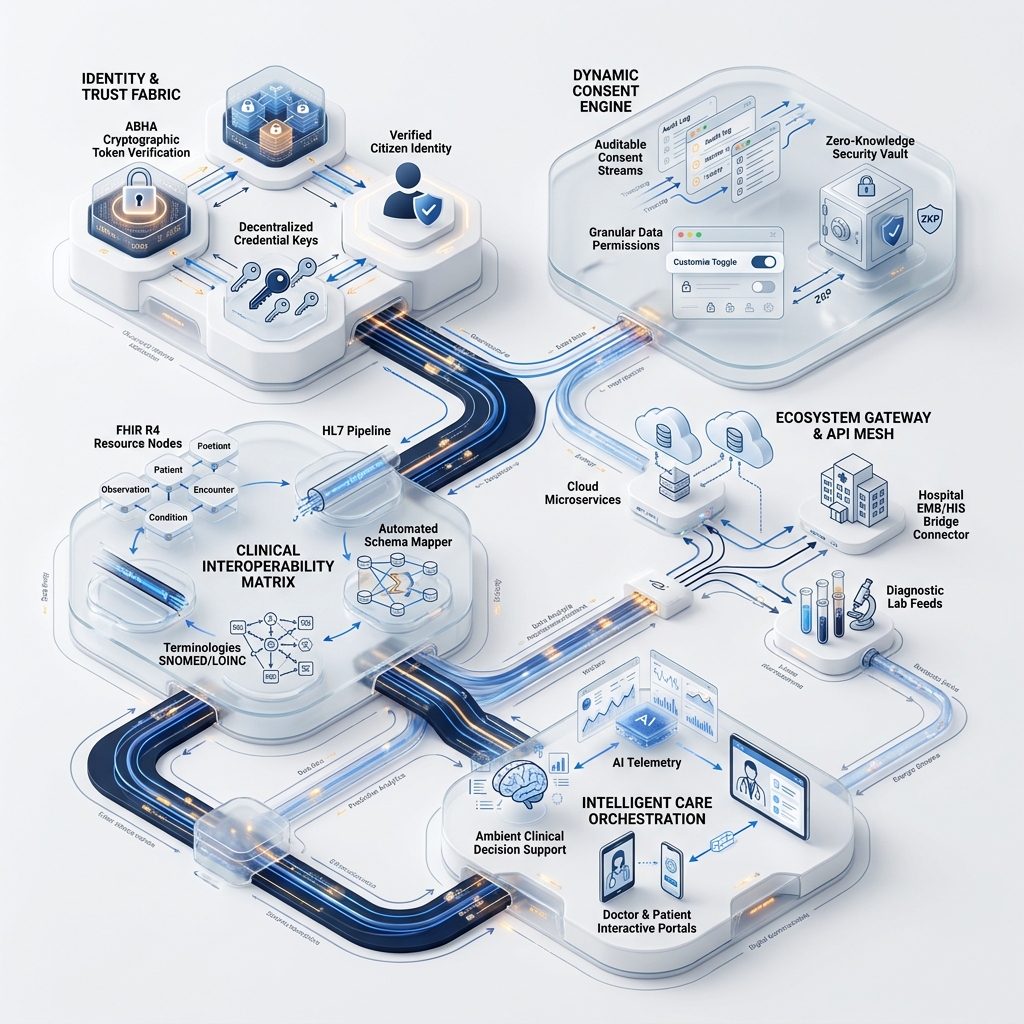
Connecting legacy hospital systems (HIS, EMR, PACS) to modern cloud APIs, the HealthFabric™ engineering platform (ProABDM, ProHealth Connect, ProHealth AI, ProTele Care), leadership checklist, and strategic roadmap.
Legacy Modernization
HealthFabric™ Platform
2030 Checklist
Continuous Evolution
Through HealthFabric™, Prologic brings together healthcare interoperability, ABDM engineering, AI-powered workflows and digital care into an integrated technology vision.
Our approach is deliberately engineering-led: understand the existing ecosystem, connect what matters, modernize what needs to evolve, and create an architecture capable of supporting what comes next.
Because the future of healthcare will not be built by replacing every system.
It will be built by connecting them intelligently.

Integration connects systems. Interoperability connects healthcare journeys. Prologic's HealthFabric™ platform brings together four complementary capabilities:

The foundation for participating in India's ABDM digital health ecosystem.

The interoperability layer connecting hospital software, APIs and fragmented data.

The intelligence layer turning interoperable clinical records into AI workflows.
The secure care-delivery layer enabling virtual patient-provider interactions.

Why Sharing Data Isn't Enough to Transform Healthcare Executive Summary For years, digital health initiatives have focused on one primary ob...
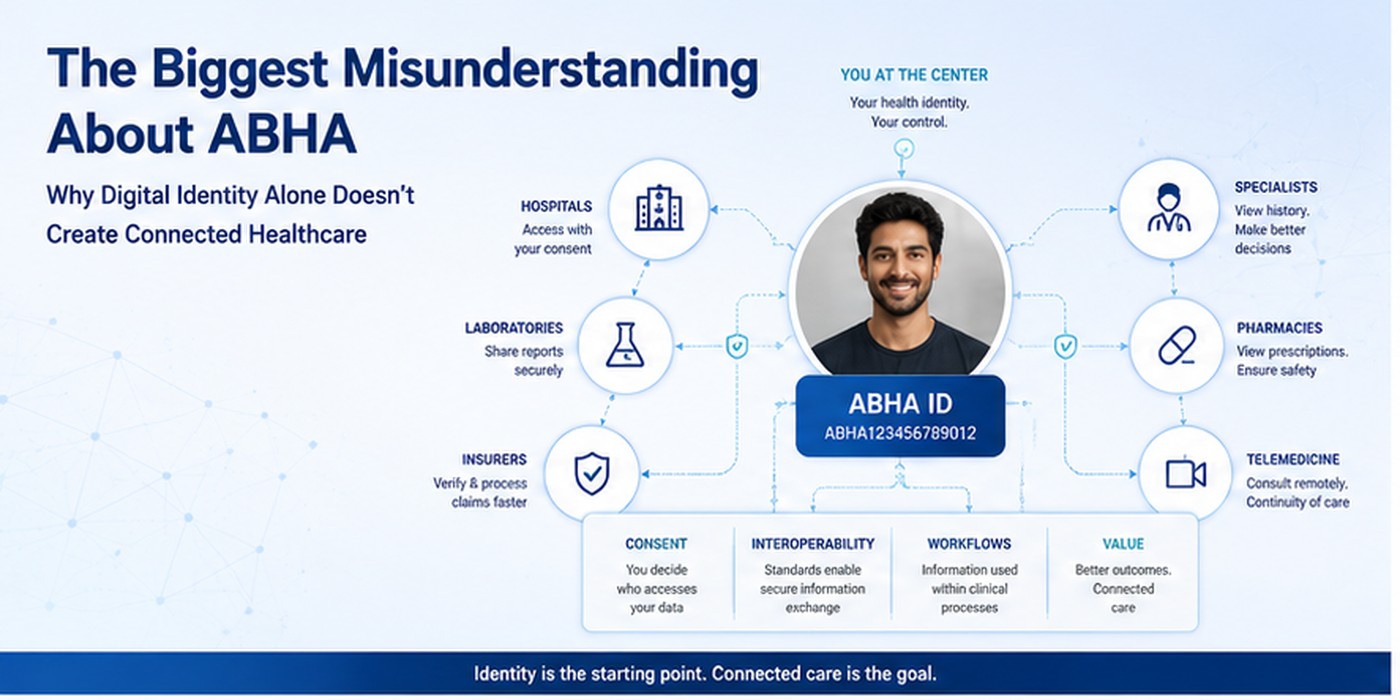
Why Digital Identity Alone Doesn't Create Connected Healthcare Executive Summary When people first hear about the Ayushman Bharat Health Acc...
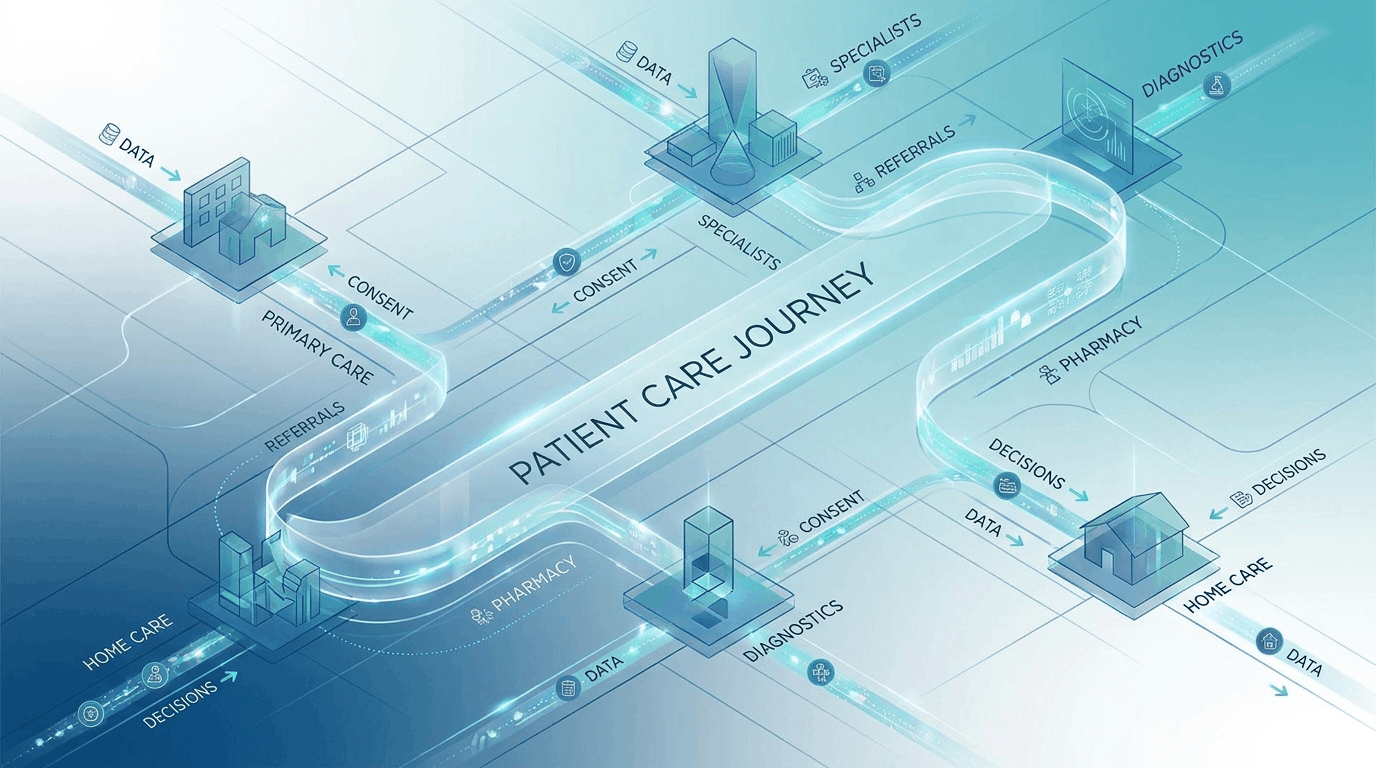
Why Digital Healthcare Still Feels Fragmented Despite Hundreds of New Solutions Executive Summary Healthcare has never had more software. Ho...
