






Every AI Project Has One Constraint Nobody Mentions
Why Context, Not Models, Determines Success Executive Summary Every AI project begins with excitement. The conversation quickly turns to mod...
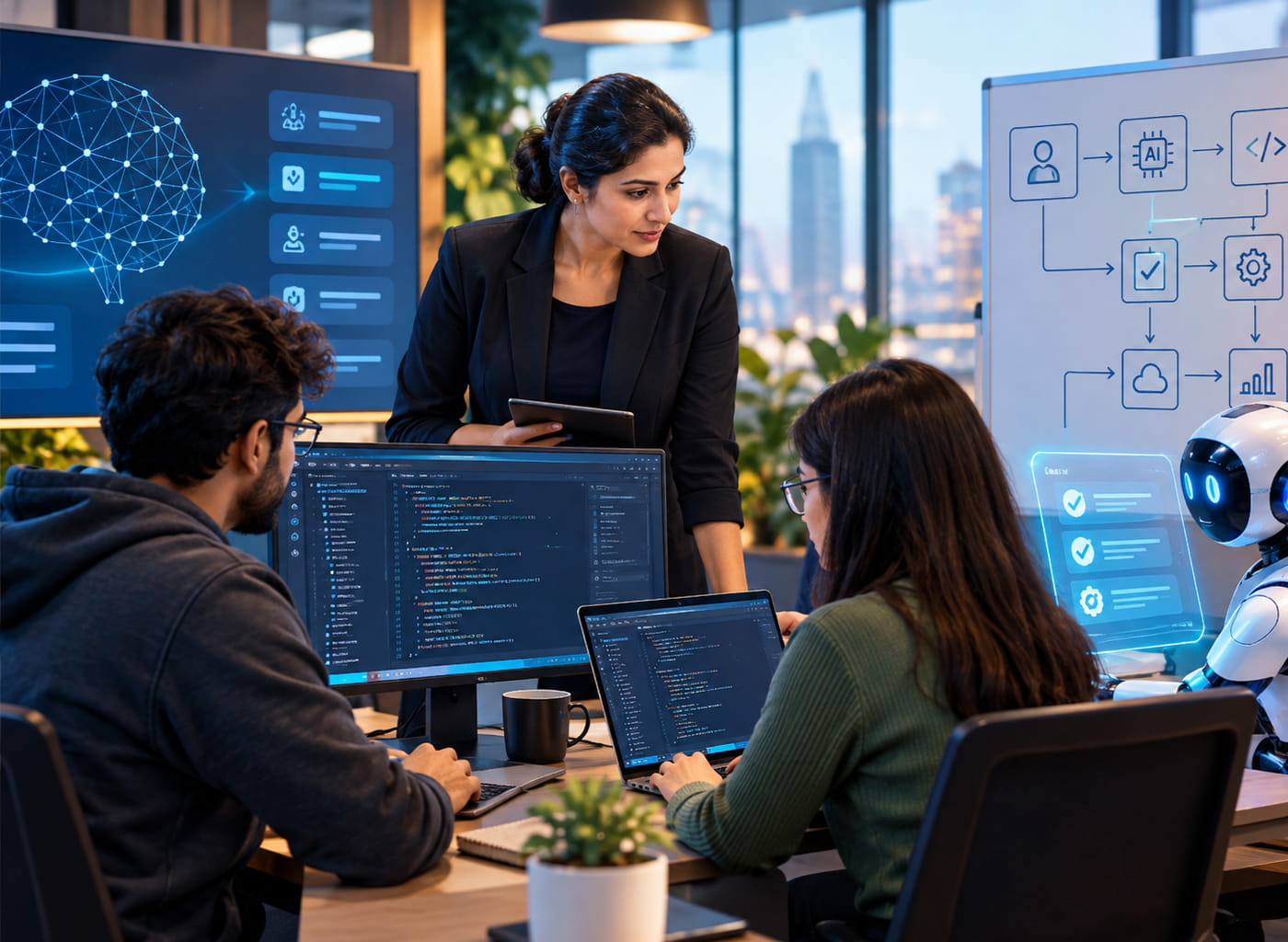
For most of the history of software engineering, the organizational model was relatively straightforward. A company had engineers, technical leads, architects, engineering managers and a CTO. People designed systems, wrote code, reviewed pull requests, investigated failures and decided what should be built next. Tools became increasingly powerful, but the fundamental unit of engineering remained the human developer.
That assumption is beginning to change.
AI can now understand requirements, explore unfamiliar codebases, generate implementations, write tests, analyze errors, propose architectural changes and perform repetitive engineering tasks. The important change is not that developers have acquired another productivity tool. The deeper change is that some engineering work can now be delegated to systems that can reason about a task, execute multiple steps and return an outcome.
That creates a new organizational question.
If an engineering team increasingly consists of humans working alongside AI agents, what exactly is the CTO responsible for managing?
The answer cannot simply be “the AI.”
AI agents do not replace the engineering organization. They become another layer within it. They need context, boundaries, objectives, access controls, evaluation mechanisms, supervision and feedback. They need to know what they are allowed to change and what requires human approval. They need reliable information about the product and the system they are operating within.
In other words, AI does not eliminate engineering management.
It makes engineering management more architectural.
A traditional engineering team is built around human capacity. If a company has ten developers, its delivery capacity is influenced by their experience, specialization, availability and ability to collaborate.
Adding AI changes the equation because some work that previously required human execution can now be delegated.
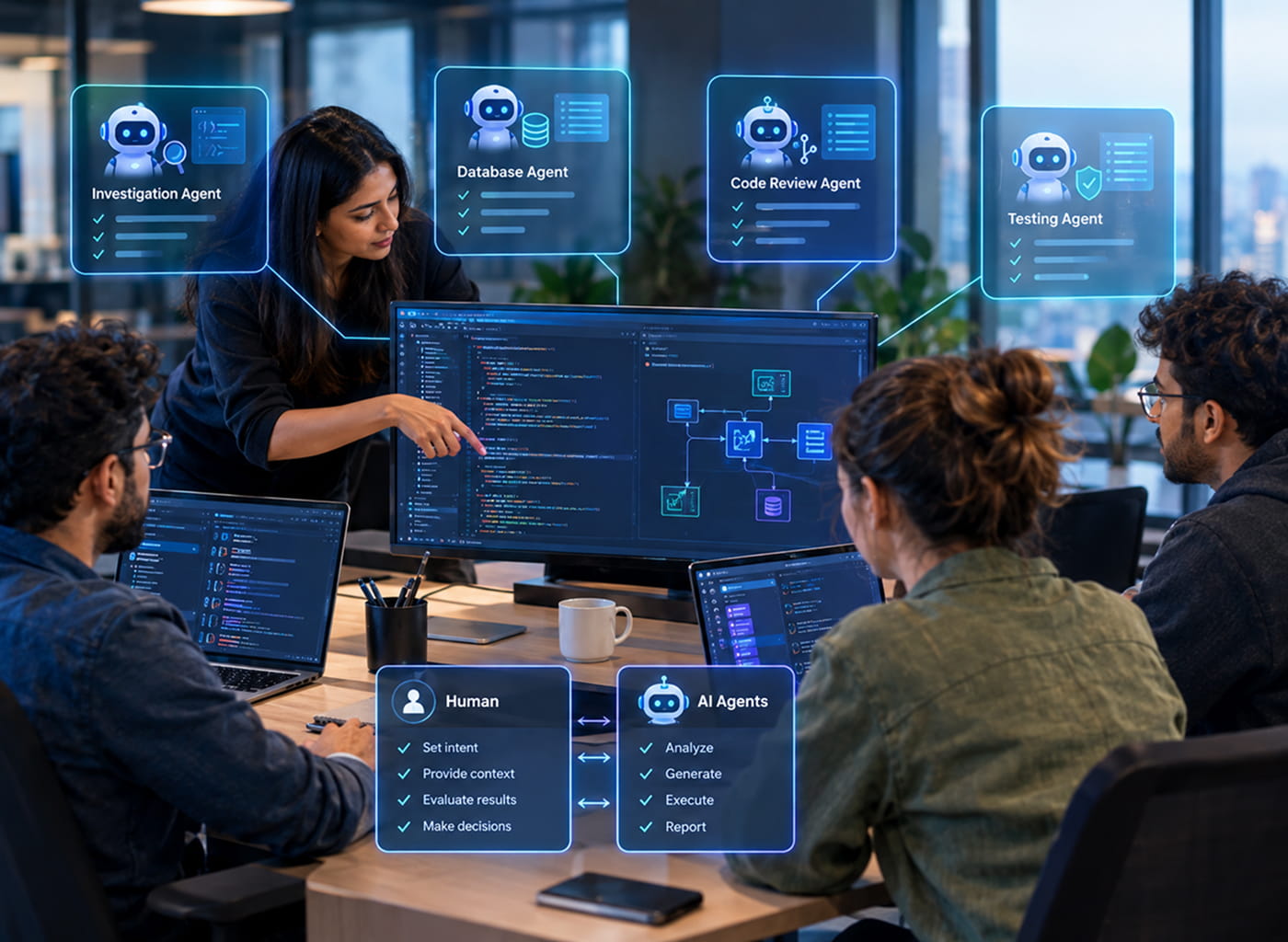
A developer might use an AI agent to investigate a production error, identify the relevant modules, trace the execution path, propose a fix, generate tests and prepare a change for review. Another agent might analyze a database schema and identify inconsistencies. A third might inspect a pull request against architectural rules. A testing agent might generate edge cases that the original developer did not consider.
The developer has not disappeared from the process. Their role has changed.
Instead of personally performing every engineering activity, they increasingly decide which work should be delegated, what context should be provided, how the output should be evaluated and where human judgment is required.
That is a meaningful shift.
For decades, software organizations optimized around dividing work between people. Architecture was divided among architects and developers. Development was divided among frontend and backend engineers. Testing was divided among developers and QA teams. Operations was divided among engineering and infrastructure teams.
AI introduces another dimension: some work can now be divided between human judgment and machine execution.
This does not mean every task should be handed to an agent. It means engineering organizations can begin designing a deliberate allocation of responsibility.
A useful way to think about this is not as humans versus AI, but as a new engineering system in which humans determine intent and accountability while machines increasingly participate in analysis and execution.
The CTO’s role becomes central to deciding how that system should operate.
Management has always been partly about delegation.
A CTO does not personally write every service, review every line of code or investigate every incident. Work is delegated to engineering leaders and teams, who delegate further to individual engineers.
AI agents introduce a new form of delegation.
The difference is that an AI agent can potentially move from instruction to execution much faster than a conventional organizational hierarchy. It can inspect a codebase, make changes, run tests and iterate without requiring a human to perform each intermediate action.
That creates enormous potential, but it also creates a new risk.
Poor delegation to a human is usually constrained by organizational structure. Poor delegation to an AI agent can scale very quickly.
If an agent has broad repository access, unclear requirements and insufficient validation, it can generate a large amount of technically plausible but incorrect work in a short period of time.
The solution is not to avoid agents.
The solution is to engineer the delegation system.
An AI agent needs a clearly defined task, appropriate context, constrained permissions, measurable acceptance criteria and a mechanism for review. It should know whether it is expected to investigate, recommend, modify, test or deploy. It should also know when it has reached the boundary of its authority.
This is remarkably similar to good engineering management.
The difference is that the delegated worker is now software.
That makes agent governance an engineering responsibility rather than merely an AI policy issue.
One of the most important consequences of AI-native engineering is that context becomes a scarce and valuable resource.
A human developer joining a project gradually learns its architecture, business rules, technical history, conventions and constraints. Much of that knowledge exists informally in conversations, tickets, documents, code reviews and the accumulated experience of the team.
An AI agent does not automatically possess that understanding.
If it is given only a ticket saying “add payment support,” it may generate technically valid code that does not fit the product’s payment architecture, security model, compliance requirements or existing integration patterns.
The problem is not necessarily the model’s intelligence.
The problem is missing context.
This changes the importance of engineering knowledge management.
Requirements, architecture decisions, domain rules, coding standards, test strategies, API contracts, security constraints and previous decisions increasingly need to exist in forms that both humans and machines can use.
This is one reason the AI-native engineering organization will look different from the traditional software organization. The codebase alone is no longer sufficient as the complete representation of the system.
The engineering organization needs a broader context layer.
That layer may contain product requirements, architectural decisions, domain knowledge, design constraints, test expectations, compliance rules, operational history and the reasoning behind important technical choices.
The CTO therefore has another responsibility that was previously less explicit: ensuring that organizational knowledge can be reliably transferred between people and machines.
The quality of that context will directly influence the quality of the engineering output.
Traditional engineering leadership already involves balancing product priorities, technical debt, delivery speed, quality, security and team capability.
AI adds another variable: deciding how work should flow through humans and machines.
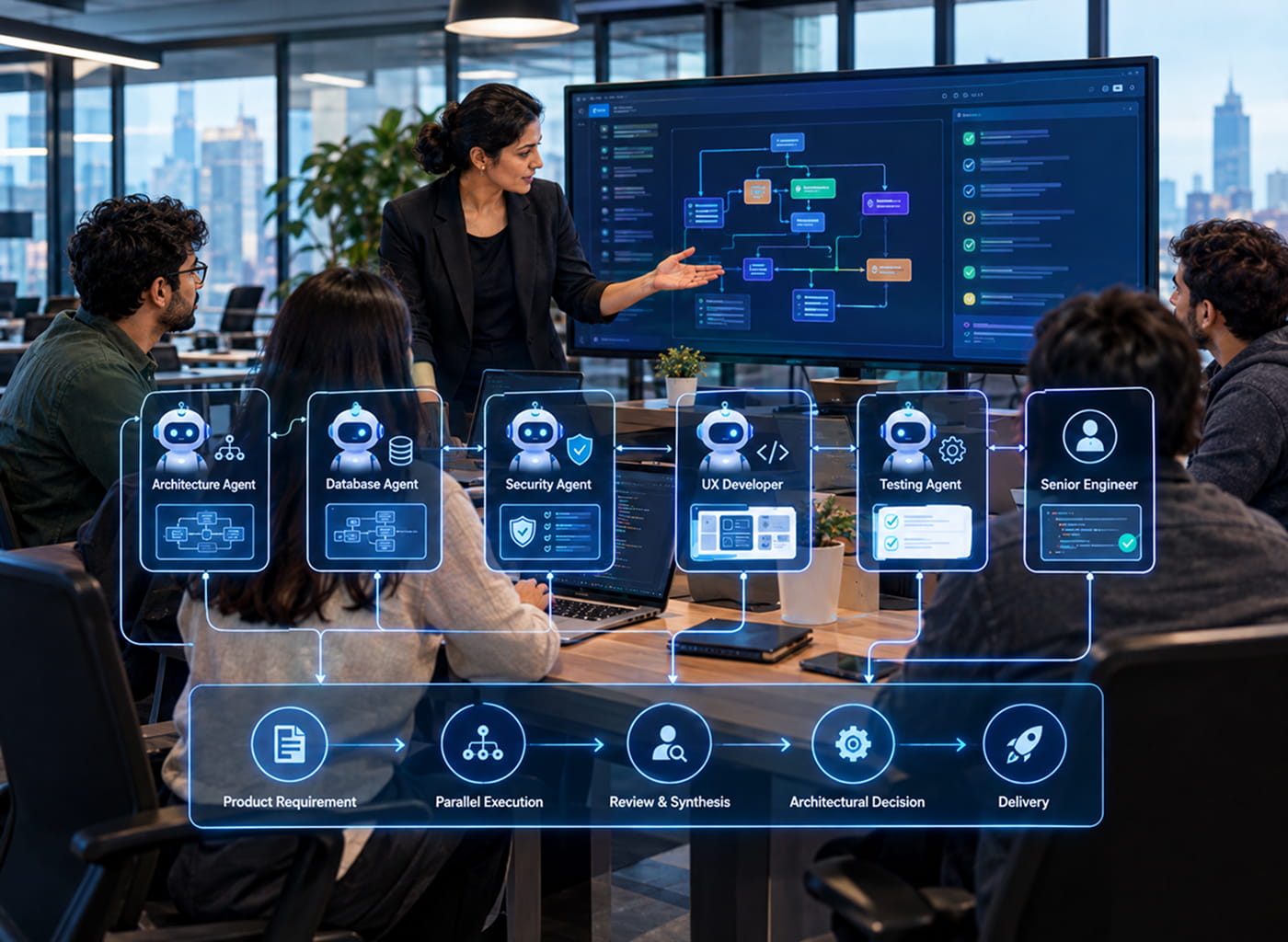
A future CTO may look at a product requirement and determine that several different types of engineering work should happen in parallel.
One agent might analyze the existing architecture. Another could examine the database implications. A third could identify security and compliance considerations. A developer could work on the user experience while another agent prepares automated tests. A senior engineer might then review the combined output and make the final architectural decision.
The CTO does not need to personally orchestrate every one of these activities.
Instead, the organization needs a repeatable operating model for orchestration.
This is where AI agents begin to resemble a new class of engineering workforce.
They can have defined responsibilities. They can operate within defined boundaries. Their output can be evaluated. Their performance can be measured. They can be assigned different levels of autonomy.
Some agents may operate almost entirely automatically because their tasks are deterministic and low risk.
Others may produce recommendations but require human approval.
High-impact changes may require senior engineering review regardless of how confident an agent appears.
The organization therefore needs something similar to a responsibility architecture for AI.
It should be clear which decisions belong to an agent, which belong to a developer, which require an architect and which remain with engineering leadership.
That is not bureaucracy for its own sake.
It is how an organization scales responsibility without losing control.
Software organizations have always struggled with engineering productivity metrics.
Lines of code are a poor measure. Ticket counts can encourage undesirable behavior. Story points measure estimation systems more than actual value. Even deployment frequency can become misleading if the organization optimizes for activity rather than outcomes.
AI makes these weaknesses more obvious.
An engineer assisted by AI may produce significantly more code than before. But more code is not necessarily more value.
If an AI agent generates five thousand lines of code and the engineering team spends the next two weeks correcting it, the apparent productivity gain was meaningless.
The more useful question is whether the engineering system can move from intent to reliable software more effectively.
That means future engineering metrics will increasingly need to consider the quality of delegated work, review effort, defect rates, rework, deployment confidence, incident frequency and the time required to move from a validated requirement to a working capability.
The organization may also need to measure how effectively humans and agents work together.
For example, how much engineering time is spent reviewing machine-generated work? Which types of tasks produce reliable agent output? Where do agents repeatedly fail? Which contextual information improves their performance? Where is human intervention still essential?
These questions turn AI adoption into an engineering optimization problem.
The CTO’s responsibility is not to maximize AI usage.
It is to maximize reliable engineering throughput.
That distinction will become increasingly important as organizations become more comfortable with autonomous development systems.
One of the paradoxes of AI-assisted development is that writing software is becoming cheaper while verifying software remains difficult.
Generating a function can take seconds.
Determining whether that function represents the correct business rule can take considerably longer.
AI can produce code that compiles, passes basic tests and looks structurally convincing while still being wrong in ways that matter to the business.
This changes the balance between creation and verification.
When code generation becomes inexpensive, engineering organizations need stronger review systems rather than weaker ones.
Automated testing becomes more important.
Architecture checks become more important.
Static analysis becomes more important.
Security scanning becomes more important.
Traceability between requirements and implementation becomes more important.
Human review of high-risk changes becomes more important.
The purpose is not to distrust AI.
The purpose is to recognize that generation and validation are different engineering problems.
A mature AI-native organization therefore treats agents as participants in a controlled engineering pipeline rather than unrestricted code generators.
The agent can propose and implement.
The system can test and inspect.
Humans can review where judgment matters.
Only then can the organization increase execution capacity without proportionally increasing technical risk.
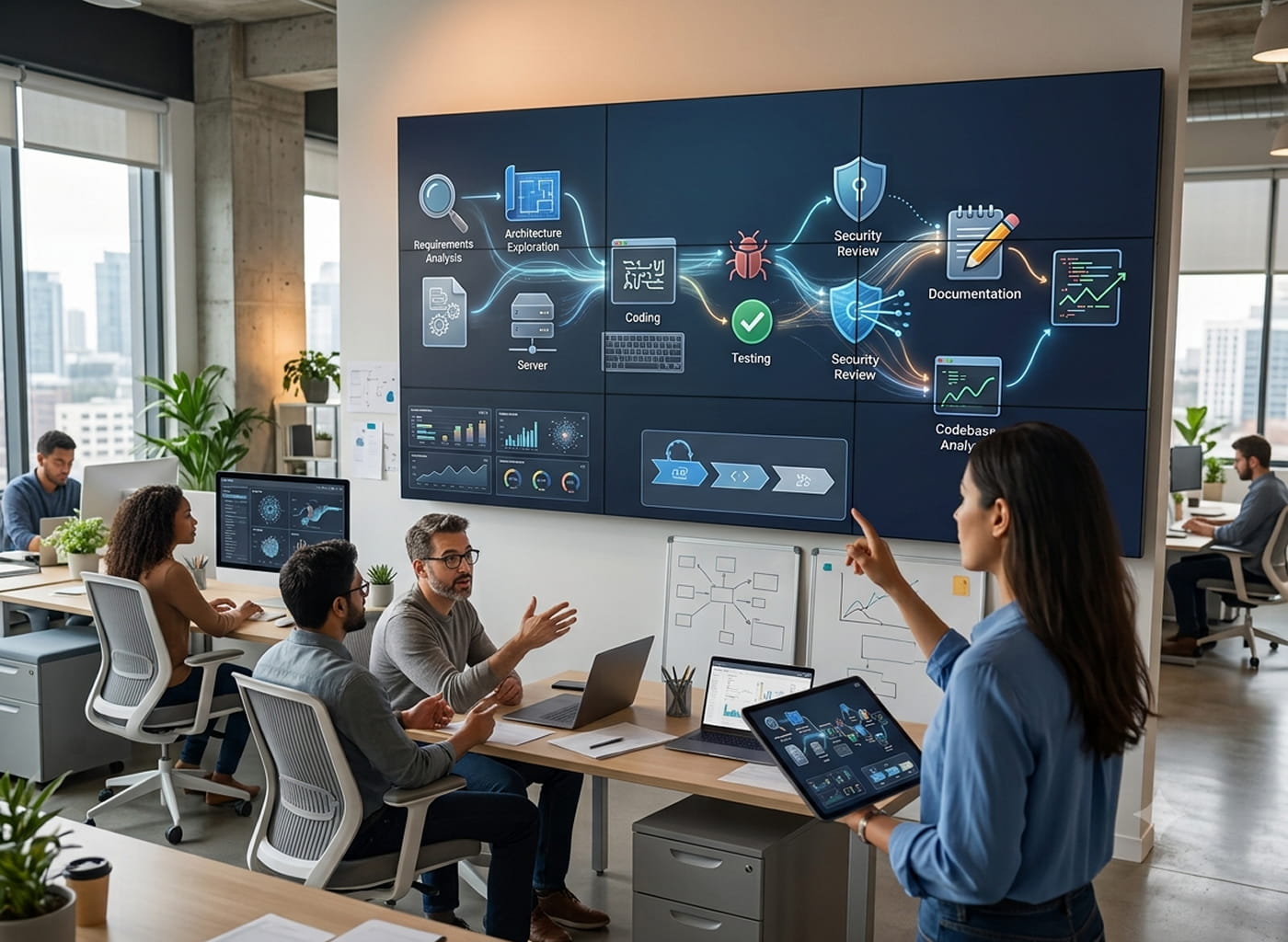
There is a temptation to approach AI adoption by giving every developer access to the same AI coding tool and declaring the organization AI-enabled.
That is unlikely to produce a durable advantage.
Tools improve individual productivity, but organizations gain leverage when they redesign the way work moves through the system.
An AI-native engineering team may have agents dedicated to requirements analysis, architecture exploration, coding, testing, security review, documentation and codebase analysis. These agents do not need to operate independently. They can form a controlled pipeline in which each stage provides structured output to the next.
The human engineers remain responsible for product understanding, architecture, judgment and accountability.
The machines handle more of the repetitive analytical and implementation work.
The real advantage comes from the system connecting those capabilities.
This is similar to what happened with modern software delivery itself. Continuous integration was not valuable merely because automated builds existed. It became valuable because development, testing and deployment were connected into a repeatable flow.
AI agents will follow a similar trajectory.
The competitive advantage will not come simply from having access to an advanced model. Most serious engineering organizations will eventually have access to capable models.
The advantage will come from having better context, better workflows, better evaluation, better governance and better integration between humans and agents.
This may be the most significant change of all.
The CTO of the future will still need to understand technology deeply. Architecture, security, reliability, scalability and product engineering will remain fundamental.
But the CTO will increasingly need to understand something else: how engineering work itself should be designed.
Which activities should remain human?
Which can be delegated?
Which require human approval?
What context should agents receive?
How should agent output be evaluated?
What permissions should agents have?
How should engineering knowledge be captured?
How should failures be detected?
How should the organization learn from incorrect machine-generated work?
These are not questions that can be answered by selecting a better AI model.
They are organizational architecture questions.
The future CTO therefore becomes partly an architect of an engineering system that contains people, software agents, automated workflows, knowledge repositories and governance mechanisms.
That is a broader responsibility than managing a development department.
It is closer to designing an adaptive production system for software.
At Prologic, the transition toward AI-native engineering is not about asking developers to write code faster with an AI assistant.
The larger opportunity is to redesign the complete engineering lifecycle around human and machine collaboration.
Requirements can be clarified with AI.
Products can be decomposed into capabilities.
Compliance and architectural constraints can be analyzed early.
Data models and workflows can be explored before implementation.
Agents can participate in coding and testing.
AI can review code against known architectural and engineering standards.
Humans can remain responsible for decisions that require domain understanding, accountability and judgment.
This is the thinking behind PAINE – Prologic AI Native Engineering.
The objective is not to create an engineering organization where humans become supervisors of machines.
It is to create an engineering organization where humans and AI systems operate as coordinated participants in the same delivery system.
That distinction matters.
A developer with an AI tool is still fundamentally working in the traditional model.
An AI-native engineering organization changes the model itself.
And once that happens, the role of the CTO changes with it.
The CTO is no longer simply responsible for building the engineering team.
The CTO becomes responsible for designing the system through which humans, AI agents, engineering knowledge and software delivery work together.
That is likely to become one of the defining leadership challenges of the next generation of software companies.
AI is changing software engineering from a process performed primarily by humans into a system in which humans and AI agents increasingly share analysis, implementation, testing and operational responsibilities.
This does not make engineering leadership less important. It makes it more complex.
The future CTO will need to decide which activities should remain human-led, which can be delegated to AI agents, what context those agents require, what permissions they should receive and how their output should be evaluated. Engineering organizations will need stronger knowledge systems, governance, testing and review mechanisms as machine-generated software becomes more common.
The key competitive advantage will not simply be access to better AI models. It will come from building better systems for orchestrating people, agents, context, workflows and validation.
The future CTO is therefore likely to become less of a manager of developers alone and more of an architect of the engineering system itself.
This paper is particularly relevant for CTOs, CIOs, engineering VPs, technology founders, engineering managers, solution architects and technical leaders who are evaluating how AI agents will change software delivery.
It is also relevant to organizations moving from individual AI coding assistants toward structured AI-native engineering practices, particularly where reliability, security, compliance and architectural consistency matter.
Why Context, Not Models, Determines Success Executive Summary Every AI project begins with excitement. The conversation quickly turns to mod...
What production failures teach us about building systems that can survive reality There is a moment in almost every software project when th...
Why Great Software Is Discovered Through Use, Not Designed in Isolation Executive Summary There is a comforting idea in software development...
Why human behavior, organizational habits, and real-world exceptions often matter more than technical elegance Executive Summary A software...
Why Digital Healthcare Still Feels Fragmented Despite Hundreds of New Solutions Executive Summary Healthcare has never had more software. Ho...
Why retailers should stop treating the cart as the problem There is a familiar conversation in eCommerce. The conversion rate has dropped. T...
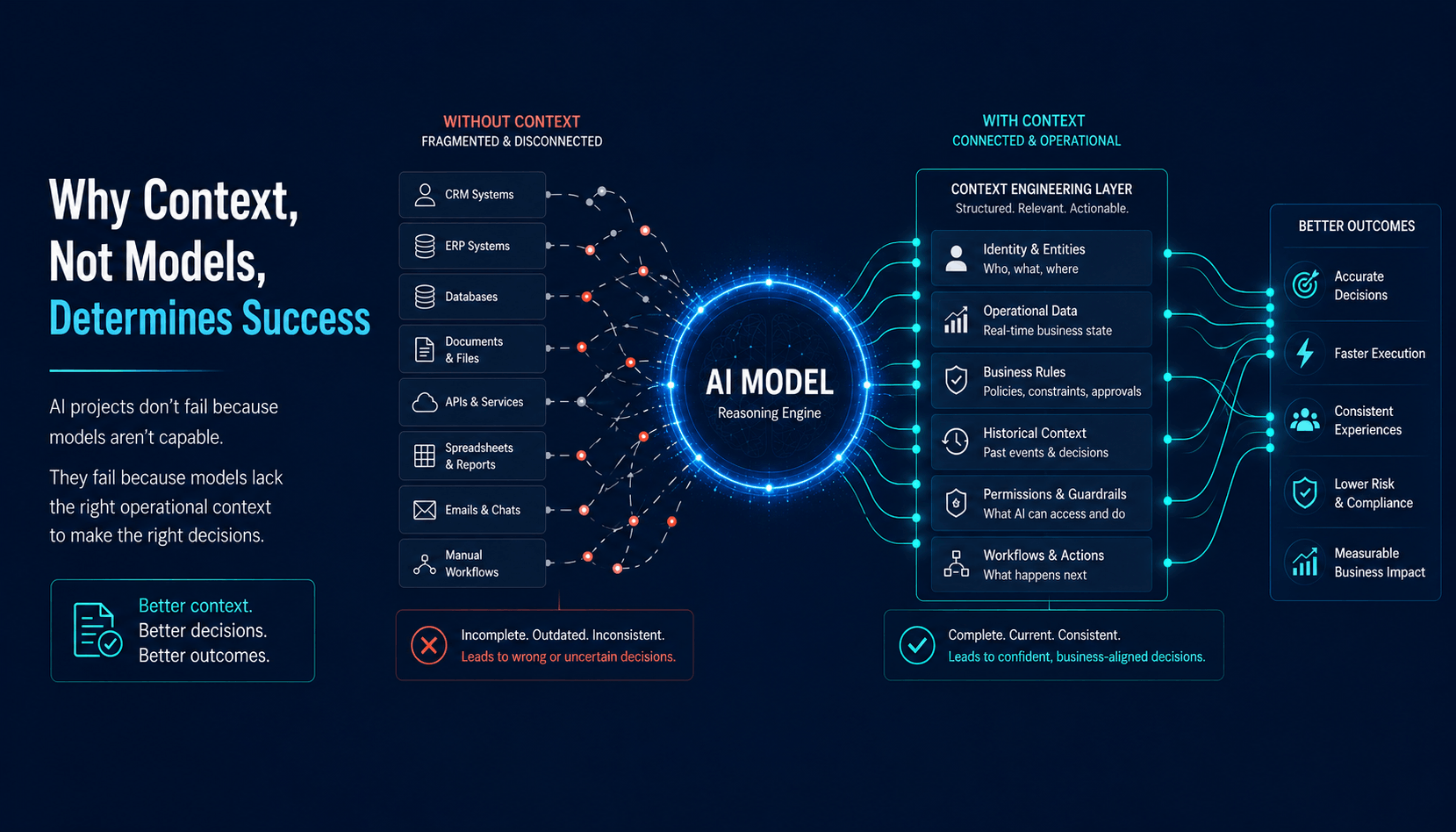
Every AI Project Has One Constraint Nobody Mentions

Why We Design Failure Before Features
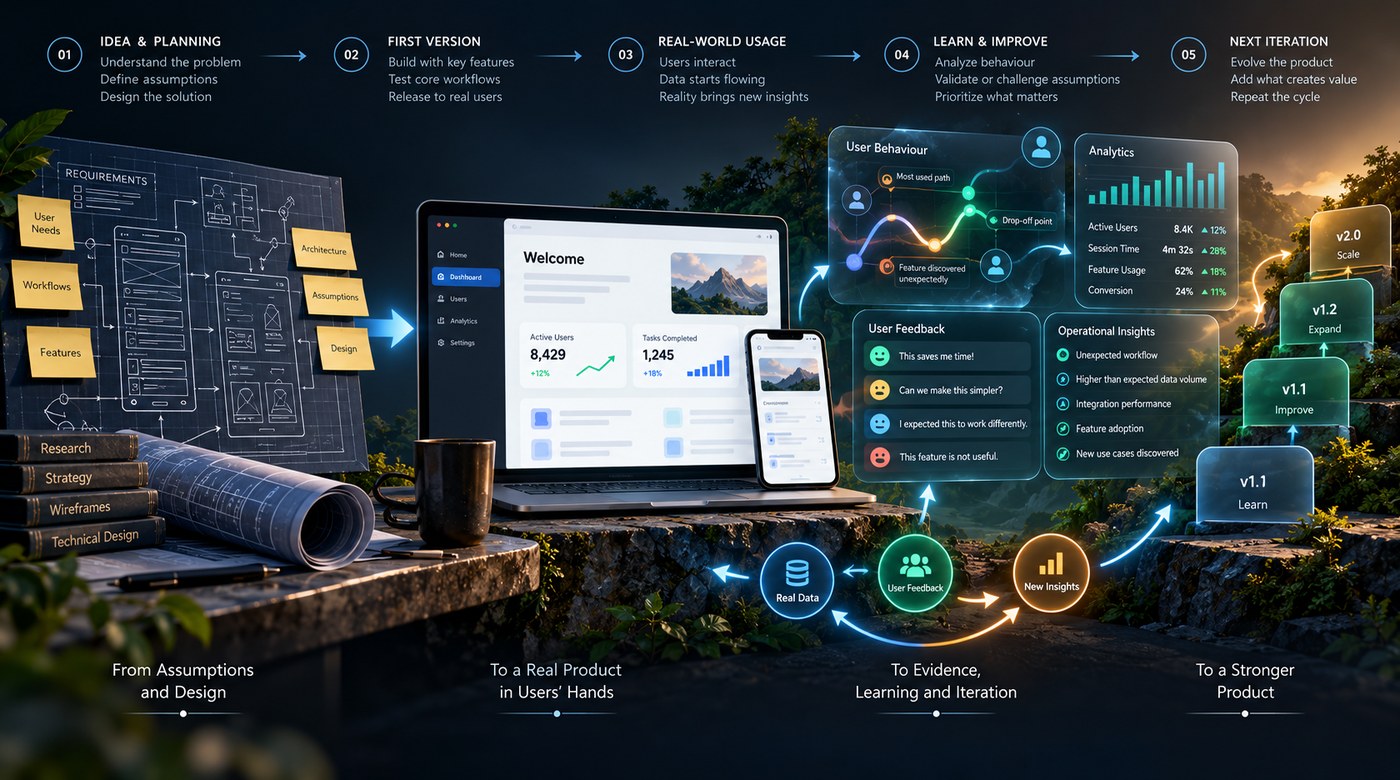
The First Version Is Rarely the Real Product

Engineering Around Humans Is Harder Than Engineering Around Code
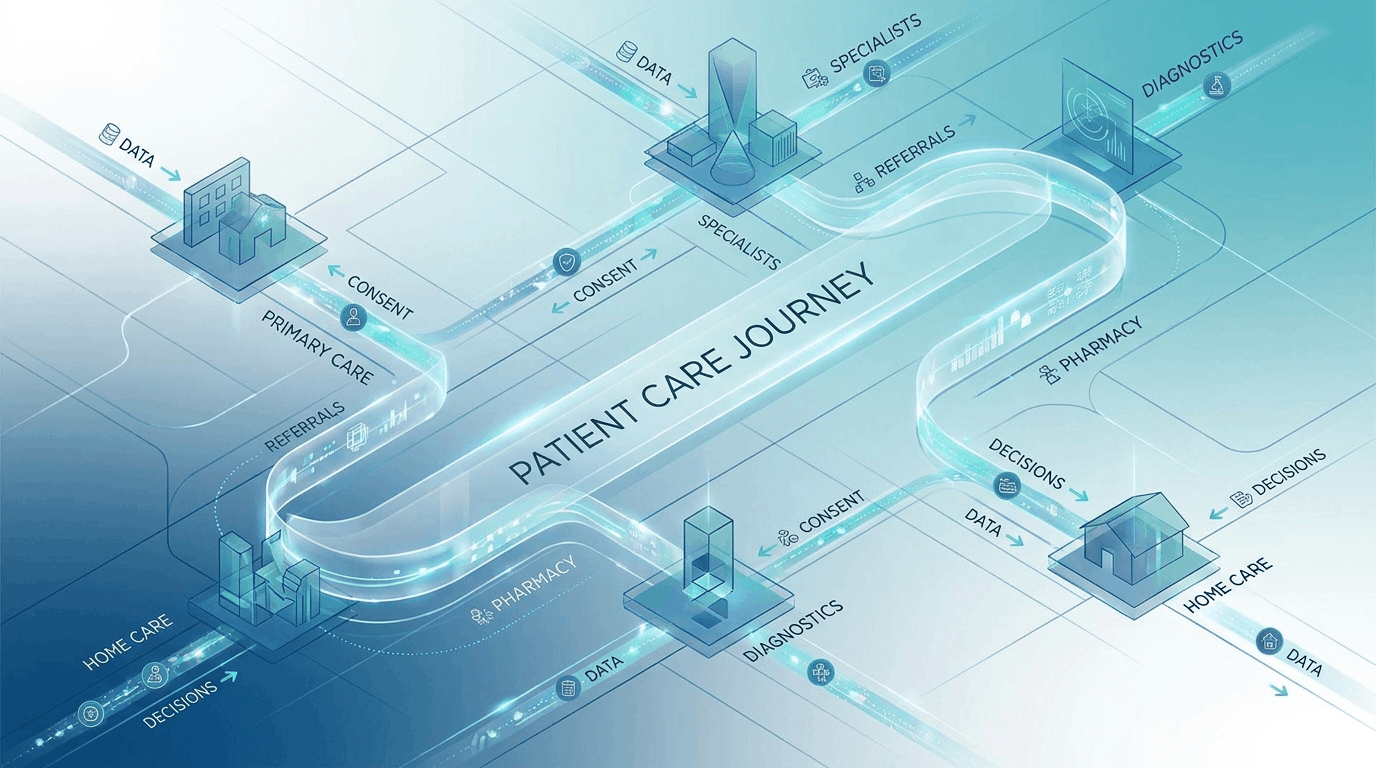
Healthcare Doesn’t Need More Apps. It Needs Connected Workflows.
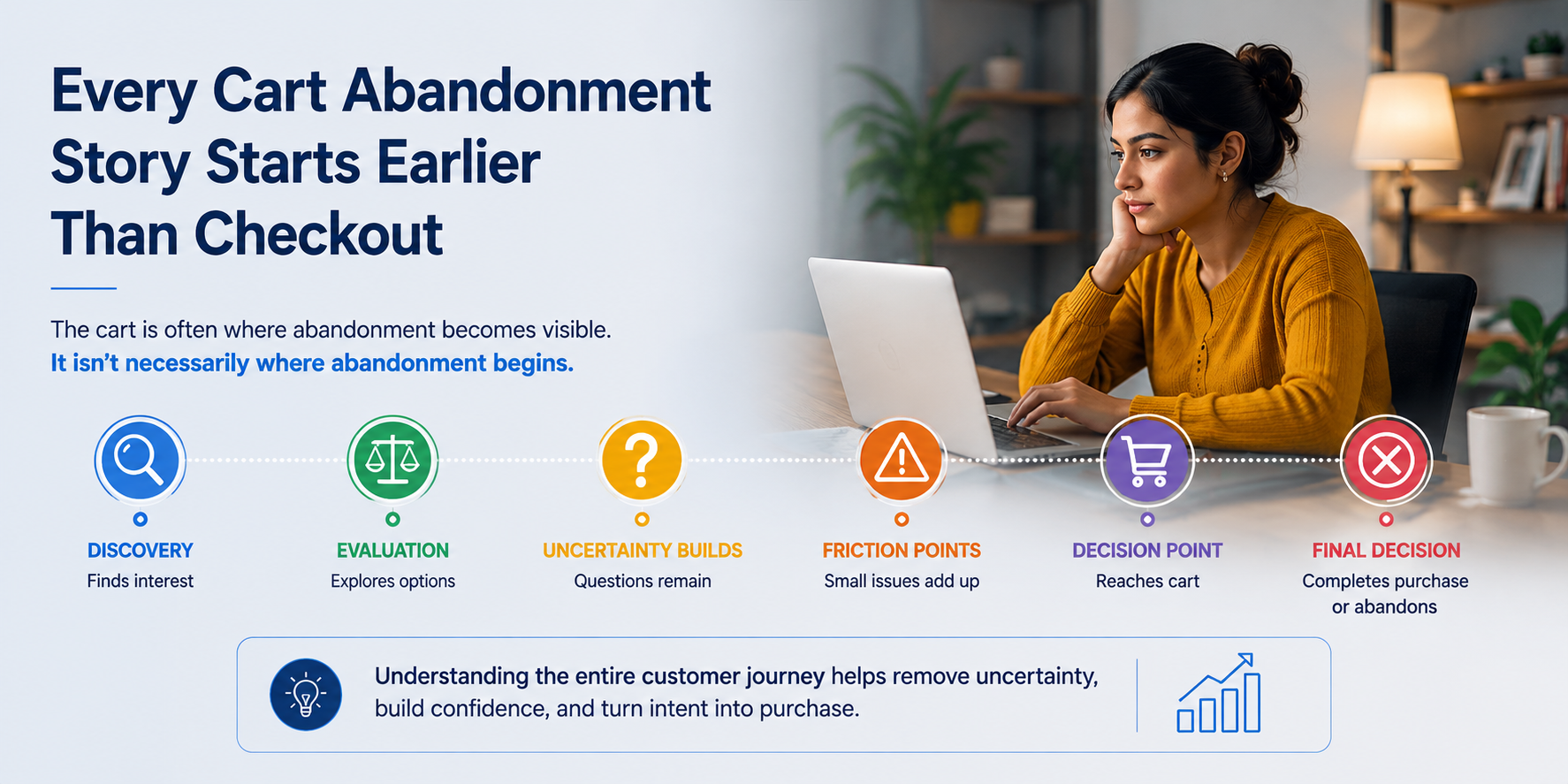
Every Cart Abandonment Story Starts Earlier Than Checkout
