










Retail AI Begins After Checkout
Why the Greatest Opportunities in Commerce Start When the Payment Is Complete Executive Summary For decades, retailers have invested heavily...
Retail has spent decades trying to make the store more efficient.
Self-checkout reduced queues. Barcode scanners reduced manual entry. Inventory systems reduced counting effort. Digital payments reduced transaction time. More recently, retailers have started introducing computer vision, predictive analytics, conversational AI, autonomous checkout and robotic systems.
It is tempting to see this progression as a journey toward a store with fewer people.
That is the wrong conclusion.
The more interesting future is a store where people spend less time doing things that technology can handle and more time doing things that require judgment, empathy, creativity and human interaction.
That distinction matters because a retail store is not simply a physical version of an ecommerce website. It is a living operating environment where customers, employees, inventory, suppliers, technology and business policies continuously interact.
The problem is rarely that retail employees are unwilling to work.
The problem is that too much of their time is consumed by friction.
An employee walks across the store to check inventory. A customer waits because a price needs verification. A manager receives three different versions of the same operational information. Staff manually reconcile stock discrepancies. Employees spend part of their shift searching for products in the back room. A customer asks whether another size is available, and the answer requires checking another system.
None of these tasks looks particularly significant in isolation.
Together, they create the operating drag that customers experience as slow service and employees experience as unnecessary work.
This is where the real opportunity for retail automation begins.

The conversation around automation often starts with the wrong question.
How many employees can we replace?
A better question is:
How much unnecessary work can we remove from the people who remain?
That change in perspective has significant implications for retail technology.
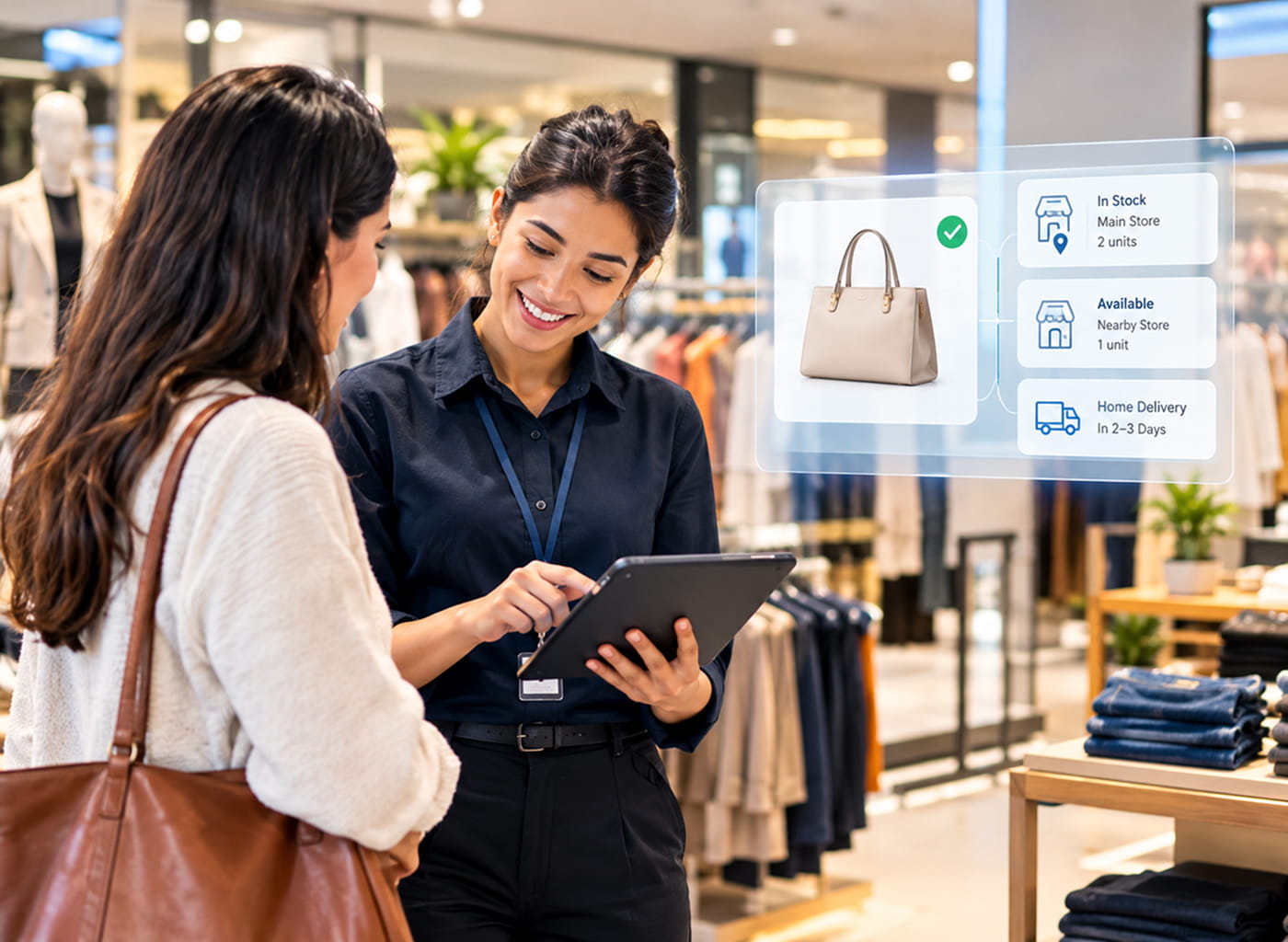
Consider a store associate helping a customer find a particular product. The associate may need to check availability, locate the item, confirm the price, verify whether another size exists and potentially determine whether another nearby store has inventory.
The customer sees an employee helping them.
Behind that interaction may be several disconnected systems and several minutes of avoidable operational effort.
A well-designed retail automation system can compress that entire process into a single workflow. The associate can ask one question and receive a contextual answer: the item is available, there are two units in the back room, another size is available in the adjacent store, and the customer can have it delivered if required.
The technology has not replaced the employee.
It has increased the employee’s capability.
That is an important distinction.
The best automation often becomes invisible because the customer does not see the technology. They simply experience a better store.
For retailers, this means automation should not be measured only by labor reduction. It should also be measured by the amount of productive human attention it creates.
If an associate spends less time searching, checking, entering, reconciling and escalating, that time becomes available for helping customers.
That is a much more valuable definition of efficiency.
Retail technology has historically been designed primarily around transactions.
Point-of-sale systems record purchases. Inventory systems track stock. Workforce systems manage schedules. CRM systems capture customer information.
These systems are useful, but they largely require employees to retrieve and interpret information themselves.
The next generation of retail automation changes that relationship.
Instead of giving employees more dashboards, retailers can give them contextual intelligence at the moment they need it.
Imagine an associate looking at a customer’s request and receiving a simple recommendation:
“This product is unavailable in your size here, but two units are available at the nearby store. The customer has purchased this brand twice before.”
That is fundamentally different from opening three applications and searching for the same information manually.
The technology becomes an intelligence layer sitting above the operational systems.
This is particularly important as retailers introduce AI.
Adding an AI chatbot to an employee portal does not automatically make a store intelligent. The AI needs access to relevant operational context: inventory, pricing, promotions, product information, customer permissions, store policies and potentially real-time events.
Without that context, the AI becomes another interface employees have to manage.
With context, it can become an operational assistant.
This is one of the defining principles of modern retail automation: the objective is not to add another tool to the store; it is to reduce the number of tools the employee has to think about.
Retail operations look predictable when viewed from a distance.
A customer enters. They browse. They select products. They pay. The transaction completes.
Real stores are nothing like that.
A customer wants a product that appears to be in stock but cannot be found.
A promotion applies differently than expected.
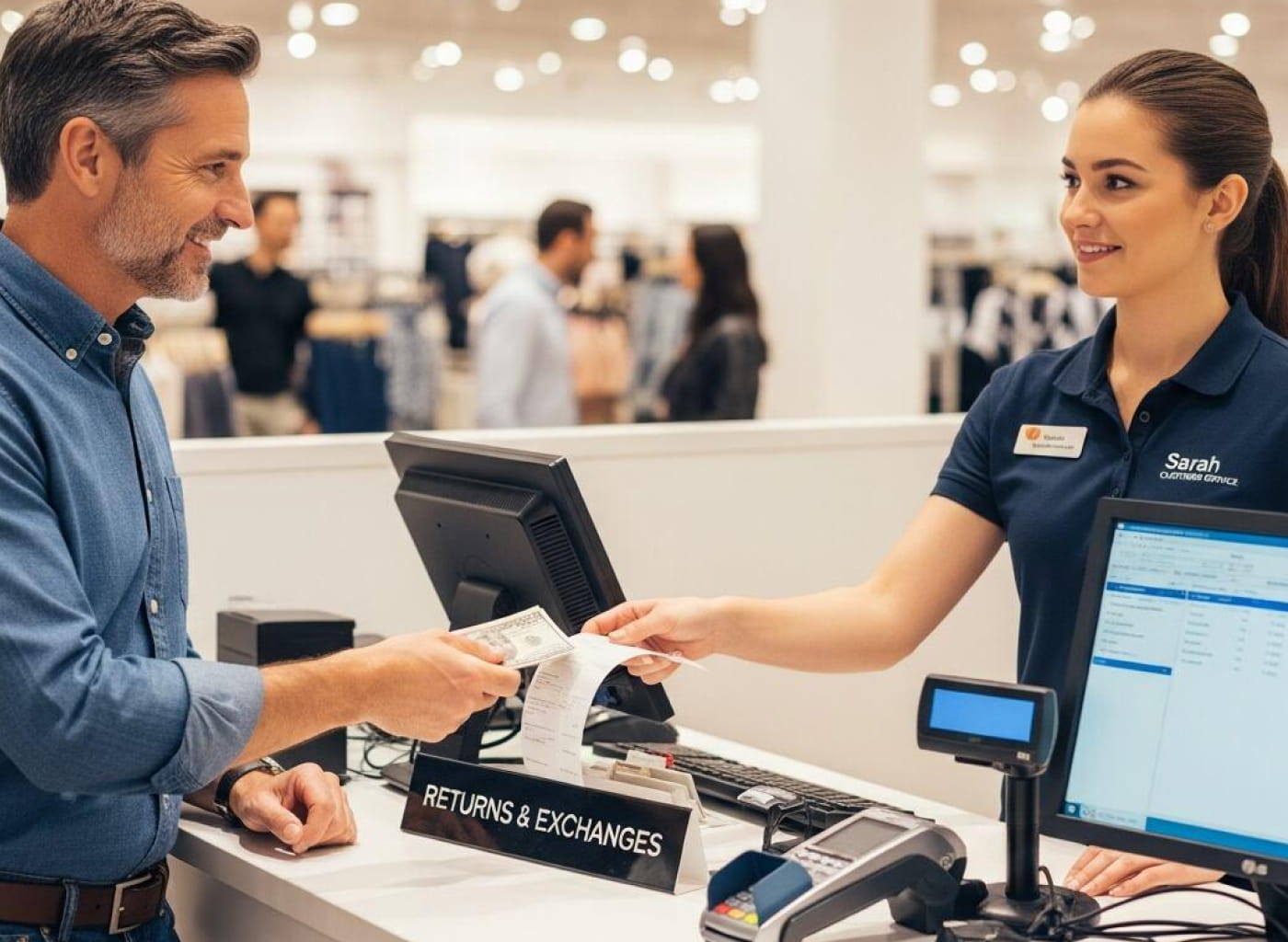
A customer wants to return something purchased through another channel.
An item is damaged.
A delivery is delayed.
A payment fails.
A product has been allocated to an online order.
A customer wants to buy online and collect in store.
An employee needs managerial approval for an exception.
These situations are not unusual edge cases. They are part of normal retail operations.
Yet many retail systems are designed around the happy path.
This creates a strange paradox. Retailers automate the predictable parts of the operation and then leave employees to manually resolve the exceptions.
The result is that employees become the integration layer between systems.
They remember policies. They interpret conflicting information. They call other departments. They check another application. They ask a manager. They explain the situation to the customer.
That is expensive operationally, but it is also frustrating for the employee.
A more mature retail automation strategy therefore focuses heavily on exception handling.
The system should identify unusual situations, provide relevant context and guide the employee toward an appropriate action.
This does not necessarily mean allowing AI to make every decision autonomously.
In many cases, the better design is:
detect → explain → recommend → confirm → execute.
The employee remains accountable for the decision, while the system handles the information burden surrounding it.
That model is particularly valuable in environments where policies, customer expectations and operational constraints intersect.
Automation without connectivity creates isolated efficiencies.
A smart shelf can detect inventory movement.
A POS can process transactions.
A workforce application can manage schedules.
A CRM can store customer information.
A warehouse system can track fulfilment.
But the real value appears when these systems can participate in the same operational flow.
Suppose a store sells the last two units of a product.
The POS knows about the transaction. The inventory system knows about the stock reduction. The ecommerce platform may still display the product as available for several minutes. The replenishment system may not yet understand the change. A customer may simultaneously be attempting to reserve the same product online.
The problem is not the absence of automation.
The problem is that the automation is fragmented.
This is why the future of retail automation is closely connected to connected commerce architecture.
Retailers need operational systems that can exchange events and decisions rather than simply exchange data.
A sale should be capable of triggering inventory recalculation.
An inventory threshold should influence replenishment.
A customer interaction should potentially influence fulfilment options.
A delivery event should update customer communication.
A store-level exception should be visible to the relevant operational team.
The store therefore becomes one node in a larger commerce system.
The physical store, ecommerce platform, warehouse, customer service operation and fulfilment network increasingly need to behave as parts of the same business.
That is what makes automation meaningful.

There is another important shift happening in retail.
Historically, technology has often been used to tell employees what happened.
Sales were recorded.
Inventory was counted.
Customers were classified.
Reports were generated.
AI can increasingly help employees understand what should happen next.
That is a much more powerful capability.
Consider a store manager beginning a shift.
Instead of opening several dashboards, the manager could receive a contextual operational briefing: certain products are selling faster than expected, one category is understocked, today’s traffic is likely to be higher than normal, several click-and-collect orders are approaching their promised collection time, and one operational issue requires attention.
The system is not merely reporting data.
It is helping the manager prioritize attention.
The same principle applies to associates.
An AI system might identify that a customer is struggling to find an appropriate product, suggest alternatives based on availability and product attributes, and help the associate explain the differences.
The human remains at the centre of the interaction.
AI provides the context.
This distinction becomes increasingly important as retailers experiment with autonomous systems.
Not every retail decision should be automated.
Some decisions are operationally straightforward and can be executed automatically.
Others involve customer relationships, brand judgment, exceptions or accountability and should remain human-led.
The future is therefore unlikely to be a binary choice between human retail and autonomous retail.
It will be a spectrum of human and machine responsibilities.
The challenge for retailers is deciding where each responsibility belongs.
Retailers naturally focus on visible experiences.
Faster checkout.
Digital kiosks.
Smart mirrors.
Mobile apps.
Interactive displays.
AI assistants.
These can be valuable, but they are only one part of the opportunity.
Some of the highest-value automation will happen behind the scenes.
A replenishment decision made before a shelf becomes empty.
A system detecting an inventory discrepancy before it affects an order.
A workforce system anticipating a busy period and adjusting staffing recommendations.
An AI system identifying an unusual return pattern.
A fulfilment engine selecting the most appropriate store for an order.
A pricing system detecting a change in demand.
An employee receiving the right information before they have to ask for it.
Customers may never know these systems exist.
That is not a failure of the technology.
It is often the sign that the technology is working properly.
The objective of intelligent retail is not to make the store look futuristic.
It is to make the store feel effortless.
That requires retailers to move beyond isolated automation projects and think about the store as a continuously operating software system.
Sensors provide signals.
Operational systems provide state.
AI provides interpretation.
Rules and policies provide constraints.
Employees provide judgment.
Automation executes appropriate actions.
Together, these components create a new operating model for physical commerce.
Retailers do not need to automate everything at once.
In fact, trying to automate the entire store is usually a mistake.
The better approach is to identify areas where employees repeatedly spend time on low-value coordination.
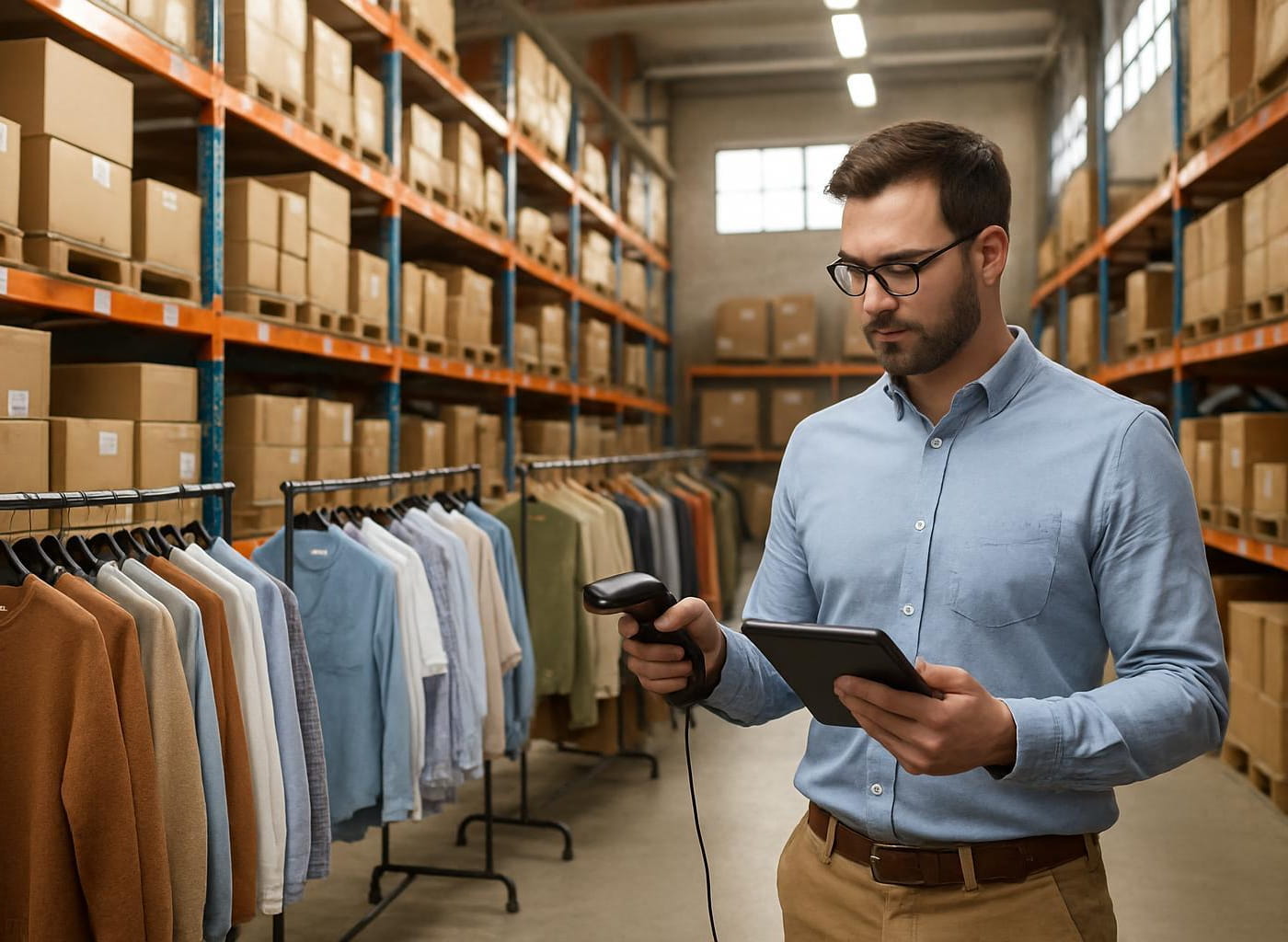
Inventory lookup is one obvious example.
Another is order and fulfilment exception handling. Returns, exchanges and cross-channel orders are also strong candidates because they frequently require employees to reconcile information across multiple systems.
Operational reporting is another opportunity. If managers spend significant time assembling information from different dashboards, an intelligent operational layer can turn those reports into contextual briefings and recommended actions.
The strongest candidates generally share three characteristics: they occur frequently, they consume human attention and they follow enough predictable patterns for technology to provide useful assistance.
The goal is not maximum automation.
The goal is maximum reduction in unnecessary friction.
This distinction should also change how retailers evaluate technology investments.
Instead of asking only how much revenue a new system can generate, retailers should ask:
How many employee minutes does it save?
How many customer interactions become easier?
How many exceptions can it resolve without escalation?
How quickly can employees find the information they need?
How many systems must an employee use to complete a common task?
How much time does a manager spend coordinating information rather than managing the store?
These are operational intelligence metrics.
And they may become increasingly important as retail organizations adopt AI.
There is an apparent contradiction at the centre of retail automation.
As technology becomes better at performing operational tasks, human interaction may become more valuable rather than less.
Customers do not necessarily visit physical stores because they need a machine to process a transaction. They visit because the physical environment can provide discovery, confidence, advice, immediacy and human interaction.
Technology should protect those advantages rather than eliminate them.
A store associate who spends less time searching for stock can spend more time understanding what a customer actually needs.
A manager who spends less time assembling reports can spend more time coaching employees.
A customer-service employee who has instant access to order history and policy context can resolve problems with greater confidence.
Automation therefore does not have to make retail less human.
Done properly, it can make human attention more available.
That may ultimately be the most important definition of the future store.
At Prologic, we see intelligent commerce as a connected operating model rather than a collection of ecommerce features.
The physical store is becoming another intelligent node within that model.
Its inventory, employees, customers, fulfilment operations, payments and business rules increasingly need to participate in the same connected architecture.
That is where retail automation becomes more interesting.
The question is no longer simply whether a retailer can automate checkout, inventory counting or customer support. The larger question is whether the retailer can build an environment in which technology continuously removes operational friction while people remain responsible for the moments that require judgment.
The future store may therefore have fewer repetitive tasks, fewer disconnected systems and fewer unnecessary decisions for employees to make.
It does not necessarily need fewer people.
It needs people doing better work.
And that is a much more compelling future for retail.
Why the Greatest Opportunities in Commerce Start When the Payment Is Complete Executive Summary For decades, retailers have invested heavily...
Why retailers should stop treating the cart as the problem There is a familiar conversation in eCommerce. The conversion rate has dropped. T...
Why the Future of Retail Depends Less on Stock Counts and More on Intelligent Decisions Executive Summary For decades, inventory management...
Why human behavior, organizational habits, and real-world exceptions often matter more than technical elegance Executive Summary A software...
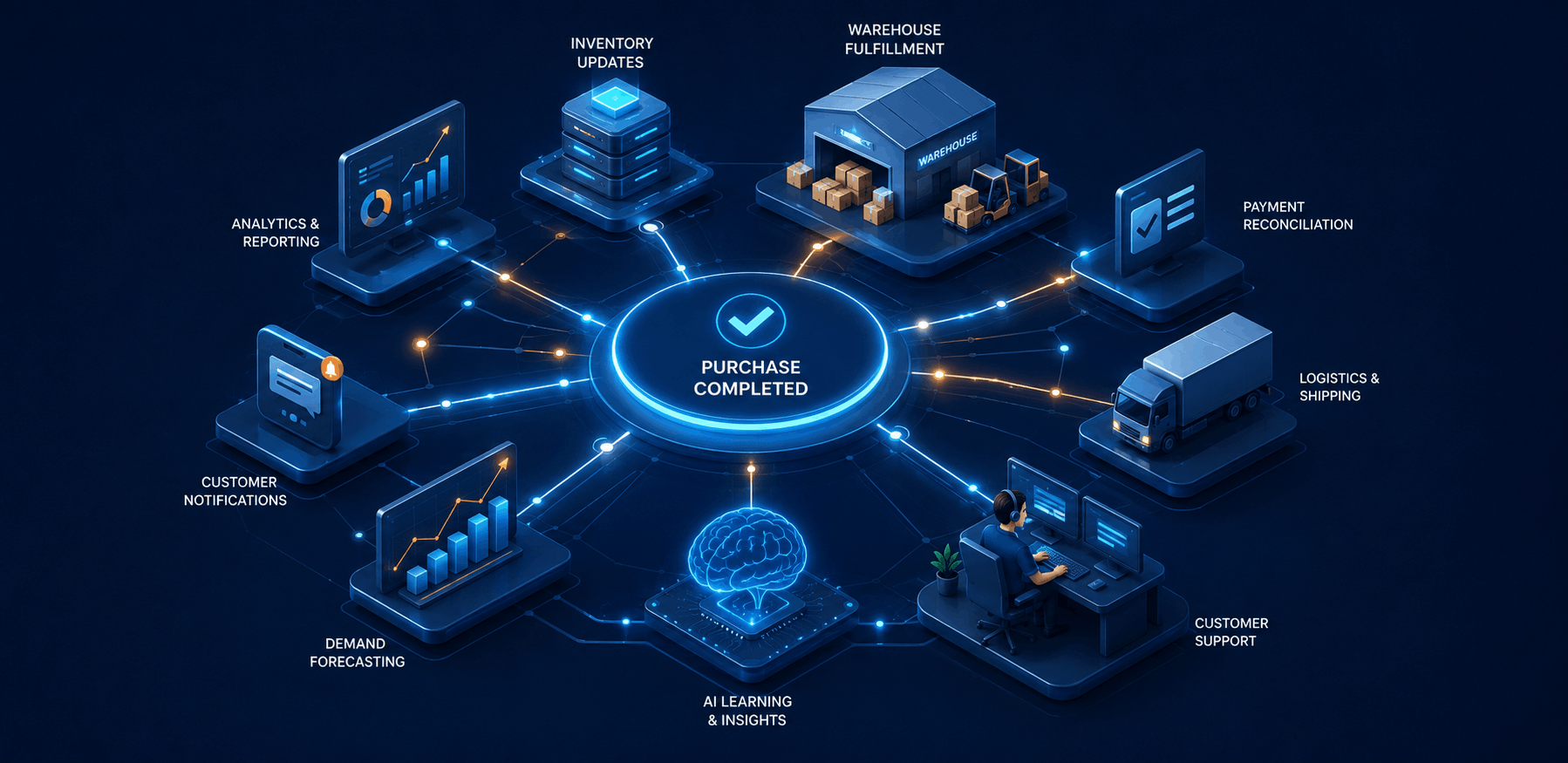
Retail AI Begins After Checkout
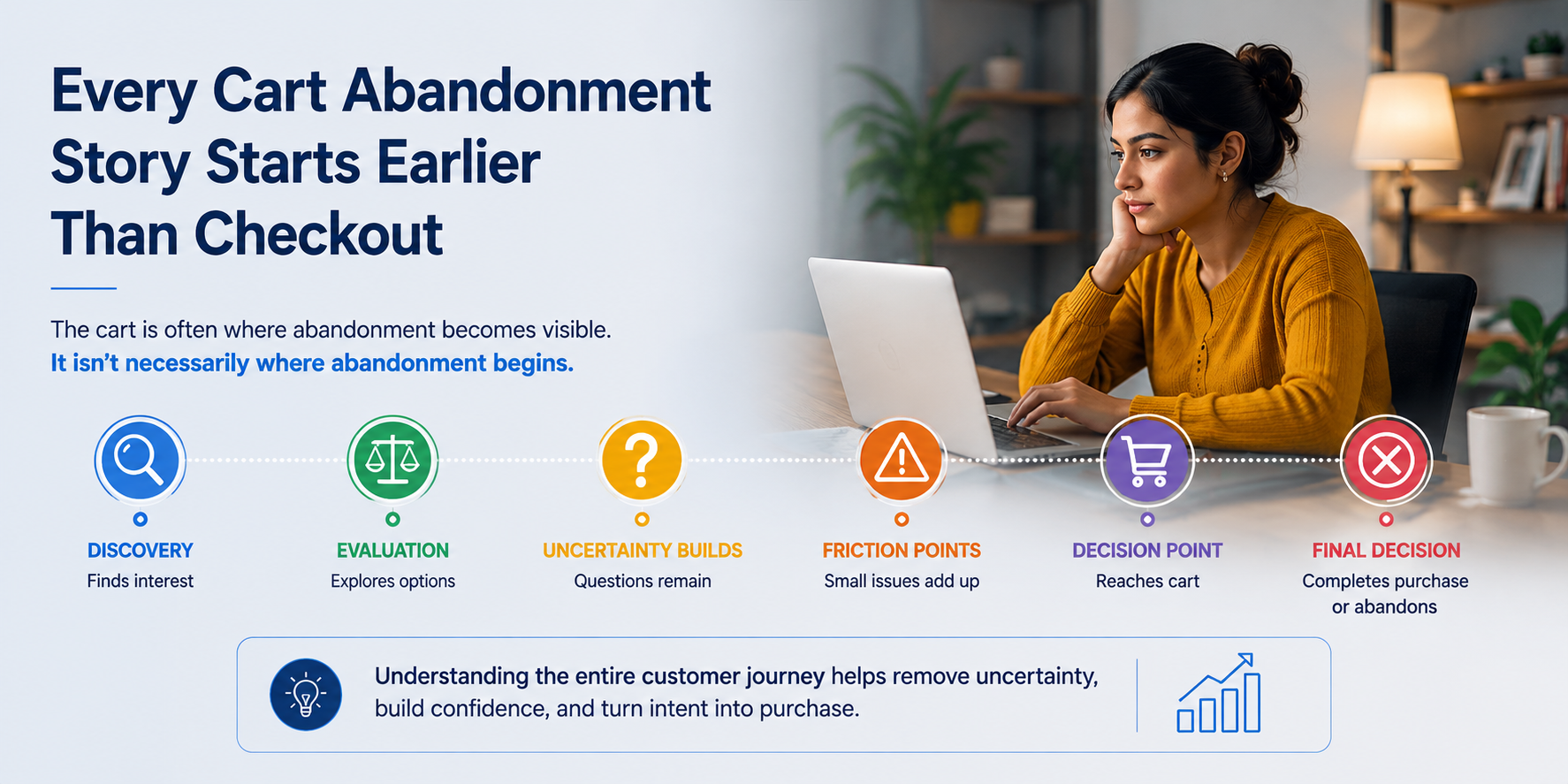
Every Cart Abandonment Story Starts Earlier Than Checkout
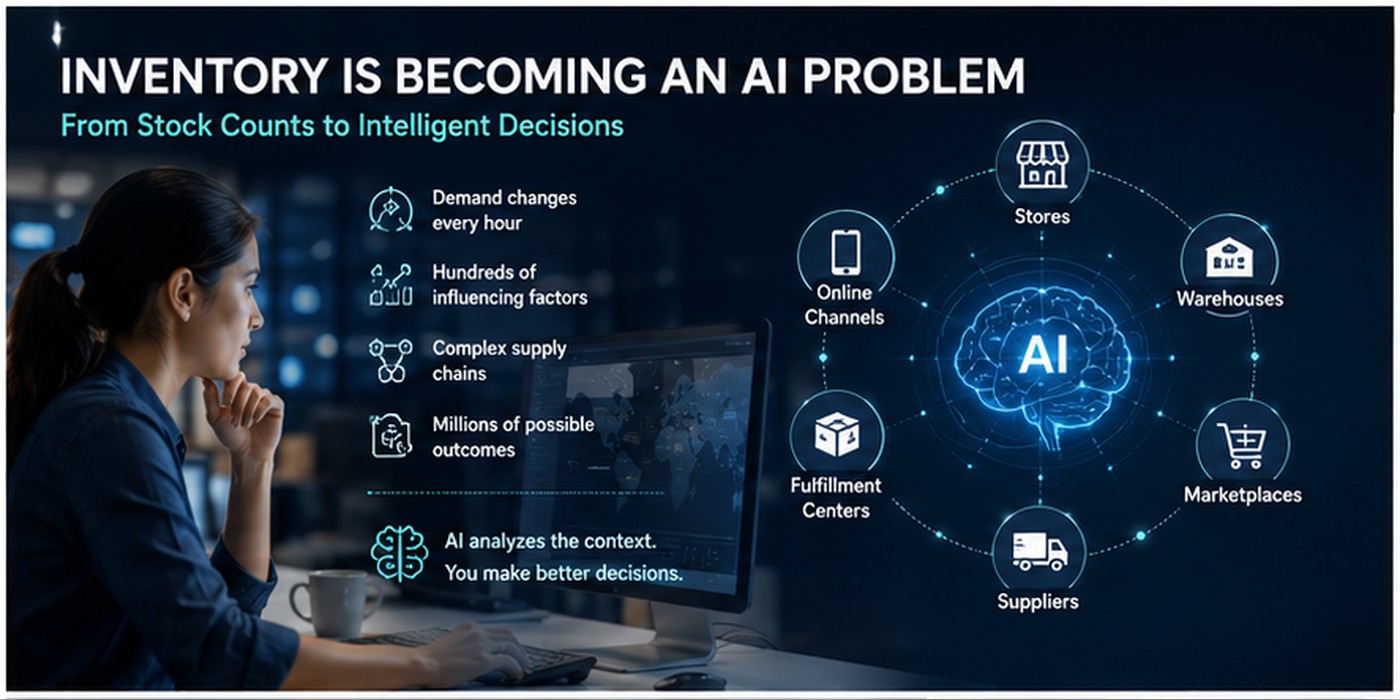
Inventory Is Becoming an AI Problem

Engineering Around Humans Is Harder Than Engineering Around Code
