










- Why is checkout automation not enough for modern retail?Checkout automation improves one part of the customer journey, but retail operations also depend on accurate inventory, product data, replenishment, POS synchronisation, payments, and exception management.
- What is a connected retail automation strategy?It is an approach that connects store technologies, commerce systems, inventory, payments, and operational workflows so that information and actions remain consistent across the retail environment.
- What technologies support intelligent retail stores?Computer vision, RFID, smart shelves, smart carts, kiosks, POS integration, edge AI, inventory intelligence and retail analytics can contribute to an intelligent store.
- Does retail automation mean replacing store employees?No. A well-designed automation strategy can reduce repetitive tasks, improve information availability and allow employees to focus on customer service, exceptions and operational decisions.
- How should retailers prioritise automation investments?They should identify measurable operational problems, establish a baseline, assess existing systems and dependencies, and introduce capabilities incrementally based on business value.
- What role does ProRetail Grid play in retail automation?ProRetail Grid is Prologic's autonomous retail infrastructure offering, covering capabilities such as computer vision, smart carts, smart shelves, RFID, autonomous checkout and store analytics.
- How does CommerceFabric extend retail automation?CommerceFabric connects store infrastructure through ProRetail Grid, commerce infrastructure through ProCommerce Core and payment infrastructure through ProPay Nexus.
Reading Time: 10 min
Why We Said No to Treating Checkout as the Entire Retail Automation Strategy
When retailers talk about automation, the conversation often begins at the checkout counter. Self-checkout kiosks, cashier-less stores, smart carts, and frictionless payment experiences have become some of the most visible examples of retail innovation. They are easy to demonstrate, relatively easy for customers to understand, and directly connected to a familiar business objective: making transactions faster.
But checkout is only one moment in a much larger retail operation.
Before a customer reaches the checkout, products must be available, shelves must be replenished, inventory must be accurate, pricing must be consistent, and the store must be ready to serve demand. After a transaction, stock records must be updated, payments reconciled, exceptions resolved, and replenishment decisions made. If these activities operate through disconnected systems, automating the checkout alone may simply make one part of the retail journey faster while leaving the underlying operation fragmented.
This is where I believe retailers need to rethink their automation strategy. We should not confuse automating a transaction with automating retail. The distinction is important because the real opportunity lies in connecting the entire operating environment, not just removing friction at the payment counter.
The checkout counter is a touchpoint, not the retail operation
Checkout is a highly visible part of the customer experience, but it represents only a small part of the work required to run a store. A customer sees a product, picks it up, makes a purchase and leaves. Behind that apparently simple journey are multiple systems and operational decisions involving product information, pricing, inventory, promotions, payment authorisation, transaction records and stock updates.
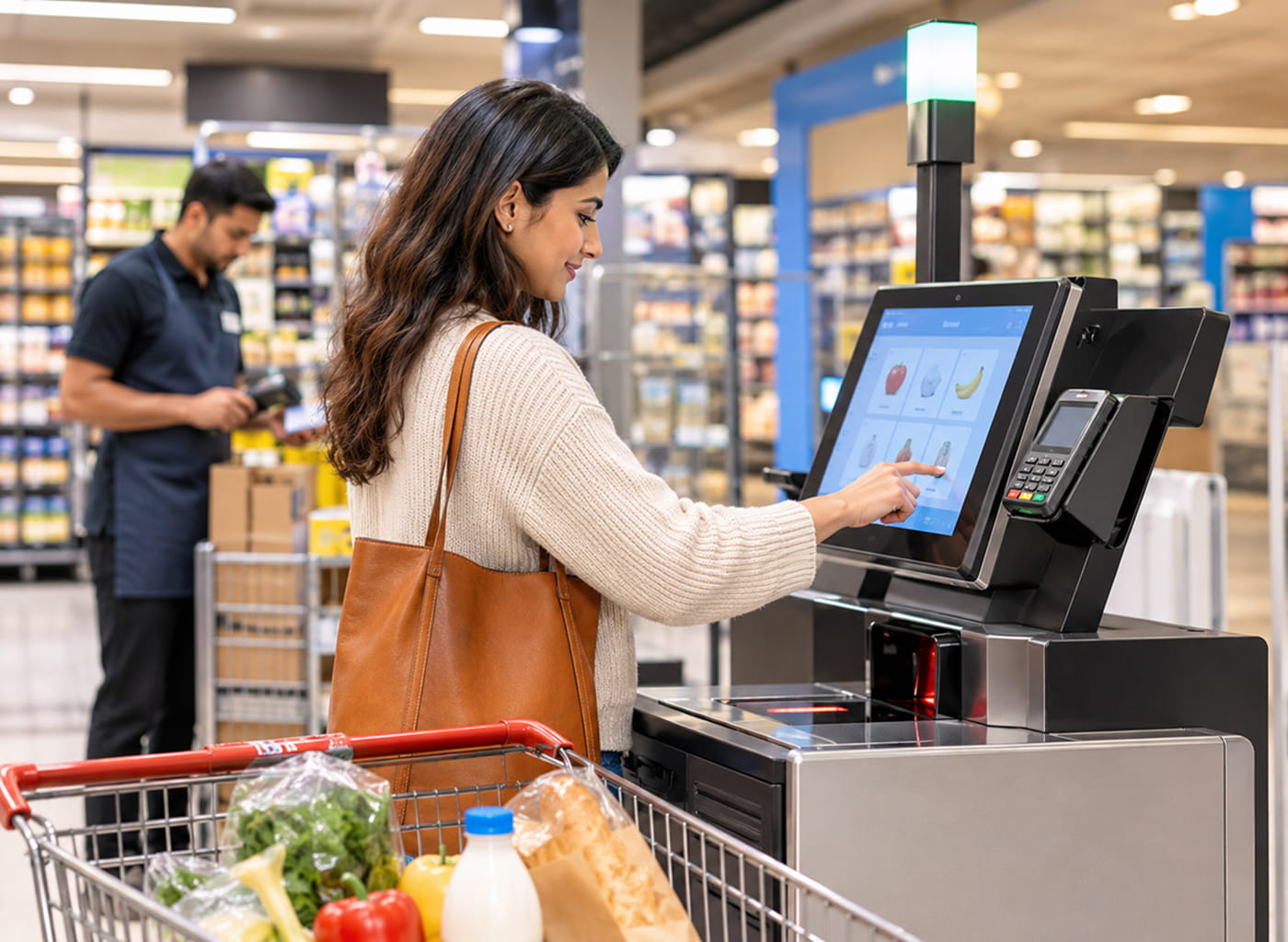
When these capabilities are disconnected, the store experiences problems that no checkout technology can independently solve. A smart cart may identify the products a customer has selected, but it still needs reliable product data and inventory information. A self-checkout system may process a payment quickly, but the transaction must still be synchronised with the point-of-sale and inventory systems. An autonomous checkout experience may reduce the need for a traditional counter, but exceptions, payment failures, and inventory discrepancies still require resolution.
The same principle applies to store employees. If staff spend a significant part of their day checking stock manually, resolving pricing discrepancies, locating products, or reconciling transactions, faster checkout does not remove those operational burdens. It may improve one metric while leaving the rest of the store’s workload unchanged.
Retail automation should therefore begin with a broader question: how effectively does the store operate as a connected system? That question is more important than whether the retailer has installed a particular checkout technology. This broader perspective reflects the shift towards intelligent commerce, where retailers connect operational data and business decisions across the entire customer and retail lifecycle.
Automating a disconnected process can make the problem move faster
One of the risks of narrow automation is that it improves an individual activity without addressing the dependencies around it. A process may become faster, but the next process may still be delayed because the information required to continue is missing or inconsistent.
Consider a store that introduces self-checkout. Customers can complete transactions with less waiting, but inventory updates are delayed. Store staff still need to reconcile discrepancies, investigate unexpected stock movements, and correct records. The checkout experience has improved, yet the retailer may continue to struggle with inventory accuracy and product availability.
Similarly, a retailer might deploy smart carts that recognise selected products and support a frictionless checkout journey. If the product catalogue, pricing rules, promotions and inventory records are not synchronised, the experience can become unreliable. The customer may encounter a price mismatch, an unavailable item or a transaction exception that requires staff intervention.
These are not arguments against self-checkout or smart carts. They are arguments for engineering the systems around them. Automation creates sustainable value when the information and workflows that support a capability are reliable. Otherwise, the organisation risks automating the visible part of a process while leaving its underlying complexity untouched. The opportunity extends to retail intelligence beyond checkout, where transaction data can inform inventory planning, replenishment, fulfilment and subsequent business decisions.
Retail automation needs connected operational layers
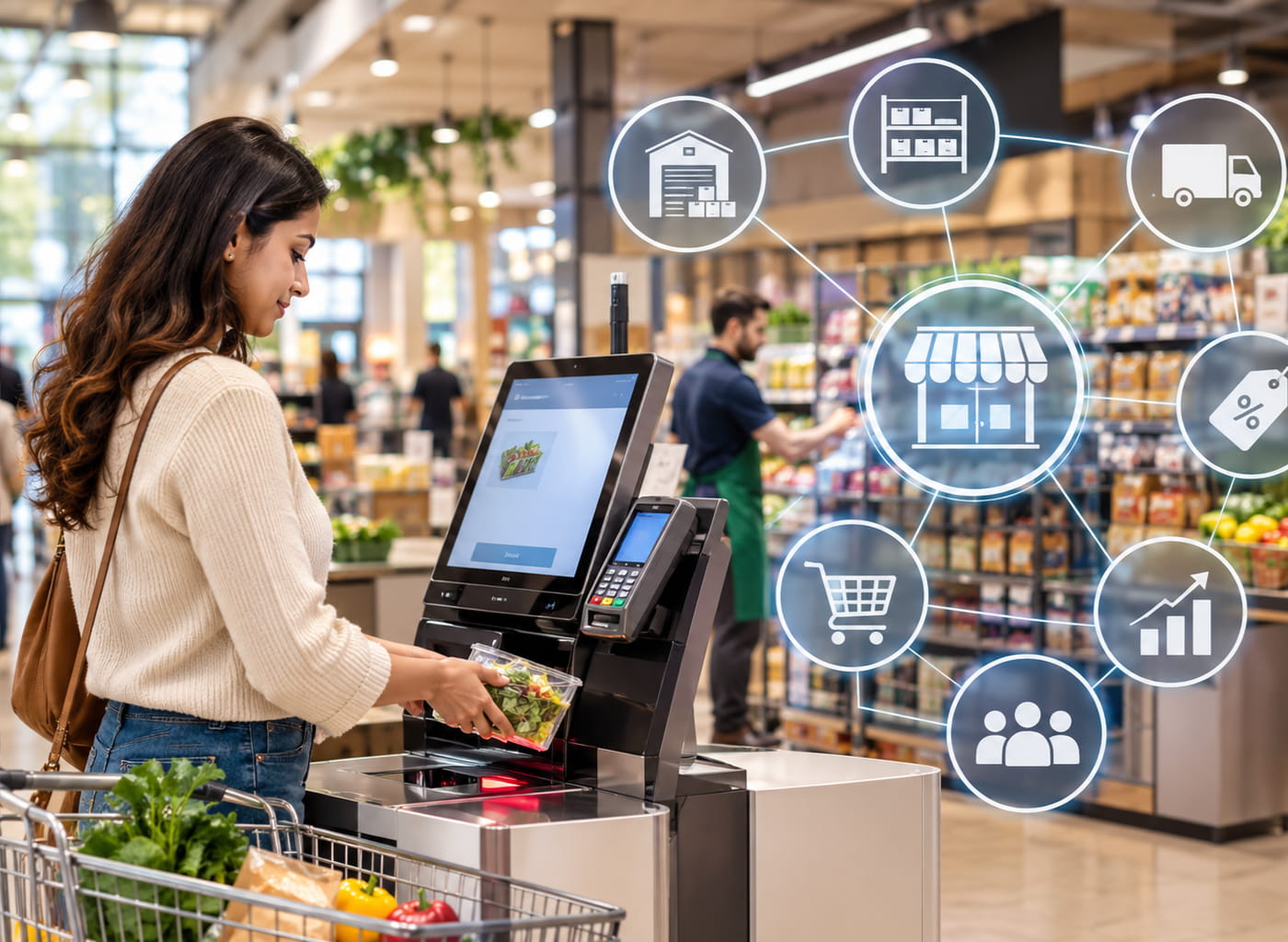
A more useful way to approach retail automation is to think in terms of connected capabilities rather than individual devices. The store environment needs to capture operational signals, interpret them in context, coordinate decisions, and execute appropriate actions.
The first layer is the physical store. This includes cameras, computer vision, smart shelves, RFID, smart carts, kiosks, sensors, and other devices that help the retailer understand what is happening in the environment. These technologies can improve product visibility, detect events, support customer journeys, and provide information that would otherwise depend on manual observation. These capabilities are central to ProRetail Grid, Prologic’s autonomous retail infrastructure for connecting AI-powered store technologies such as computer vision, smart shelves, RFID, smart carts, and autonomous checkout.
The second layer is the operational and commerce foundation. Product information, pricing, promotions, inventory, POS, orders, and fulfilment must exchange information consistently. The store cannot operate intelligently if its physical signals are disconnected from the business systems that determine what should happen next. A product detected by a camera needs to be associated with the right product record. A completed transaction needs to update the appropriate inventory and sales records. An exception needs to reach the system and person responsible for resolving it.
This connected architecture is also shaping the software-defined store, where physical operations, connected devices and business systems work together as a coordinated environment.
The third layer is payment and transaction infrastructure. Payments are not simply the final button in a customer journey. They involve authorisation, transaction status, refunds, reconciliation, settlement and exception handling. A frictionless checkout experience still depends on dependable payment processing and accurate transaction records.
Finally, an intelligence and orchestration layer can connect information from these capabilities to support decisions. For example, the system may identify a shelf gap, check inventory availability, determine whether replenishment is required, and notify the appropriate store employee. More advanced systems may recommend actions based on demand patterns, operating conditions or historical performance. However, the decision must remain bounded by business rules, permissions, and appropriate human oversight. This becomes particularly important for AI-driven inventory decisions, where demand signals, stock movements and operational context can help retailers make more informed replenishment decisions.
This layered approach is the thinking behind Prologic’s CommerceFabric positioning: store infrastructure, commerce infrastructure and payment infrastructure should work as connected capabilities rather than isolated technology investments.
Explore CommerceFabric to understand how connected store, commerce, and payment infrastructure can support a more coordinated retail operating environment.
The real objective is an intelligent store, not an unattended store
There is another assumption worth challenging. Retail automation is sometimes presented as a journey towards eliminating human involvement. That is a narrow interpretation of the opportunity.
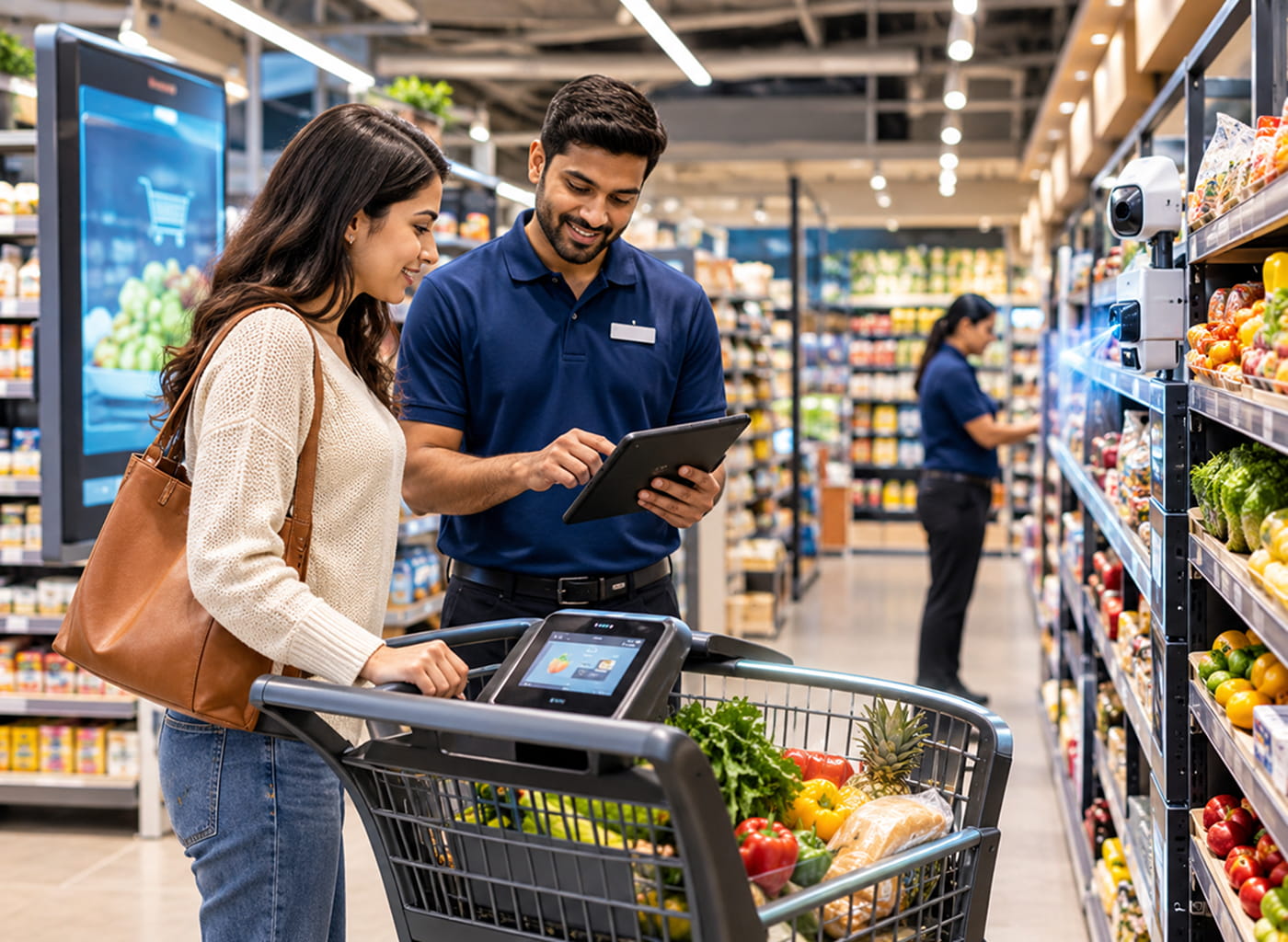
Store employees perform work that involves judgment, customer interaction, exception handling, merchandising, problem resolution, and operational coordination. Not every activity should be automated, and not every decision can be reduced to a model prediction or a fixed rule. In many situations, the best outcome is to remove repetitive work so that people can focus on activities where human intervention adds more value.
For example, computer vision may help identify a shelf that needs attention, while an employee performs the replenishment. RFID may improve inventory visibility, while store management investigates discrepancies. Smart carts may simplify product identification and checkout, while staff handle exceptions and customer assistance. Analytics may highlight unusual patterns, while managers decide how to respond.
The goal should be to create a store that is more informed, responsive, and efficient. Automation should make the work easier for customers and employees, not simply reduce the number of people visible on the shop floor. This approach reflects the idea that retail automation should remove operational friction for store employees, giving them more time to focus on customer assistance, judgment, and problem-solving.
This also has implications for the way retailers evaluate investments. A solution should not be judged only by the number of transactions completed without cashier involvement. It should be evaluated through inventory accuracy, replenishment performance, transaction reliability, shrinkage, staff productivity, customer experience, and the cost of operating the complete system.
The right automation sequence begins with operational priorities
Retailers do not need to automate every part of a store at once. In fact, attempting to introduce multiple technologies simultaneously can create integration complexity and make it difficult to establish which investment produced which outcome.
A more disciplined approach begins by identifying the operational constraints that matter most. A retailer may have a checkout queue problem, but it may also have poor inventory accuracy or excessive manual reconciliation. Another may have reliable inventory records but struggle with replenishment speed. A third may want to introduce autonomous checkout but lack the product data and transaction controls needed to support it.
The sequence should follow the business problem. Start with a measurable baseline, understand the systems and people involved, identify the dependencies and choose a bounded intervention. If the objective is to improve shelf availability, for example, the first step may be to connect product recognition with inventory data and replenishment workflows rather than immediately introducing a complete autonomous store experience.
The next step should validate the complete workflow. Did the system identify the right event? Was the information accurate? Did the right person receive the notification? Was the issue resolved faster? Did inventory records remain consistent? What happened when the system was uncertain or unavailable?
These questions help establish whether the solution is delivering operational value rather than simply producing an impressive technology demonstration. Once the foundation is dependable, additional capabilities can be introduced incrementally.
Why we said no to the narrow definition of retail automation
The position behind this article is straightforward. We are not saying no to self-checkout, autonomous checkout, smart carts, or any other retail automation capability. These technologies have an important role in the future of physical retail. What we should say no to is the assumption that deploying one of them, in isolation, is enough to make a store intelligent.
A retailer does not become autonomous simply by removing the cashier. Nor does a store become intelligent merely by installing cameras, RFID readers or smart shelves. The value comes from connecting these capabilities to the systems, information and workflows that operate the business.
At Prologic, this is how we approach the future of retail through ProRetail Grid and the broader CommerceFabric ecosystem. We see the store as an intelligent operating environment, connected to commerce platforms, inventory systems and payment infrastructure. The technology should work together to improve how the store functions, how employees work, and how customers experience retail.
The next generation of retail will not be defined by how many devices a store deploys or how many transactions it processes without a cashier. It will be defined by how intelligently its different capabilities work together.
Checkout automation makes a transaction easier. Connected retail automation makes the business work better.